
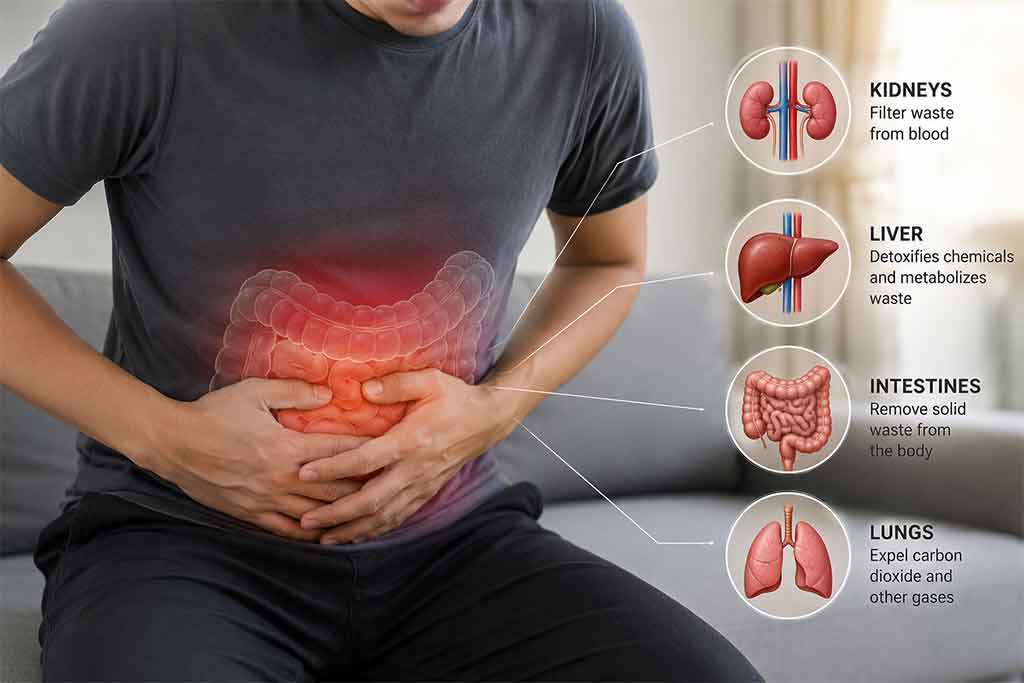

When waste is not removed from the body, toxins and harmful substances begin to build up inside the bloodstream and organs. This can quickly interfere with normal body functions, damage tissues, weaken the immune system, and eventually become life-threatening. The human body depends on regular waste removal through urination, bowel movements, sweating, and breathing to stay balanced and healthy.
The kidneys, liver, lungs, intestines, and skin all work together to remove waste every day. If one or more of these systems stop functioning properly, the body can no longer maintain healthy chemical levels. In severe cases, waste buildup may lead to infections, organ failure, confusion, coma, or death.
Table of Contents
Why the Body Needs to Remove Waste
Every second, the body creates waste products from digestion, breathing, and normal cell activity. Carbon dioxide leaves through the lungs, urine carries excess chemicals out through the kidneys, and the intestines remove solid waste through bowel movements.
Without this process, toxic substances stay trapped inside the body. Even a short disruption can create serious health problems. For example, severe constipation can cause dangerous blockages, while kidney failure can allow toxins to spread throughout the bloodstream.
This is one reason doctors often warn people not to ignore digestive or urinary problems. Small symptoms can sometimes point to larger health issues developing underneath.
What Happens When Waste Builds Up in the Intestines
If stool stays in the intestines too long, the body absorbs more water from it, making it dry and difficult to pass. Over time, this can lead to constipation, bloating, stomach pain, nausea, and loss of appetite.
In extreme situations, the intestines can become blocked. This condition is known as bowel obstruction and may require emergency treatment. Waste trapped inside the digestive tract can also increase bacterial growth and raise the risk of infection.
People who spend long periods sitting without enough movement may notice digestive problems becoming worse. A sedentary lifestyle slows digestion and reduces bowel activity. This is also discussed in what happens if you sit for 10 hours a day, where prolonged inactivity affects multiple body systems at once.
What Happens If the Kidneys Cannot Remove Waste
The kidneys filter waste and extra fluid from the blood. When they stop working properly, dangerous toxins begin to accumulate. This condition is often associated with kidney disease or kidney failure.
Symptoms may include swelling, fatigue, confusion, shortness of breath, muscle cramps, and changes in urination. In severe cases, untreated kidney failure can affect the heart and brain.
Doctors sometimes use dialysis to artificially remove waste from the blood when the kidneys can no longer perform that job. Without treatment, toxic buildup can become fatal.
How Waste Affects the Liver and Bloodstream
The liver helps break down chemicals, medications, alcohol, and toxins. If the liver becomes damaged, harmful substances may circulate through the body instead of being neutralized.
This can affect brain function, energy levels, digestion, and hormone balance. Some people develop jaundice, which causes yellowing of the skin and eyes due to waste pigments building up in the blood.
Certain medications and supplements can also place extra stress on the liver and kidneys when used improperly. For example, taking excessive sleep aids or hormones may create additional strain on the body’s detox systems. Related effects are explored in what happens if you take too much melatonin.
Can Waste Buildup Cause Infections?
Yes. Waste trapped inside the body can create an environment where bacteria grow more easily. This is especially dangerous when infections are left untreated.
For instance, untreated infections may spread into the bloodstream and overwhelm the immune system. In some cases, this can lead to sepsis, a severe and potentially deadly condition.
Ignoring symptoms such as fever, swelling, pain, or difficulty swallowing can sometimes allow infections to worsen rapidly. A good example is discussed in what happens if strep throat goes untreated, where a common infection can develop into serious complications.
Signs the Body Is Struggling to Remove Waste
The body often sends warning signals before waste buildup becomes severe. Some common signs include:
- Persistent constipation
- Dark or reduced urine
- Swelling in the legs or face
- Extreme fatigue
- Bad breath with a metallic taste
- Nausea and vomiting
- Brain fog or confusion
- Shortness of breath
These symptoms do not always mean organ failure, but they should never be ignored, especially when several appear together.
How to Help the Body Remove Waste Naturally
The body already has its own natural detox system, but healthy habits help those organs function properly. Drinking enough water, eating fiber-rich foods, exercising regularly, and getting enough sleep all support waste removal.
Physical activity is especially important because movement stimulates digestion, circulation, and sweating. Staying hydrated also helps the kidneys flush out waste more efficiently.
Limiting excessive alcohol, processed foods, and unnecessary medications may reduce stress on the liver and kidneys as well.
Final Thoughts
So, what happens if waste is not removed from the body? The short answer is that the body slowly becomes overwhelmed by its own toxic byproducts. Waste buildup can damage organs, disrupt normal body functions, trigger infections, and eventually become dangerous if left untreated.
The body is designed to remove waste continuously, which is why healthy digestion, urination, breathing, and circulation matter so much. Paying attention to warning signs early can prevent small problems from turning into serious medical emergencies.