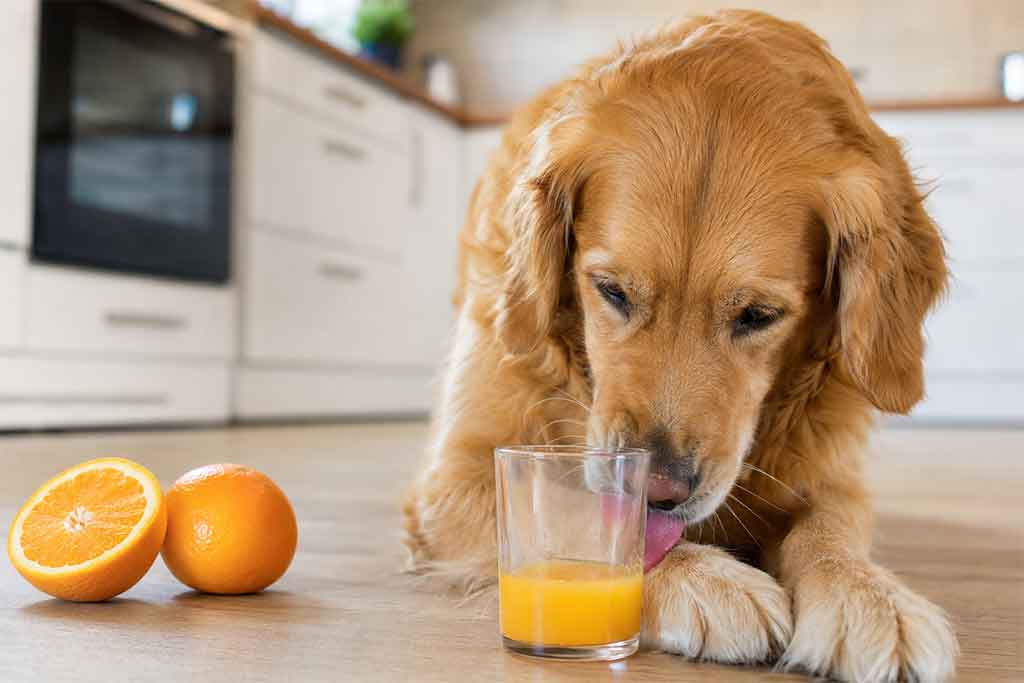

What Happens If a Dog Drinks Orange Juice? If a dog drinks orange juice in a small amount, it usually will not cause serious harm. However, orange juice is not recommended for dogs because it contains high sugar levels, natural acids, and compounds that may upset a dog’s stomach. Some dogs may experience vomiting, diarrhea, bloating, or stomach discomfort after drinking it. In larger amounts, orange juice can become more problematic, especially for dogs with diabetes, obesity, or sensitive digestive systems.
Many pet owners ask what happens if a dog drinks orange juice after their dog accidentally licks a glass or drinks from a cup left on the table. In most cases, a few sips are not dangerous. The real concern starts when dogs drink orange juice regularly or consume large quantities.
Table of Contents
Is Orange Juice Safe for Dogs?
Orange juice is not toxic like chocolate, grapes, or xylitol, but that does not mean it is healthy for dogs. Dogs process sugar and acidic drinks differently than humans. Their digestive systems are designed mainly for water and balanced pet nutrition.
Fresh orange juice contains vitamin C, potassium, and antioxidants. While these nutrients sound beneficial, dogs naturally produce their own vitamin C in the liver. Because of that, they do not need orange juice as a dietary supplement.
The acidity in citrus juice is the bigger issue. Many dogs experience stomach irritation after drinking citrus-based beverages. Even small amounts may lead to mild digestive problems.
What Happens If a Dog Drinks Orange Juice?
When a dog drinks orange juice, the reaction depends on the amount consumed, the dog’s size, and overall health condition.
Small Amounts Usually Cause Mild Symptoms
If your dog only drank a few sips, the symptoms are often minor or completely absent. Some dogs may simply dislike the sour taste and avoid it naturally.
Possible mild symptoms include:
- Temporary stomach discomfort
- Loose stool
- Mild vomiting
- Gas or bloating
- Reduced appetite for a few hours
Most healthy dogs recover quickly without treatment.
Large Amounts Can Cause Digestive Problems
Large quantities of orange juice can irritate the stomach because of the citric acid and sugar content. Dogs are more sensitive to acidic foods than humans.
If a dog drinks too much orange juice, symptoms may include:
- Frequent vomiting
- Diarrhea
- Abdominal pain
- Lethargy
- Dehydration
Puppies and smaller dog breeds are more vulnerable because their bodies process sugar and acid faster.
Can Orange Juice Be Dangerous for Dogs?
In some situations, yes. Orange juice becomes risky when it contains extra ingredients or when the dog already has health issues.
Store-Bought Orange Juice Risks
Commercial orange juice products often contain added sugar, preservatives, flavor enhancers, or artificial sweeteners. Some sugar-free drinks use xylitol, which is extremely toxic to dogs.
Even a small amount of xylitol can cause:
- Dangerous blood sugar drops
- Seizures
- Liver failure
- Death in severe cases
Always check the ingredient label if your dog drinks packaged orange juice.
Dogs With Health Conditions
Dogs with diabetes, obesity, pancreatitis, or gastrointestinal sensitivity should avoid orange juice completely. The sugar can worsen existing health conditions and trigger digestive flare-ups.
Senior dogs may also react more strongly to acidic beverages.
Why Dogs Should Mostly Drink Water
Fresh water is still the best and safest drink for dogs. Dogs do not need fruit juice to stay healthy. Water supports digestion, circulation, body temperature, and organ function without unnecessary sugar or acid.
Some pet owners offer fruit juice because they believe vitamin-rich drinks are healthy. In reality, dogs receive proper nutrients from balanced dog food. Extra sugary drinks usually create more risks than benefits.
If you want to give your dog a healthy treat, plain water, dog-safe fruits, or veterinarian-approved snacks are much better options.
Can Dogs Eat Oranges Instead?
Yes, dogs can eat small amounts of peeled oranges. The fruit itself is generally safer than processed orange juice because it contains fiber and less concentrated sugar.
Still, oranges should only be an occasional treat.
Before feeding oranges to your dog:
- Remove seeds
- Remove the peel
- Serve small bite-sized pieces
- Avoid canned oranges in syrup
Some dogs enjoy oranges, while others dislike the strong citrus smell.
What To Do If Your Dog Drinks Orange Juice
If your dog accidentally drinks orange juice, stay calm and observe their behavior for the next several hours.
Monitor for Symptoms
Watch for signs such as:
- Vomiting
- Diarrhea
- Excessive drooling
- Lethargy
- Loss of appetite
Most mild cases improve naturally within a day.
Provide Fresh Water
Offer plenty of clean drinking water to help dilute the acidity and prevent dehydration.
Call a Veterinarian When Necessary
Contact a veterinarian immediately if:
- Your dog consumed a large amount
- The juice contained xylitol
- Symptoms become severe
- Your dog has existing medical conditions
- You notice seizures or weakness
Quick medical attention is important in suspected xylitol poisoning cases.
How To Prevent Dogs From Drinking Orange Juice
Dogs are curious and may drink from unattended glasses, especially sweet-smelling beverages.
Simple prevention tips include:
- Keep drinks out of reach
- Do not leave juice on low tables
- Teach “leave it” commands
- Use spill-proof cups when possible
Preventing access is easier than dealing with digestive problems later.
Final Thoughts
So, what happens if a dog drinks orange juice? In most cases, a small amount causes only mild digestive discomfort or no symptoms at all. However, orange juice is still not considered a healthy drink for dogs because of its acidity and sugar content. Large amounts may trigger vomiting, diarrhea, and stomach irritation, while store-bought juice with artificial sweeteners can become extremely dangerous.
The safest choice for dogs will always be fresh water and balanced nutrition. If your dog accidentally drinks orange juice, monitor them carefully and contact a veterinarian if symptoms appear severe or unusual.