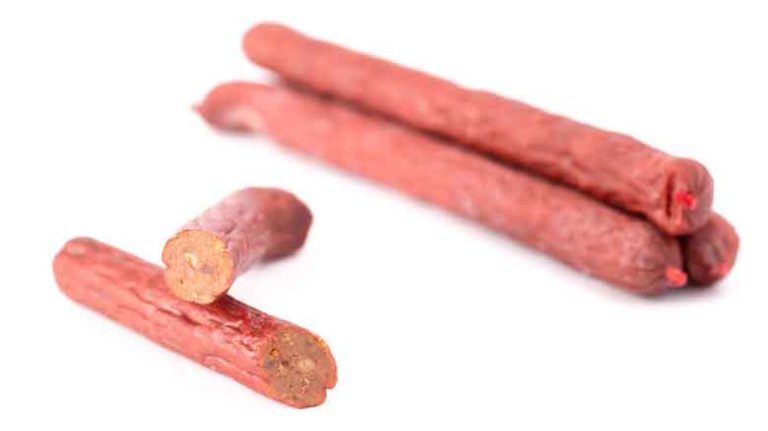
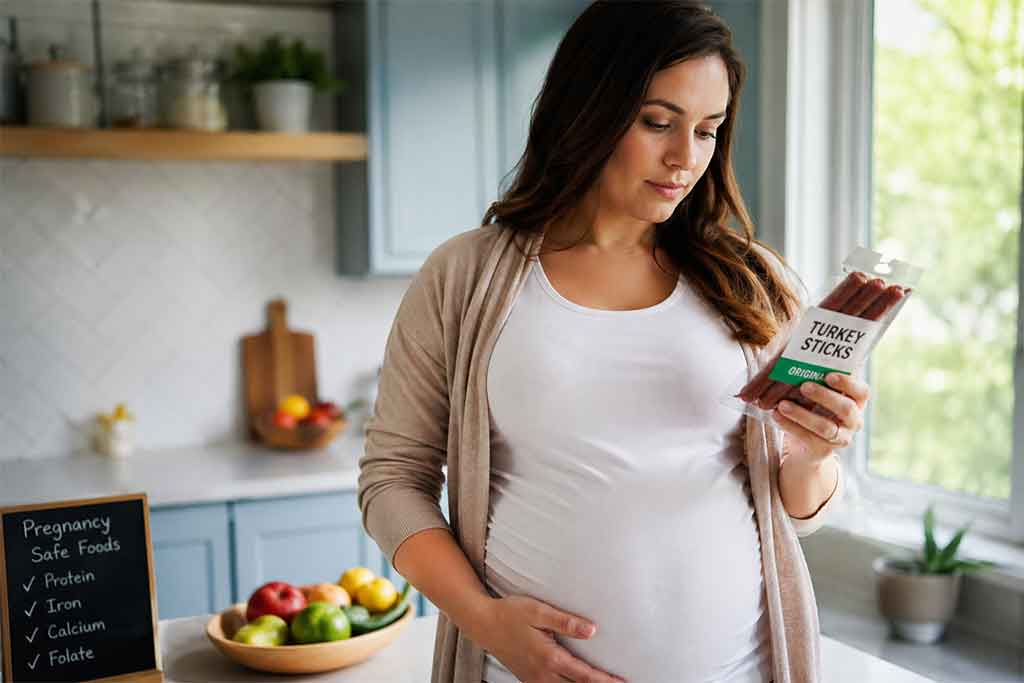

Yes, you can eat turkey sticks while pregnant, but only if they are properly handled, stored, and preferably heated before eating. The main concern is not the turkey itself, but how it is processed and stored, since deli-style or ready-to-eat meats can carry bacteria like Listeria or contain high levels of sodium and preservatives. So, the short answer to Can I eat turkey sticks while pregnant is: yes, but do it carefully and in moderation.
Pregnancy changes how your body reacts to foodborne bacteria, making food safety much more important than usual. That’s why even convenient snacks like turkey sticks need extra attention before you eat them.
Table of Contents
Are turkey sticks safe during pregnancy?
Turkey sticks are generally made from processed turkey meat, often dried, cured, or smoked. In most cases, they are considered ready-to-eat snacks. However, during pregnancy, “ready-to-eat” does not automatically mean “risk-free.”
When asking Can I eat turkey sticks while pregnant, the safety depends on a few things:
- How they are processed
- Whether they are fully cooked or cured properly
- How they are stored (refrigerated or shelf-stable)
- Whether they are reheated before consumption
If the turkey sticks are shelf-stable and commercially sealed, they are usually safer than deli-sliced meats. Still, health experts often recommend heating them until steaming hot to reduce the risk of bacterial contamination.
Risks to be aware of (Listeria, sodium, and preservatives)
One of the biggest concerns with processed meats during pregnancy is Listeria monocytogenes, a bacteria that can survive in refrigerated, ready-to-eat foods. Infection during pregnancy can lead to serious complications, including miscarriage, preterm birth, or infection in newborns.
This is why the question Can I eat turkey sticks while pregnant doesn’t have a simple yes or no answer—it depends heavily on food safety handling.
Other concerns include:
- High sodium levels: Turkey sticks are often very salty, which can contribute to water retention and high blood pressure.
- Nitrates and nitrites: These preservatives are used to maintain color and extend shelf life but may not be ideal in large amounts during pregnancy.
- Additives and flavoring agents: Some brands contain artificial ingredients that offer little nutritional benefit.
Because of these risks, moderation is key. Eating them occasionally is very different from making them a daily snack.
How to eat turkey sticks safely during pregnancy
If you still want to include turkey sticks in your diet, there are safer ways to do it. The goal is to reduce any risk of contamination while still enjoying convenience foods.
Here are some practical tips:
- Heat turkey sticks until they are steaming hot before eating
- Choose brands that are fully cooked and vacuum-sealed
- Check expiration dates and avoid any damaged packaging
- Store them properly in the refrigerator after opening
- Limit intake due to sodium and preservatives
Many healthcare professionals suggest that reheating deli or processed meats is one of the simplest ways to reduce risk. It may not sound convenient, but it significantly improves food safety.
So, if you’re still wondering Can I eat turkey sticks while pregnant, the safest approach is: yes, but heat them first and keep portions small.
Healthier alternatives for pregnancy snacks
If you’re looking for safer or more nutritious options, there are plenty of alternatives that can satisfy similar cravings without the same level of risk.
Some better choices include:
- Freshly cooked turkey or chicken slices
- Hard-boiled eggs
- Greek yogurt with fruit
- Nuts and seeds (in moderation)
- Cheese with whole grain crackers
These options provide more nutrients like protein, calcium, and healthy fats, which are important for fetal development.
Processed snacks like turkey sticks are fine occasionally, but pregnancy is a good time to prioritize whole, minimally processed foods.
When you should avoid turkey sticks
There are situations where it’s better to skip them entirely. You should avoid turkey sticks if:
- They have been sitting open for too long
- They are eaten cold without reheating
- You are unsure about storage conditions
- You already consume a lot of processed meats in your diet
In these cases, the risks outweigh the convenience. Pregnant individuals with weakened immune systems or high-risk pregnancies should be especially cautious.
Related concerns about processed meats in pregnancy
Turkey sticks fall into a broader category of processed meats, which are often discussed during pregnancy due to safety concerns. Many expectant mothers also ask about other similar snacks and deli products.
For example, some people wonder about spicy beef sticks or similar products, which carry similar risks related to preservatives and foodborne bacteria. You can read more about this in discussions like what happens if you eat Slim Jims while pregnant, which explains how highly processed meats can affect pregnancy health.
This helps put the question Can I eat turkey sticks while pregnant into a broader context: it’s not just about one food, but about understanding how processed meats fit into a pregnancy-safe diet overall.
Final thoughts
So, Can I eat turkey sticks while pregnant? Yes, but with caution. The safest approach is to heat them thoroughly, eat them in moderation, and choose high-quality products with minimal additives.
Pregnancy doesn’t mean you have to completely avoid convenient snacks like turkey sticks, but it does mean being more mindful about food safety. Small adjustments—like reheating and limiting intake—can make a big difference in reducing risk while still letting you enjoy the foods you like.