
How to Tell If Eggs Are Bad Before You Eat Them? Eggs usually stay fresh longer than many people think, but bad eggs can still happen if they are stored incorrectly or kept too long. The easiest way to tell if eggs are bad is by checking the smell, appearance, and freshness using a simple water test. A rotten egg often smells strong and sulfur-like immediately after cracking. If the egg white looks strange, watery, discolored, or the yolk breaks too easily, it is safer to throw it away.
Knowing how to tell if eggs are bad can help you avoid food poisoning, stomach pain, and wasting good food unnecessarily. In many cases, eggs are still safe even after the printed expiration date, but you should always inspect them carefully before cooking.
Table of Contents
Check the Smell First
The smell test is the fastest and most reliable method. Fresh eggs have almost no smell at all. Bad eggs give off a strong rotten odor that is hard to miss. Some people describe it as sulfur or spoiled garbage.
If you crack an egg into a bowl and notice a foul smell immediately, do not taste it. Throw it away right away and wash the bowl thoroughly.
This method works even if the shell looks perfectly normal from the outside.
Use the Egg Float Test
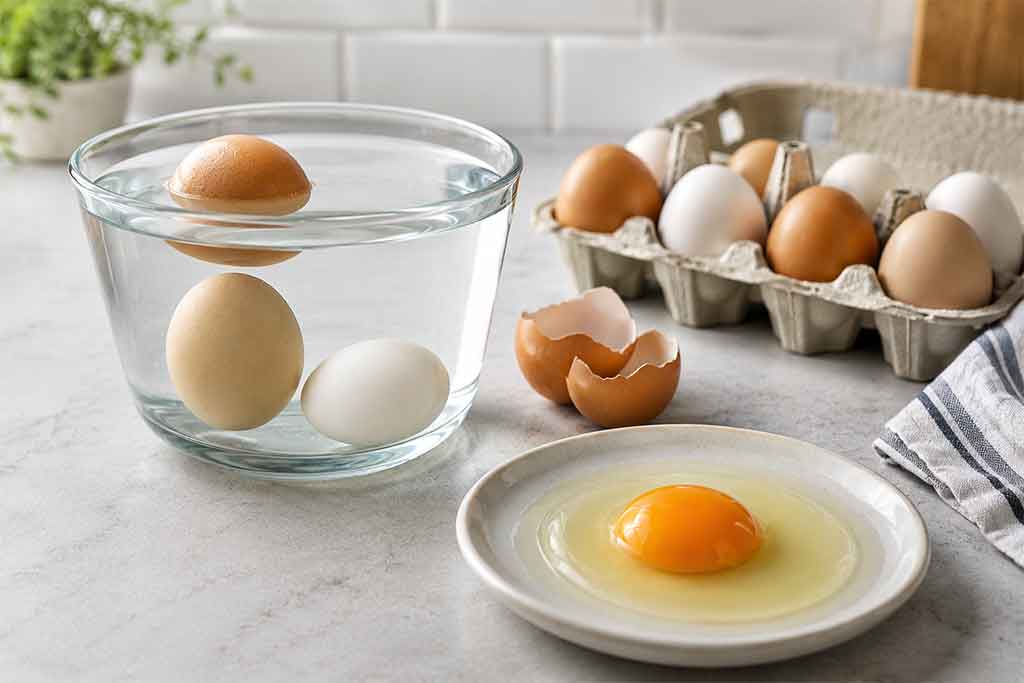
The float test is one of the most popular ways to check egg freshness. Fill a bowl or glass with cold water and gently place the egg inside.
- If the egg sinks and lays flat, it is very fresh.
- If it sinks but stands upright, it is older but usually still safe.
- If the egg floats to the top, it is likely bad and should be discarded.
Eggs float because air builds up inside the shell as moisture slowly escapes over time. More air means the egg is older.
While this test helps determine freshness, always combine it with the smell test for better accuracy.
Look Closely at the Egg White and Yolk
Fresh eggs have thick whites and firm yolks that sit high in the bowl. Older eggs become thinner and spread out more.
Here are signs an egg may be spoiled:
- Pink, green, or rainbow-colored egg whites
- Black or unusual spots inside the egg
- Extremely watery texture
- Powdery shell appearance
- Cracked shell with leaking liquid
A watery egg is not always dangerous, but if the appearance seems unusual together with a strange smell, avoid eating it.
Check the Expiration or Julian Date
Egg cartons usually include a sell-by date or Julian packing date. The Julian date is a three-digit number showing the day of the year the eggs were packed.
For example:
- 001 means January 1
- 100 means April 10
- 365 means December 31
Refrigerated eggs can often stay safe for 3 to 5 weeks after purchase when stored properly at a consistent cold temperature.
Still, dates alone should not be your only guide. Always inspect the egg before using it.
How to Store Eggs Properly
Proper storage makes a huge difference in egg freshness. Keep eggs refrigerated at or below 40°F (4°C). Store them inside the original carton instead of placing them in the refrigerator door.
The refrigerator door experiences temperature changes every time it opens, which can reduce freshness faster.
Also avoid washing eggs before storing them because removing the natural protective coating may increase bacterial risk.
If you often cook with dairy products too, you may also want to learn what happens if you eat expired yogurt after 7 days since spoiled refrigerated foods can sometimes cause similar digestive issues.
Can You Eat Eggs Past the Expiration Date?
Yes, sometimes you can. Eggs are often still good days or even weeks after the expiration date if they have been refrigerated properly.
That said, freshness decreases over time. Older eggs may not work as well for baking or poaching because the whites become thinner.
Never rely only on the printed date. The smell test and appearance are more important indicators.
What Happens If You Eat a Bad Egg?
Eating spoiled eggs may lead to food poisoning symptoms such as:
- Nausea
- Vomiting
- Diarrhea
- Stomach cramps
- Fever
In some cases, contaminated eggs may contain Salmonella bacteria. Symptoms can appear within hours or days after eating.
If you accidentally eat undercooked or questionable foods regularly, it is also useful to understand what happens if you eat undercooked chicken once because bacterial contamination risks are similar.
Do Brown Eggs Last Longer Than White Eggs?
No, shell color does not affect freshness or safety. Brown and white eggs spoil at roughly the same rate. The difference comes from the breed of chicken, not the quality of the egg.
Storage conditions matter much more than shell color.
Can Cracked Eggs Go Bad Faster?
Yes. Cracked eggs spoil more quickly because bacteria can enter through the damaged shell. If an egg cracks during transport, it is best to cook it immediately or throw it away if it smells unusual.
A damaged shell increases contamination risk significantly.
Common Myths About Bad Eggs
Many people believe all floating eggs are unsafe, but that is not always true. Floating simply means the egg is older. Some older eggs are still usable for baking if they smell and look normal.
Another myth is that refrigeration is unnecessary. In the United States, eggs should stay refrigerated because they are washed before sale, removing the natural protective layer.
Food safety myths can sometimes create unnecessary panic. Similar confusion also exists around mold and expired foods, especially when people wonder what happens if you eat moldy bread.
Final Thoughts
Learning how to tell if eggs are bad is simple once you know the signs. Start with the smell test, then inspect the texture and use the float test if needed. A fresh egg should smell neutral, look clean, and sink in water.
When in doubt, throw it out. Eating a questionable egg is never worth the risk of food poisoning.
Proper refrigeration, careful inspection, and basic food safety habits can help keep your meals safe while reducing unnecessary waste.