
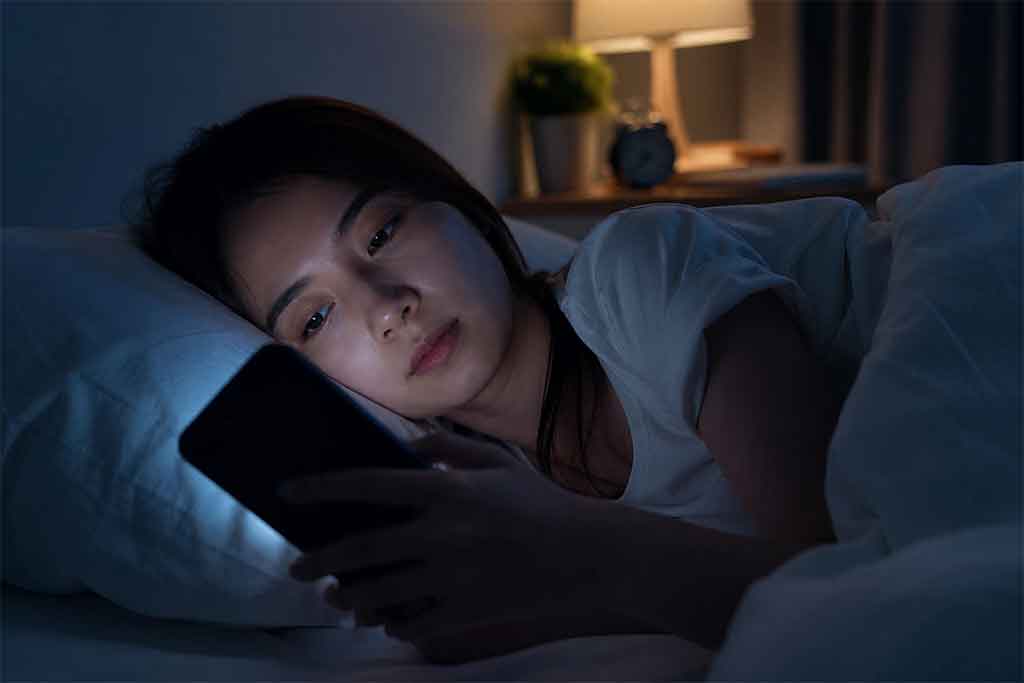

If you use your phone before bed every night, the most common result is poorer sleep quality. You may fall asleep later, wake up more often, and feel less refreshed in the morning. Nightly screen use can also affect mood, focus, and energy during the day. While it may seem harmless to scroll for “just a few minutes,” that habit often stretches longer than expected and trains your brain to stay alert when it should be winding down.
Many people notice the effects slowly. At first, it may only mean sleeping 20 minutes later. Over time, it can become trouble falling asleep, checking notifications during the night, or waking up tired. If this sounds familiar, your bedtime phone routine may be playing a bigger role than you think.
Table of Contents
Phone Light Can Delay Sleep
One of the biggest reasons what happens if you use your phone before bed every night matters is light exposure. Phones emit blue-enriched light that can reduce melatonin production. Melatonin is the hormone that helps signal sleep time to your body.
When your brain sees bright light late at night, it may think it is still daytime. That can delay sleepiness and shift your natural body clock later. You may end up staying awake longer even when you feel tired.
If you already struggle with sleep schedules, reading about waking up at 5am every day for a week can show how routines shape energy levels.
Your Brain Stays Stimulated
Phones are not just sources of light. They are also designed to keep attention. Social media, short videos, games, messages, and news updates all stimulate the brain. Instead of slowing down, your mind stays engaged.
Even peaceful activities like reading comments or browsing products can trigger emotional reactions or curiosity. Suddenly, your brain is active again when it should be shifting into rest mode.
This is why many people say they are tired but cannot sleep after using their phone in bed. The body is ready, but the mind is still “on.”
You May Sleep Less Than You Realize
A common pattern is bedtime procrastination. You plan to sleep at 11:00 PM, pick up your phone for five minutes, and next thing you know it is midnight.
Losing 30 to 60 minutes of sleep each night adds up quickly. Over a week, that can mean several hours of missed rest. Chronic sleep loss may lead to brain fog, irritability, lower motivation, and cravings for sugary foods.
If sleep deprivation continues, it can feel similar to pulling an all-nighter, though on a smaller scale each day. You can compare that with what happens when you stay up all night.
Morning Fatigue Gets Worse
Another answer to what happens if you use your phone before bed every night is that mornings often become harder. You may snooze alarms more often, feel groggy, or need extra caffeine just to function.
That happens because late-night screen habits can reduce both sleep quantity and sleep quality. Even if you were in bed for eight hours, fragmented or delayed sleep can still leave you drained.
Many people blame stress or work when the real issue starts the night before.
Mood and Focus Can Take a Hit
Sleep and mental sharpness are closely linked. If you repeatedly use your phone before sleep and rest poorly, concentration can drop. Tasks feel slower. Small annoyances feel bigger. Patience gets shorter.
Students and professionals often notice this first during reading, meetings, or problem-solving. It becomes harder to stay present because the brain has not fully recovered overnight.
In some cases, late-night doomscrolling also increases anxiety. Ending the day with stressful content is rarely calming.
It Can Become a Habit Loop
The issue is not only the device itself. It is the routine built around it. Bed becomes linked with scrolling, tapping, checking, and entertainment instead of sleep.
Once that association forms, simply lying down may trigger the urge to grab your phone. This makes it harder to relax naturally.
That same habit loop happens in many lifestyle routines. For example, repetitive behaviors around health and comfort often go unnoticed until they create problems, much like sitting for 10 hours a day.
How to Use Your Phone Without Ruining Sleep
You do not always need to quit using your phone at night completely. Small changes can help a lot:
Set a cutoff time: Stop scrolling 30 to 60 minutes before bed.
Use night mode: Dim brightness and reduce blue light.
Choose calm content: Music, podcasts, or low-stimulation reading are better than endless feeds.
Charge it away from the bed: This removes the temptation to keep checking it.
Use an alarm clock: If your phone is only there as an alarm, replace it.
Some people also rely on supplements when sleep gets messy, but habits usually matter more. If curious, see what happens if you take too much melatonin.
Final Answer
What happens if you use your phone before bed every night? Most likely, you sleep later, sleep worse, and feel more tired the next day. Over time, it can affect mood, focus, and overall health. The good news is that even modest changes to your nighttime routine can improve sleep surprisingly fast. Sometimes the easiest sleep fix is simply putting the phone down a little earlier.