What If The Titanic Hadn’t Sunk? How History Could Have Changed
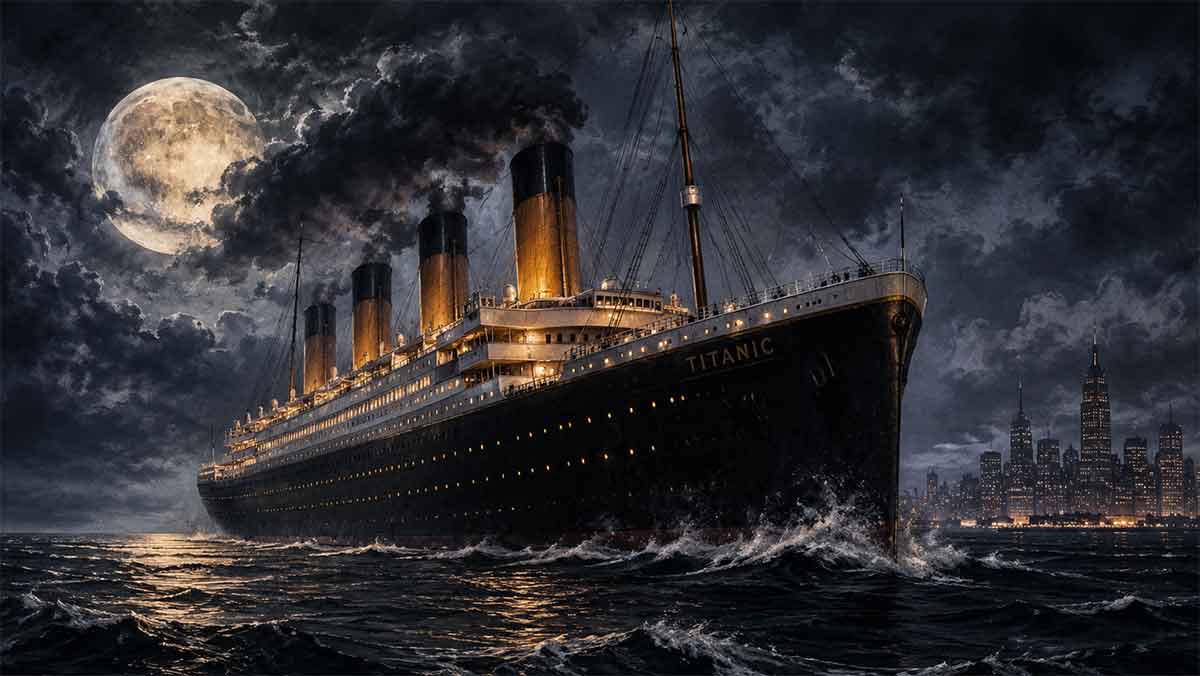
The RMS Titanic would have arrived safely in New York Harbour on April 17th, 1912, causing a huge amount of excitement from the crowds of people, newspapers and families awaiting the ship. This ship would have become seen as a massive feat of engineering.
Sounds like a completely different story!
The Titanic was meant to be the future of ocean travel. A huge, lavish, technologically advanced ship that was associated with modern engineering. It tragically sank on April 15th 1912, below the freezing waters of the North Atlantic. Taking the lives of over 1,500 people.
What if it didn’t sink?
Would the ship have become one of the most famous passenger ships in history? What effect would it have had on maritime safety regulations? Could it have really changed the world we live in today?
Let’s take a look at this interesting alternate history scenario!
1. Became The Most Famous Ocean Liner In The World
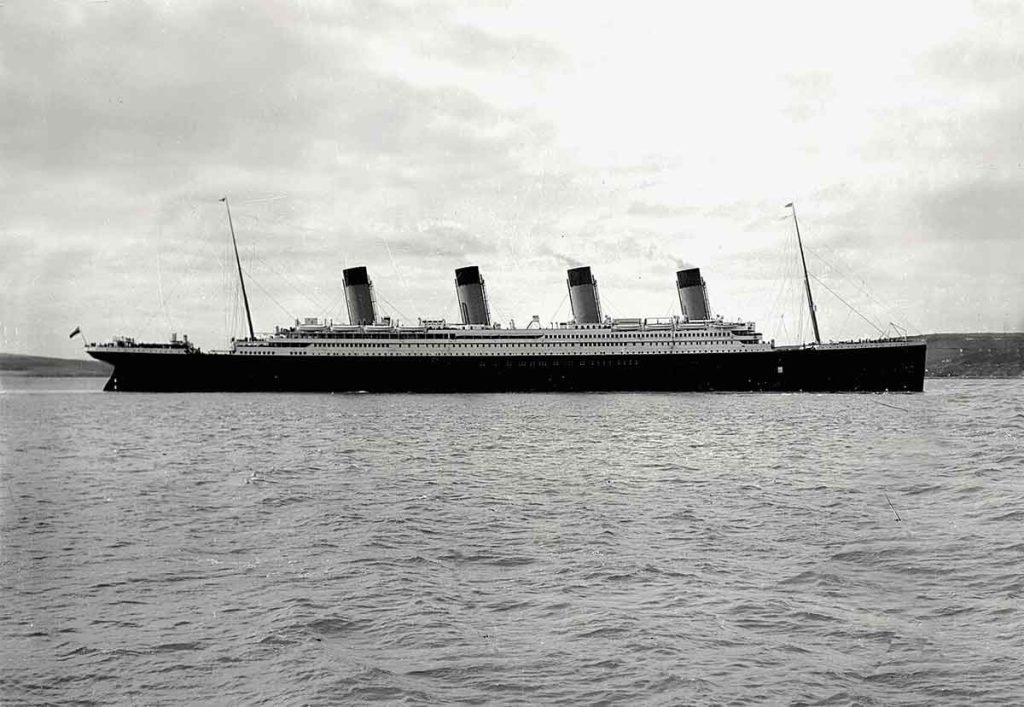
Let’s start by looking at what would have happened directly after the Titanic completed her maiden voyage.
The ship left Southampton, England on April 10th 1912 with around 2,240 passengers and crew onboard. The ship was heading to New York City to showcase the amazing capabilities of modern ocean liners.
If the ship had dodged the iceberg or caused no real damage, there would have been a huge amount of excitement.
News articles would have celebrated the success of her maiden voyage. Stories would have been shared about the luxurious accommodations onboard by the rich passengers. Shippers would have been impressed by the size of the ship.
The Titanic wasn’t an ordinary ship. It was part of the Olympic class of liners run by the White Star Line. Along with her Olympic and Britannic sisters.
This could have made the ship become famous extremely quickly.
The ship could have become synonymous with luxury, advancement and British engineering. A trip on-board could have been like flying first class with a prestigious airline.
However, the ship became famous before her maiden voyage. So it would have just boosted her reputation.
2. The White Star Line Would Have Been Boosted
The survival of the Titanic would have likely been great news for the White Star Line.
In the beginning of the 20th century the shipping industry was very competitive between large companies. The White Star Line were in competition with powerful companies like Cunard.
A successful Titanic would have helped boost the company.
Her Olympic class could have become even more appealing to passengers wanting a comfortable, impressive and reliable transatlantic journey.
The line could have used the success of the Titanic in advertisement to show that they had the best engineering and passenger service.
However, would this have made them dominate the market?
No.
The shipping industry was under massive pressure financially, passenger demands were changing and eventually aviation took over. Even if the Titanic hadn’t sunk the company still would have been in competition.
Their future would have depended on more than just one successful ship.
However, the Titanic could have helped give them a big advantage during a very competitive time.
3. Maritime Safety Regulations May Have Been Much Slower To Improve
This is where the alternate history gets interesting.
The Titanic disaster wasn’t just an accident with an iceberg. It highlighted some serious issues with maritime safety during the early 20th century.
One of the biggest issues was the lack of lifeboats.
The Titanic had enough lifeboats to fit around 1,178 people onboard. However, there were around 2,240 people onboard.
The disaster also raised questions about iceberg warnings, radio communication, emergency procedures and ship operator responsibilities.
The United States Senate investigated the sinking of the Titanic, along with British authorities.
This helped push the international shipping industry to improve their safety standards.
The first International Convention for the Safety of Life at Sea (SOLAS) was adopted in 1914 due to the Titanic disaster.
If the Titanic had survived, there would have been no immediate outrage from the public. Governments may not have felt the same pressure to make huge changes.
Although it may not have stayed the same forever, other accidents and advancements in technology could have still pushed for improvements.
However, some changes may have taken longer to implement internationally.
Overall,
Although there may have been over 1,500 lives saved in 1912, the removal of the Titanic from history may have slowed down the improvements in safety.
4. International Ice Patrol May Not Have Been Created
Before the Titanic disaster many ships sailed through areas with lots of floating icebergs.
The Titanic received many iceberg warnings but these didn’t help prevent the collision.
After the disaster, the United States and other maritime countries supported better iceberg monitoring.
The International Ice Patrol was created in 1914 to monitor icebergs in the North Atlantic. Giving ships useful information to avoid dangerous areas.
However, without the Titanic sinking, this may have taken longer to create.
Although iceberg monitoring would have become increasingly important over time, the disaster gave governments a strong reason to work together to tackle the issue. As individual shipping companies couldn’t effectively solve the problem.
The Titanic surviving may have delayed this.
5. Used In World War I
This could have been an interesting outcome.
World War I started in 1914, just two years after the Titanic’s maiden voyage.
If the ship had survived then it could have had a very different future.
Large ocean liners were an asset during warfare. Some were turned into troopships or hospital ships depending on their design.
The Titanic could have been used for military purposes.
Her huge size and capacity could have made her a good choice for moving troops across the Atlantic.
However,
The ship was mainly designed as a luxury liner. Major changes would have needed to be made to turn her into a war ship. Her use would have depended on military needs, government decisions and the state of the ship.
She may have still been used in the shipping industry.
If she had been turned into a troopship then she could have become famous for a completely different reason.
Rather than being remembered for her tragic maiden voyage, she could have been remembered for transporting soldiers during one of the most devastating conflicts in the 20 th century.
6. Survived For Decades But Not Forever
Would the Titanic still exist today?
Probably not.
Even if she hadn’t collided with the iceberg she would have eventually become old. With expensive repairs, changing safety regulations and newer ships coming into the market.
Her sister ship, the Britannic was requisitioned as a hospital ship during World War I. However, she sank in 1916 in the Aegean Sea after hitting a mine.
The Olympic had a much longer career. Eventually retiring in 1935 and being dismantled in 1937.
The Titanic could have had a similar fate.
Maybe she would have had a long career transporting passengers during the 1910’s and 1920’s. However, she would have become very expensive to run.
By the 1930’s she may have retired and been sold for scrap.
Alternatively, she could have become a museum ship.
Imagine walking around her beautiful staircase, dining halls and first class suites in a modern harbour.
This would have been a very different experience to visiting a memorial exhibition.
However, it would have taken a lot of money to preserve such a huge ocean liner.
7. Probably Never Becomes The Icon We Know Today
Perhaps the biggest difference would be the impact on popular culture.
The Titanic became famous due to the incredible ambition, human tragedy, social inequality and terrifying power of nature.
It caused countless books, documentaries, exhibitions and films to be created.
The 1997 film ‘Titanic’ directed by James Cameron is one of the most recognisable. It introduced the disaster to a new generation through a romantic plot.
However, if the Titanic had successfully completed her maiden voyage,
It is almost certain that James Cameron wouldn’t have made the film.
There would have been no famous shipwreck to recreate, no dramatic final moments under the Atlantic and no historical tragedy to centre the plot around.
The Titanic may have been featured in documentaries about luxury liners and the history of transport.
However, she would have probably not become as iconic.
She may have become famous for her amazing engineering, design and place in maritime history. Like many other historic ships.
The name Titanic may have also had a different meaning attached to it.
Today, the word often represents ambitiousness leading to disaster. However, without the tragedy it could have just represented the pinnacle of early 20 th century engineering.
8. Would The World Really Be Better?
This is probably the most complex question.
From a human perspective the answer is obvious.
Over 1,500 lives would have been saved. Families wouldn’t have suffered the devastation of losing their loved ones and hundreds of passengers would have continued their journeys to their new opportunities in America.
This would have made the world a better place for thousands of people.
However, history rarely runs this smoothly.
The Titanic disaster highlighted issues that had been present for a long time. It caused governments, shipping companies and maritime authorities to rethink passenger safety.
Without the tragedy, similar changes may have been made after another maritime disaster.
Maybe another ship would have had a similar disaster before governments decided to improve lifeboat requirements and communication standards.
We’ll never know.
All we can say is that the Titanic disaster helped speed up important conversations about safety. The impact of the disaster went far beyond the ship.
It also shows us that just because technology is advancing doesn’t mean humans are.
A beautifully designed, incredibly expensive and technologically advanced ship can still have serious issues when it comes to preparing for emergencies.
The Titanic showed us that we shouldn’t ever get too confident with our engineering.
Conclusion
So, if the Titanic hadn’t sunk,
It could have become one of the most successful ocean liners of her generation. Boosting the White Star Lines reputation. It could have been used during World War I and transported passengers for several decades. The name could have become synonymous with luxury and amazing engineering.
However,
Maritime safety regulations may have improved slower, iceberg monitoring internationally may have taken a different route and one of the most recognised historical stories of the 20 th century may not have happened.
Although this is an alternate history scenario, we can’t be 100% sure that everything would have changed if she survived.
One thing we can be sure of is that the historical importance of the Titanic goes far beyond her impressive size and luxurious design.
The Titanic reminds us that progress means nothing if you don’t consider safety.
Perhaps the most interesting thing to consider,
How many lives could have been saved if the lessons from maritime safety had been considered?
References and credible sources
The article draws on historical information from the following institutions:
1. NOAA – R.M.S. Titanic: Historical background, maiden voyage, passengers, and the sinking.
https://www.noaa.gov/rms-titanic
2. International Maritime Organization (IMO) – SOLAS Convention: The development of international maritime safety regulations following the Titanic disaster.
https://www.imo.org/en/about/conventions/pages/international-convention-for-the-safety-of-life-at-sea-%28solas%29%2C-1974.aspx
3. The National Archives (UK) – Passengers on the Titanic: Passenger history, lifeboat shortages, rescue efforts, and reactions to the disaster.
https://www.nationalarchives.gov.uk/education/teaching-resources/passengers-on-the-titanic/
4. Smithsonian Institution – The RMS Titanic: Technical specifications, maiden voyage, and historical details.
https://www.si.edu/spotlight/titanic
5. Woods Hole Oceanographic Institution – RMS Titanic: Historical information, wreck discovery, and underwater exploration.
https://www.whoi.edu/ocean-learning-hub/ocean-topics/ocean-human-lives/underwater-archaeology/rms-titanic/