
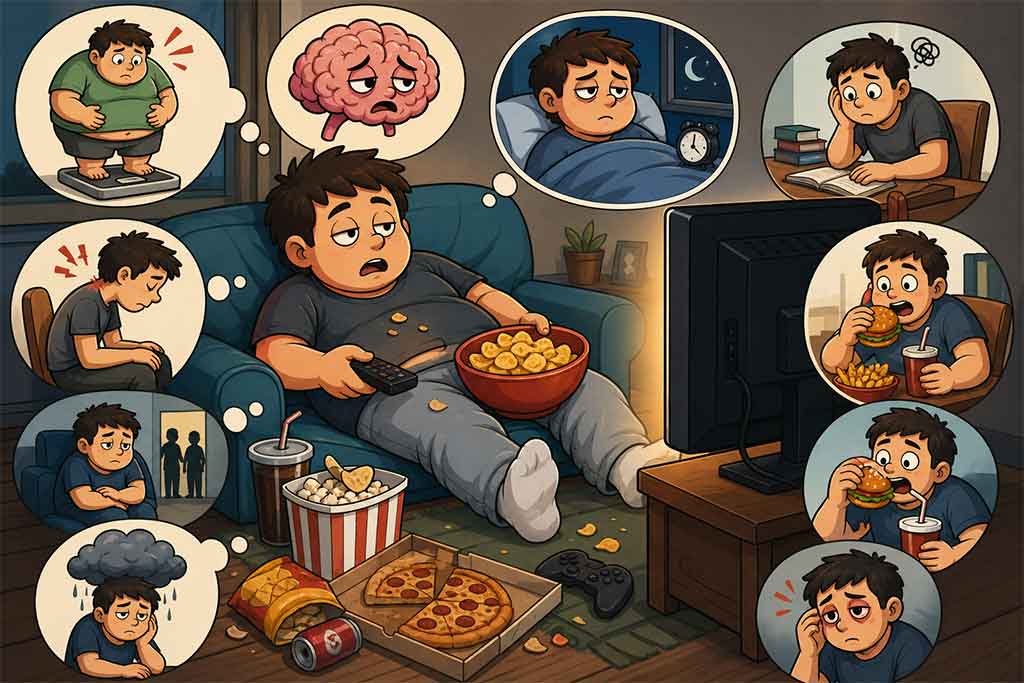

Watching TV all day every day can seriously affect your body, mind, and lifestyle. In the short term, it might feel relaxing or entertaining. But over time, it can lead to physical health issues, mental fatigue, poor sleep, and even social isolation. The habit may seem harmless at first, yet it slowly builds into something that impacts your overall well-being.
If you’re wondering what happens if you watch TV all day every day, the answer isn’t just about “wasting time.” It goes deeper. From your brain function to your posture, everything starts to shift.
Table of Contents
Physical Health Starts to Decline
Your body is designed to move, not stay still for hours. Sitting in front of a screen all day reduces physical activity to almost zero. Over time, this leads to weight gain, poor circulation, and even muscle stiffness.
When you stay sedentary for long periods, your metabolism slows down. Calories don’t burn as efficiently, which can increase the risk of obesity. This is similar to what happens in situations like what happens if you sit for 10 hours a day, where inactivity creates long-term health concerns.
Another issue is posture. Most people don’t sit properly while watching TV. Slouching becomes a habit, leading to back pain and neck strain. Over months or years, this can develop into chronic discomfort.
Your Brain Becomes Less Active
Too much passive entertainment reduces mental sharpness. Watching TV requires minimal effort from your brain compared to reading, problem-solving, or even having conversations.
When you watch TV all day every day, your brain gets used to receiving constant stimulation without needing to think deeply. This can weaken focus, reduce creativity, and make it harder to stay engaged in real-life tasks.
It’s not that TV is bad. The problem is overconsumption. Your brain needs variety. Without it, cognitive function may slowly decline.
Sleep Quality Gets Worse
Screen exposure affects your natural sleep cycle. Watching TV for hours, especially at night, interferes with melatonin production. That’s the hormone responsible for making you feel sleepy.
This is very similar to the effects described in what happens if you use your phone before bed every night, where screen time disrupts sleep patterns.
When your sleep cycle gets disturbed, you may experience insomnia, fatigue, or irregular sleeping hours. Over time, poor sleep affects mood, memory, and overall health.
You May Feel Mentally Drained
Too much TV can actually make you feel tired instead of relaxed. While it seems like a way to unwind, binge-watching for hours often leads to mental exhaustion.
Your brain processes a lot of visual and audio information during TV sessions. Without breaks, this overload can make you feel sluggish, unfocused, and even irritable.
Instead of feeling refreshed, you might notice that you’re more tired after a full day of watching TV than after doing something active.
Social Life Takes a Hit
Spending all day in front of a screen reduces real-world interaction. Over time, this can lead to loneliness and social disconnection.
Human interaction is important for emotional health. When TV replaces conversations, relationships may weaken. You might find yourself avoiding social situations or feeling uncomfortable in them.
This effect can feel similar to isolation scenarios like what happens if you don’t talk to anyone for 3 days, where lack of interaction impacts mood and mental clarity.
Productivity Drops Significantly
Time spent watching TV all day every day replaces time for growth. Whether it’s work, learning, or personal goals, everything takes a backseat.
Even if you start with “just one episode,” it often turns into hours. This habit reduces motivation to do productive activities. Over time, it can affect career progress, skills, and even financial stability.
The biggest issue is not just lost time. It’s the missed opportunities that come with it.
Your Eating Habits May Get Worse
TV watching often goes hand-in-hand with mindless eating. Snacks become part of the routine, and portion control disappears.
When your attention is on the screen, you’re less aware of how much you’re eating. This can lead to overeating and unhealthy food choices.
It’s a pattern similar to situations like what happens if you eat too much sugar in one sitting, where consumption increases without awareness.
Over time, this habit contributes to weight gain and other health problems.
Your Mood Can Be Affected
Excessive TV watching can impact emotional balance. The type of content you consume plays a big role.
Watching negative news, intense dramas, or stressful content all day can increase anxiety or sadness. On the other hand, even light content, when consumed excessively, can create a sense of emptiness or boredom.
Balance is key. Without it, your mood may become unstable.
Eye Strain and Vision Problems
Long hours in front of a screen can strain your eyes. Symptoms include dryness, irritation, blurred vision, and headaches.
Your eyes are not meant to focus on screens for extended periods without breaks. Watching TV all day every day increases the risk of digital eye strain.
This issue becomes more noticeable over time, especially if lighting and screen distance are not ideal.
Reality and Expectations May Shift
Too much TV can influence how you see the real world. Shows often present exaggerated lifestyles, unrealistic scenarios, or dramatized conflicts.
When you consume this content daily, it can shape your expectations about life, relationships, and success. You may start comparing reality to fiction, which leads to dissatisfaction.
This subtle effect builds gradually but can impact how you think and feel.
Is Watching TV All Day Ever Okay?
In rare cases, it’s fine for short periods. For example, during illness, recovery, or a rest day, extended TV time isn’t harmful.
The problem starts when it becomes a daily habit. Watching TV all day every day removes balance from your routine.
Entertainment should be part of life, not the entire structure of it.
How Much TV Is Too Much?
Moderation is the key. Most experts suggest limiting screen time to a few hours per day outside of work-related use.
If TV starts replacing sleep, physical activity, or social interaction, it’s a sign that it’s too much.
Pay attention to how you feel. If you notice fatigue, low motivation, or poor sleep, your screen habits may need adjustment.
Simple Ways to Break the Habit
Small changes can make a big difference. You don’t need to quit TV completely.
Start by setting time limits. Choose specific shows instead of endlessly browsing. Take breaks every hour to move around.
Replace some TV time with other activities like reading, walking, or talking to friends. Even small shifts can improve your overall health and mood.
Final Thoughts
Watching TV all day every day might feel harmless, but it comes with real consequences. From physical health issues to mental fatigue and reduced productivity, the effects build over time.
The goal isn’t to eliminate TV. It’s to use it wisely. Balance your screen time with movement, social interaction, and meaningful activities.
Once you find that balance, TV becomes what it should be: entertainment, not a lifestyle.