
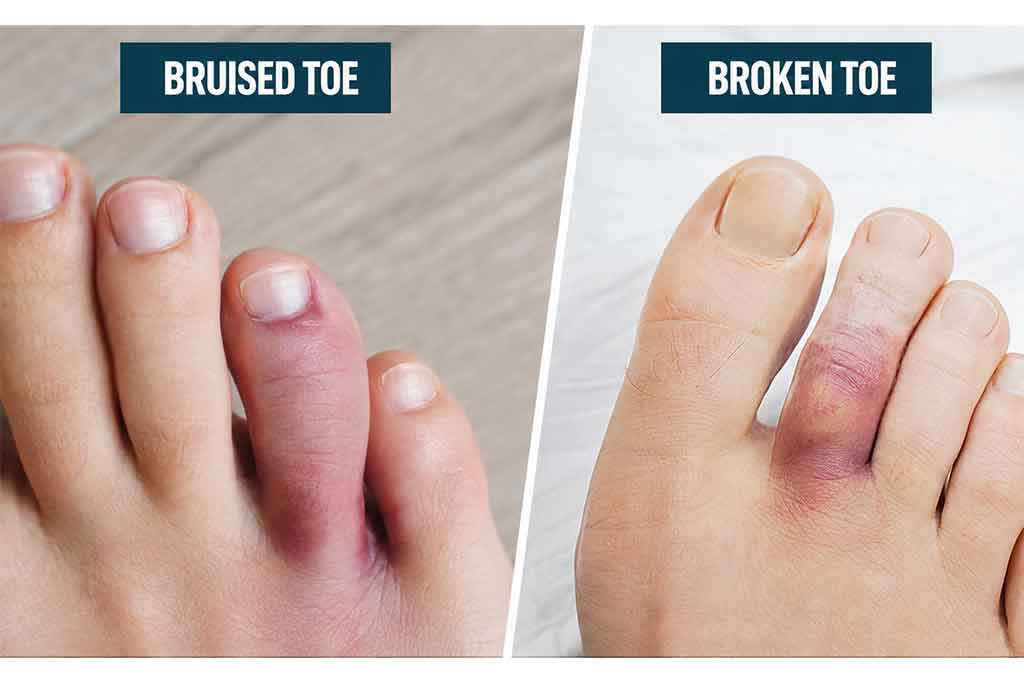

If you slammed your toe into furniture, dropped something heavy on it, or twisted your foot awkwardly, you are probably asking yourself one thing: how do I know if my toe is broken or just bruised? The short answer is this: a bruised toe usually causes mild to moderate pain, swelling, and discoloration that slowly improves within a few days. A broken toe often causes intense pain, difficulty walking, severe swelling, stiffness, or even a crooked-looking toe.
In many cases, both injuries can look similar at first. That is why people often confuse a fractured toe with a bruise. The biggest difference is usually the level of pain, mobility, and how long symptoms last. If the pain gets worse instead of better, or if you cannot put weight on your foot, there is a higher chance the toe is broken.
Toe injuries are extremely common. Most people hit their toes at least once in their lives, especially the pinky toe. Some injuries heal on their own, while others need medical treatment to avoid long-term problems.
Knowing the difference between a broken toe and a bruised toe can help you decide whether you should rest at home or see a doctor immediately.
Table of Contents
What Does a Bruised Toe Feel Like?
A bruised toe happens when small blood vessels under the skin break after an impact. This causes discoloration, tenderness, and swelling. The injury affects soft tissue rather than the bone itself.
Common bruised toe symptoms include:
- Mild or moderate pain
- Swelling around the toe
- Blue, purple, or dark discoloration
- Tenderness when touched
- Pain that improves after a day or two
- Ability to still walk, even if uncomfortable
Most bruised toes heal without medical treatment. Ice, rest, and comfortable shoes are usually enough.
If you have ever wondered why swelling and discoloration happen after an injury, the body reacts similarly in other situations too. For example, what happens if a blood vessel in your eye pops also involves broken blood vessels creating visible discoloration.
What Does a Broken Toe Feel Like?
A broken toe means the bone has cracked or fractured. Some breaks are tiny hairline fractures, while others are severe enough to shift the bone out of place.
Symptoms of a broken toe may include:
- Sharp or throbbing pain immediately after injury
- Severe swelling
- Bruising that spreads quickly
- Difficulty walking
- Pain when putting weight on the foot
- A crunching sound during injury
- Visible deformity or crooked toe
- Toe stiffness
- Numbness in severe cases
The pain from a fractured toe is usually stronger and lasts longer than a simple bruise. In some cases, the toe may look normal at first, which is why people sometimes ignore fractures.
Key Differences Between a Broken Toe and a Bruised Toe
Pain Level
A bruised toe often hurts but remains manageable. A broken toe usually causes sharp pain that gets worse when walking or touching the area.
Swelling
Bruised toes swell mildly. Broken toes often swell significantly and stay swollen longer.
Mobility
You can usually move a bruised toe, even if it feels sore. A broken toe may feel stiff or impossible to move comfortably.
Appearance
A bruise causes discoloration under the skin. A fracture may also cause the toe to look bent, shortened, or misaligned.
Healing Time
Bruised toes often improve within days. Broken toes can take four to six weeks or longer to heal fully.
Can You Walk on a Broken Toe?
Yes, some people can still walk with a broken toe, especially if the fracture is small. That is one reason toe fractures often go untreated.
However, being able to walk does not automatically mean the toe is only bruised. Many people continue normal activities even with fractures, which can delay healing.
If walking causes severe pain, limping, or pressure sensitivity, you should get the injury checked.
When Should You See a Doctor?
You should seek medical attention if:
- The toe looks crooked
- You cannot walk normally
- The pain becomes severe
- Swelling keeps increasing
- The nail is badly damaged
- There is bleeding under the nail
- You have numbness
- Symptoms do not improve after a few days
- You suspect the big toe is fractured
The big toe is especially important because it helps with balance and walking. A fracture there may require special treatment.
Ignoring injuries can sometimes create bigger problems later. Similar to how strep throat goes untreated, delaying care for certain conditions can lead to complications.
How Doctors Diagnose a Broken Toe
A doctor usually starts with a physical examination. They check for swelling, bruising, tenderness, and toe alignment.
In many cases, an X-ray is needed to confirm whether the toe bone is fractured.
X-rays help doctors determine:
- The location of the fracture
- Whether the bone shifted
- The severity of the break
- If multiple bones are involved
Without imaging, it can sometimes be difficult to know if your toe is broken or just bruised.
How to Treat a Bruised Toe
Most bruised toes heal with home care.
Rest
Avoid activities that put pressure on the injured toe.
Ice
Apply ice for 15 to 20 minutes every few hours during the first 48 hours.
Elevation
Keep your foot elevated to reduce swelling.
Comfortable Footwear
Wear shoes with a wide toe box to avoid extra pressure.
Pain Relief
Over-the-counter pain medicine may help reduce discomfort.
Most bruises improve noticeably within one week.
How to Treat a Broken Toe
Treatment depends on how severe the fracture is.
Buddy Taping
Doctors often tape the broken toe to the neighboring toe for support.
Rigid Shoes
Stiff-soled shoes help protect the toe during healing.
Rest and Ice
Reducing movement and swelling helps recovery.
Surgery
Severe fractures with displaced bones may require surgery.
Never ignore severe pain or deformity. Improper healing can cause long-term walking problems.
How Long Does a Bruised Toe Take to Heal?
A bruised toe often heals within a few days to two weeks, depending on the severity.
Mild bruises may stop hurting after only a few days. Deep bruises with swelling can take longer.
Healing also depends on how much pressure you continue putting on the foot.
How Long Does a Broken Toe Take to Heal?
A broken toe usually takes four to six weeks to heal. Severe fractures may take longer.
Even after the bone heals, mild swelling and stiffness can continue for months in some cases.
Athletes and active people may need extra recovery time before returning to sports.
Can a Broken Toe Heal on Its Own?
Yes, some broken toes heal naturally with rest and protection. Small fractures often recover without surgery.
However, not all fractures heal correctly on their own. If the bone heals in the wrong position, you may develop:
- Chronic pain
- Toe deformity
- Arthritis
- Difficulty walking
- Balance problems
That is why persistent symptoms should never be ignored.
What Happens If You Ignore a Broken Toe?
Ignoring a fractured toe can make the injury worse. Some people assume the pain will disappear eventually, but untreated fractures sometimes heal improperly.
Possible complications include:
- Bone misalignment
- Permanent stiffness
- Chronic swelling
- Nerve irritation
- Joint damage
Many health issues become harder to fix when ignored for too long. For example, what happens if waste is not removed from the body shows how untreated physical problems can affect overall health.
Can Toenail Damage Mean the Toe Is Broken?
Sometimes. A heavy impact may injure both the nail and the bone underneath.
Signs of serious nail injury include:
- Black or dark blood under the nail
- Nail lifting
- Severe pressure pain
- Cracked nail
Blood trapped under the nail can create intense pressure. Doctors may drain the blood if necessary.
Is the Big Toe More Serious?
Yes. The big toe handles much of your balance and walking force. Fractures there often require more careful treatment.
A broken big toe can make walking difficult for weeks. Some cases require casting or surgery.
If your big toe injury causes severe swelling or instability, seek medical care promptly.
Can Kids Break Their Toes Easily?
Children can absolutely fracture their toes. Sports, running barefoot, and rough play increase the risk.
Kids may not always explain pain clearly, so parents should watch for:
- Limping
- Swelling
- Crying when touching the toe
- Refusal to wear shoes
If symptoms continue beyond a couple of days, medical evaluation is a good idea.
How to Prevent Toe Injuries
Toe injuries are common but often preventable.
Wear Proper Footwear
Supportive shoes reduce the chance of accidental impact.
Keep Floors Clear
Many broken toes happen from stubbing feet on furniture or clutter.
Use Caution During Sports
Protective footwear matters during athletic activities.
Avoid Walking Barefoot in Risky Areas
Construction zones, garages, and crowded spaces increase injury risk.
Small habits can prevent annoying injuries. In the same way, avoiding neglect matters in other daily situations too, such as what happens if you don’t change your oil.
Home Remedies That May Help
Several simple methods may ease discomfort while healing:
- Ice packs
- Elevation
- Compression wraps
- Warm soaks after swelling decreases
- Gentle stretching once pain improves
Avoid aggressive massage during the early stages because it may increase inflammation.
Common Myths About Broken Toes
If You Can Walk, It Is Not Broken
False. Many people walk on fractured toes.
Bruising Always Means a Break
False. Bruising happens with soft tissue injuries too.
You Cannot Do Anything for a Broken Toe
False. Proper support helps healing and reduces complications.
Only Major Accidents Cause Toe Fractures
False. Even stubbing your toe hard can break a bone.
Can You Exercise With a Toe Injury?
It depends on the severity.
Low-impact activities like swimming may be okay after pain improves. Running, jumping, or heavy lifting should usually wait until healing progresses.
Pushing through pain too early may delay recovery.
Signs Your Toe Is Healing
Positive healing signs include:
- Reduced swelling
- Less discoloration
- Improved mobility
- Decreasing pain
- Better ability to walk
If symptoms suddenly worsen again, contact a doctor.
Final Thoughts
If you are wondering how do I know if my toe is broken or just bruised, the main clues are pain severity, swelling, mobility, and healing time. Bruised toes usually improve fairly quickly, while broken toes often stay painful longer and may affect your ability to walk normally.
Minor toe injuries can often heal at home with rest, ice, and protection. However, severe pain, crooked appearance, numbness, or ongoing swelling should never be ignored.
When in doubt, getting an X-ray is the safest way to know whether you are dealing with a bruise or a fracture. Early treatment can prevent long-term problems and help your toe heal properly.