

What Happens If Your Dog Eats Dark Chocolate? Symptoms, Risks & What To Do
Imagine leaving a piece of dark chocolate on the coffee table for just a few minutes. You return to find an empty wrapper, a guilty-looking dog, and absolutely no idea how much chocolate has disappeared.
It’s an unsettling situation, especially if you’re not sure whether your dog has eaten enough to become sick.
So, what happens if a dog eats dark chocolate? The short answer is that it can cause chocolate poisoning, a potentially serious condition that affects a dog’s heart, nervous system, and digestive system. In severe cases, it can even become life-threatening.
Dark chocolate deserves particular attention because it contains significantly higher concentrations of toxic compounds than milk chocolate. Even an amount that seems relatively small to a person can be dangerous for a smaller dog.
The good news is that prompt veterinary attention can make a considerable difference. Understanding the risks, recognizing early warning signs, and knowing what to do can help you protect your dog when an accident happens.
Let’s look at what actually happens inside a dog’s body after eating dark chocolate and how you should respond.
Why Is Dark Chocolate Dangerous for Dogs?
Chocolate contains two naturally occurring stimulants called theobromine and caffeine. Both belong to a group of substances known as methylxanthines.
Humans can process these compounds relatively efficiently. Dogs, however, metabolize them much more slowly. As a result, the substances can accumulate in their bodies and interfere with normal bodily functions.
Theobromine is the primary concern. It stimulates the central nervous system, affects the cardiovascular system, and increases urine production.
When a dog consumes too much, the effects can range from an upset stomach to serious neurological and heart problems.
Why Dark Chocolate Is More Toxic Than Milk Chocolate
Not all chocolate carries the same level of risk.
Generally, the darker and more concentrated the chocolate, the higher its methylxanthine content. Dark chocolate contains considerably more theobromine than ordinary milk chocolate.
According to the Merck Veterinary Manual, approximate methylxanthine concentrations are:
- Cocoa powder: 28.5 mg per gram.
- Unsweetened baking chocolate: 15.5 mg per gram.
- Semisweet and sweet dark chocolate: 5.3–5.6 mg per gram.
- Milk chocolate: 2.3 mg per gram.
- White chocolate: 0.04 mg per gram.
These figures explain why dark chocolate is particularly concerning.
For example, a dog that eats a small piece of dark chocolate may receive a much higher dose of theobromine than a dog eating the same weight of milk chocolate.
White chocolate contains very little theobromine, but that doesn’t make it an appropriate dog treat. Its fat and sugar content can still cause digestive problems, and some sugar-free products contain xylitol, which is highly toxic to dogs.
What Happens If a Dog Eats Dark Chocolate?
The effects depend on several factors, including the dog’s weight, the amount consumed, the cocoa concentration, and individual sensitivity.
A large dog might experience relatively mild symptoms after consuming an amount that could cause a much more serious reaction in a small dog.
However, there is no reason to assume that a dog is safe simply because it ate only a little.
1. Digestive Problems May Appear First
One of the earliest signs of chocolate poisoning involves the digestive system.
Your dog may experience:
- Vomiting.
- Diarrhea.
- Excessive thirst.
- Increased urination.
- Abdominal discomfort.
These symptoms can initially look like an ordinary stomach upset. That’s precisely why they shouldn’t be dismissed when you know your dog has eaten chocolate.
The fat content in chocolate can also contribute to pancreatitis, an inflammation of the pancreas that may cause additional discomfort, vomiting, and loss of appetite.
2. The Nervous System Can Become Overstimulated
As the toxic compounds affect the central nervous system, your dog’s behavior may change.
You might notice unusual restlessness, agitation, excessive excitement, or an inability to settle down.
Some dogs become unusually sensitive to movement or stimulation. Others may appear anxious and struggle to relax.
As poisoning progresses, muscle tremors, stiffness, and poor coordination can develop.
These are more concerning signs because they suggest that the effects are extending beyond an ordinary digestive reaction.
3. Heart Problems Can Develop
One of the most serious consequences of dark chocolate poisoning involves the cardiovascular system.
Theobromine and caffeine can stimulate the heart, potentially causing an increased heart rate, elevated blood pressure, and abnormal heart rhythms.
In severe cases, dangerous cardiac complications can occur.
A dog experiencing heart-related effects may show rapid breathing, unusual weakness, restlessness, or collapse.
Unfortunately, some heart rhythm abnormalities aren’t obvious just by looking at your dog. Veterinary monitoring may be necessary to identify them.
4. Severe Poisoning Can Cause Seizures
At high exposure levels, chocolate poisoning can affect the brain and nervous system severely.
Possible complications include:
- Severe muscle tremors.
- High body temperature.
- Seizures.
- Loss of coordination.
- Collapse.
- Coma.
These symptoms represent a veterinary emergency.
Without appropriate treatment, severe chocolate poisoning can be fatal.
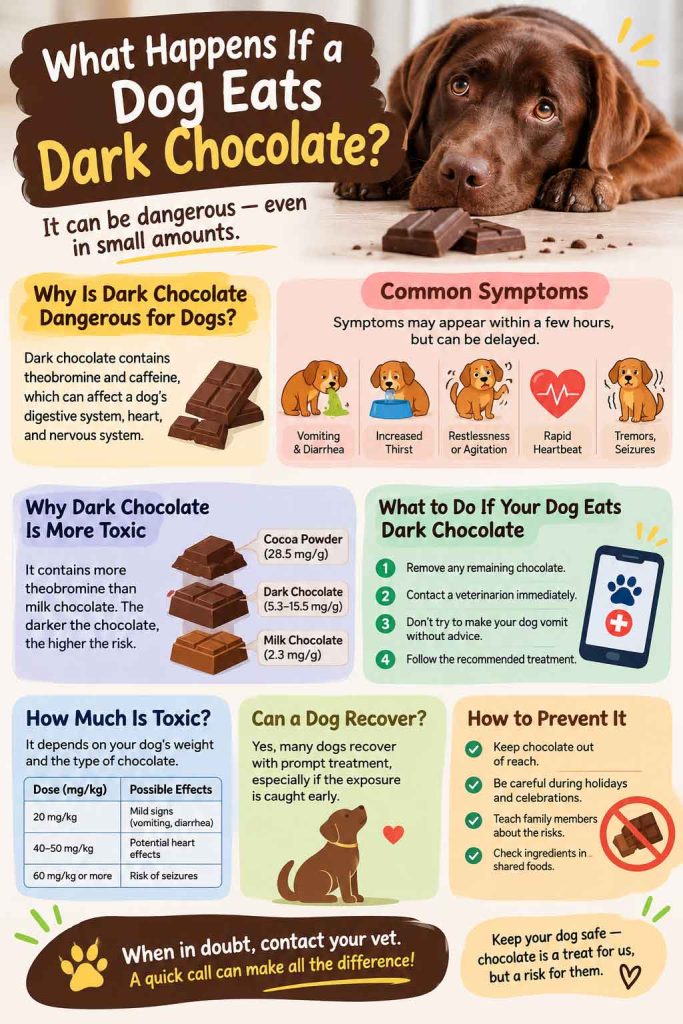
How Much Dark Chocolate Is Toxic to Dogs?
This is probably one of the first questions dog owners ask after discovering an empty chocolate wrapper.
Unfortunately, there isn’t one universal amount that is safe for every dog.
A dog’s weight and the concentration of the chocolate both matter.
The Merck Veterinary Manual provides general methylxanthine exposure thresholds:
| Estimated dose | Potential effects |
|---|---|
| 20 mg/kg | Mild signs such as vomiting, diarrhea, and increased thirst |
| 40–50 mg/kg | Potential cardiovascular effects |
| 60 mg/kg or more | Risk of seizures |
These figures refer to the combined methylxanthine dose, not the weight of the chocolate itself.
To put this into perspective, consider two dogs: one weighing 5 kg and another weighing 30 kg.
If both consume the same piece of dark chocolate, the smaller dog receives a much larger dose relative to its body weight.
This is why small breeds, puppies, and lightweight dogs can be particularly vulnerable.
It’s also worth remembering that chocolate products vary considerably. A 70% cocoa chocolate bar and an unsweetened baking chocolate product don’t necessarily carry the same risk.
Don’t use these figures to decide whether your dog can safely wait at home. A veterinarian should assess the exposure using the actual product, estimated amount, and your dog’s weight.
What Are the Symptoms of Dark Chocolate Poisoning in Dogs?
Symptoms don’t necessarily appear immediately after ingestion.
Depending on the exposure, signs may develop within several hours. Cornell University College of Veterinary Medicine reports that clinical signs can appear approximately 2–12 hours after ingestion.
This delayed reaction creates a dangerous misconception: your dog looks perfectly normal, so you assume everything is fine.
Unfortunately, that isn’t a reliable indication of safety.
Here are the warning signs to watch for:
Early symptoms:
- Vomiting and diarrhea.
- Increased thirst.
- Frequent urination.
- Restlessness.
- Hyperactivity.
More concerning symptoms:
- Rapid heartbeat.
- Excessive panting.
- Muscle stiffness.
- Trembling or shaking.
- Unusual agitation.
- Weakness or poor coordination.
Severe symptoms:
- Abnormal heart rhythms.
- High body temperature.
- Seizures.
- Collapse.
- Loss of consciousness.
If your dog develops any of the severe symptoms, seek emergency veterinary care immediately.
Even without visible symptoms, suspected dark chocolate ingestion deserves an immediate call to your veterinarian.
What Should You Do If Your Dog Eats Dark Chocolate?
Discovering that your dog has eaten dark chocolate can be frightening. Still, the most useful thing you can do is act quickly rather than panic.
Here are the steps to follow.
1. Remove Any Remaining Chocolate
First, make sure your dog cannot eat any more.
Move the remaining chocolate, wrappers, and other potentially dangerous products somewhere your dog cannot reach.
If possible, keep the packaging. The product label can help your veterinarian identify its cocoa concentration and ingredients.
2. Contact a Veterinarian Immediately
Don’t wait until symptoms appear.
Call your veterinarian or the nearest emergency veterinary clinic and explain what happened.
Provide as much information as possible, including:
- Your dog’s approximate weight.
- The type and brand of chocolate.
- The estimated amount eaten.
- When the ingestion occurred.
- Whether your dog is showing any symptoms.
Even if you cannot determine the exact amount, contact a veterinary professional anyway.
An estimate is better than delaying the call while trying to reconstruct exactly how much chocolate disappeared.
3. Don’t Try to Make Your Dog Vomit Without Instructions
Some owners immediately consider using hydrogen peroxide or other home remedies to make their dogs vomit.
This isn’t something you should attempt without veterinary guidance.
Inducing vomiting isn’t appropriate in every situation. It may be dangerous if your dog is already experiencing neurological symptoms, has difficulty swallowing, or is otherwise unstable.
A veterinarian can determine whether vomiting should be induced and which method is appropriate.
4. Follow the Recommended Treatment
Depending on the amount consumed and your dog’s condition, your veterinarian may recommend an examination, observation, or more intensive treatment.
The important thing is not to assume that home monitoring is sufficient without professional advice.
How Do Veterinarians Treat Chocolate Poisoning?
Treatment depends on how much chocolate the dog consumed, how long ago it happened, and whether symptoms have developed.
The main objective is to reduce further absorption of toxic compounds and manage their effects on the body.
Common treatment approaches include:
Inducing vomiting: If the dog is still clinically stable and the exposure is recent, a veterinarian may administer medication to remove chocolate from the stomach.
Activated charcoal: In selected cases, activated charcoal may be used to reduce the absorption of remaining toxic compounds. Its use depends on the patient’s condition and the veterinarian’s assessment.
Intravenous fluids: IV fluids help maintain hydration and support normal bodily functions.
Heart monitoring and medication: Dogs experiencing cardiovascular complications may require ECG monitoring and medications to manage abnormal heart rhythms.
Seizure and tremor management: Medication may be necessary to control neurological symptoms and prevent further complications.
Dogs with significant poisoning may need hospitalization and continuous monitoring.
The encouraging part is that many dogs recover well when treatment begins promptly. Waiting until severe symptoms appear can make the situation considerably more difficult.
Can a Dog Recover After Eating Dark Chocolate?
Yes, many dogs can recover from chocolate poisoning, particularly when the exposure is recognized early and appropriate treatment is provided.
However, recovery isn’t guaranteed.
The outcome depends on several factors:
- The amount of chocolate consumed.
- The concentration of theobromine.
- The dog’s body weight.
- The time between ingestion and treatment.
- The severity of the symptoms.
Dogs with relatively mild exposure generally have a better outlook than those experiencing seizures, serious heart complications, or collapse.
Recovery may also take longer than owners expect. Clinical signs can persist for 12–36 hours or longer in severe cases.
Your veterinarian may recommend continued observation even after the initial symptoms improve.
One important lesson here is that early treatment isn’t an overreaction. It’s often the difference between a manageable poisoning incident and a much more serious medical emergency.
How to Prevent Your Dog From Eating Dark Chocolate
Prevention is much easier than dealing with chocolate poisoning.
Dogs are naturally curious, and many will happily investigate anything that smells interesting. Unfortunately, they don’t understand which household foods are dangerous.
A few simple habits can reduce the risk considerably.
Keep Chocolate Out of Reach
Don’t leave chocolate bars, baking ingredients, brownies, or chocolate desserts on coffee tables, kitchen counters, or other accessible surfaces.
Store them in closed cabinets or containers.
Remember that some dogs are surprisingly good at opening bags and reaching objects that appear safely stored.
Be Careful During Holidays and Celebrations
Chocolate becomes more accessible during occasions such as birthdays, Christmas, Valentine’s Day, and other celebrations.
Guests may leave sweets unattended, children might share food with pets, and gift boxes can contain several types of chocolate.
Make sure everyone in your household understands that chocolate should never be offered to dogs.
Teach Family Members About Dangerous Foods
Children and visitors may not realize that a small piece of chocolate can be harmful.
Explain that dogs have different dietary needs and that human treats aren’t automatically safe for them.
If someone wants to give your dog a snack, encourage them to choose an appropriate dog treat instead.
Check Ingredients Before Sharing Food
Some chocolate-containing products include additional ingredients that are dangerous to dogs.
Pay particular attention to:
- Xylitol, a potentially life-threatening artificial sweetener.
- Raisins, which can cause kidney injury.
- Macadamia nuts, which are toxic to dogs.
- Coffee or espresso ingredients, which add further caffeine exposure.
A product can therefore present more than one poisoning risk.
Frequently Asked Questions
Can a small piece of dark chocolate kill a dog?
It depends on the dog’s weight, the amount consumed, and the chocolate’s cocoa concentration. A small piece may cause serious poisoning in a small dog, although the same amount may have a different effect on a larger dog. Contact a veterinarian immediately for an individual risk assessment.
How long after eating dark chocolate will a dog show symptoms?
Symptoms may appear within a few hours, although the timing varies. Cornell University reports a typical onset of approximately 2–12 hours. A dog that looks normal immediately after eating chocolate may still develop poisoning symptoms later.
What if my dog eats dark chocolate but seems fine?
Don’t assume your dog is safe. Chocolate poisoning can have a delayed onset, and the absence of visible symptoms doesn’t mean the toxic compounds aren’t affecting the body. Contact your veterinarian immediately.
Is 70% dark chocolate dangerous for dogs?
Yes. Chocolate with 70% cocoa contains a substantial amount of cocoa solids and can expose dogs to significant amounts of theobromine. The actual risk depends on how much was eaten and the dog’s body weight.
Is dark chocolate worse than milk chocolate for dogs?
Generally, yes. Dark chocolate typically contains much more theobromine than milk chocolate. Cocoa powder and unsweetened baking chocolate can be even more concentrated.
Final Thoughts
So, what happens if a dog eats dark chocolate?
The answer ranges from digestive discomfort to potentially life-threatening poisoning. Theobromine and caffeine can affect a dog’s digestive system, heart, and nervous system, with the severity depending on the amount consumed and the dog’s size.
What matters most is how quickly you respond.
If you discover that your dog has eaten dark chocolate, don’t wait for vomiting, shaking, or other warning signs. Contact a veterinarian, provide details about the chocolate and estimated amount, and follow their instructions.
It’s also worth making one small change at home: treat chocolate as something that must always be kept away from your dog.
Your dog doesn’t know that the delicious-looking treat on the table could be dangerous. Keeping it out of reach is our responsibility, and it’s a simple precaution that could prevent a very frightening experience.
References and factual sources
The article draws on veterinary and animal-poisoning guidance from these sources:
- Merck Veterinary Manual – Chocolate Toxicosis in Animals — toxic doses, methylxanthine concentrations, symptoms, and treatment.
- Cornell University College of Veterinary Medicine – Chocolate Toxicity — symptoms, onset, clinical management, and prognosis.
- ASPCA – What to Do If Your Pet Gets into Chocolate — practical emergency response and additional toxic ingredients.
- Pet Poison Helpline – Is Chocolate Poisonous to Dogs? — warning signs and recommendations for suspected ingestion.