
If the Moon suddenly disappeared, life on Earth would change fast and dramatically. Within days, tides would weaken, nights would turn much darker, and the planet’s stability would begin to shift. Over time, seasons could become unpredictable, ecosystems would struggle, and Earth’s rotation might slowly change. In short, the Moon isn’t just decoration in the sky—it’s a key part of how our planet works.
This question—what would happen if the Moon disappeared—might sound like science fiction, but it reveals just how dependent Earth is on its only natural satellite. From oceans to animal behavior, the Moon quietly shapes daily life in ways most people never notice.
Table of Contents
The Immediate Effects: Darkness and Weak Tides
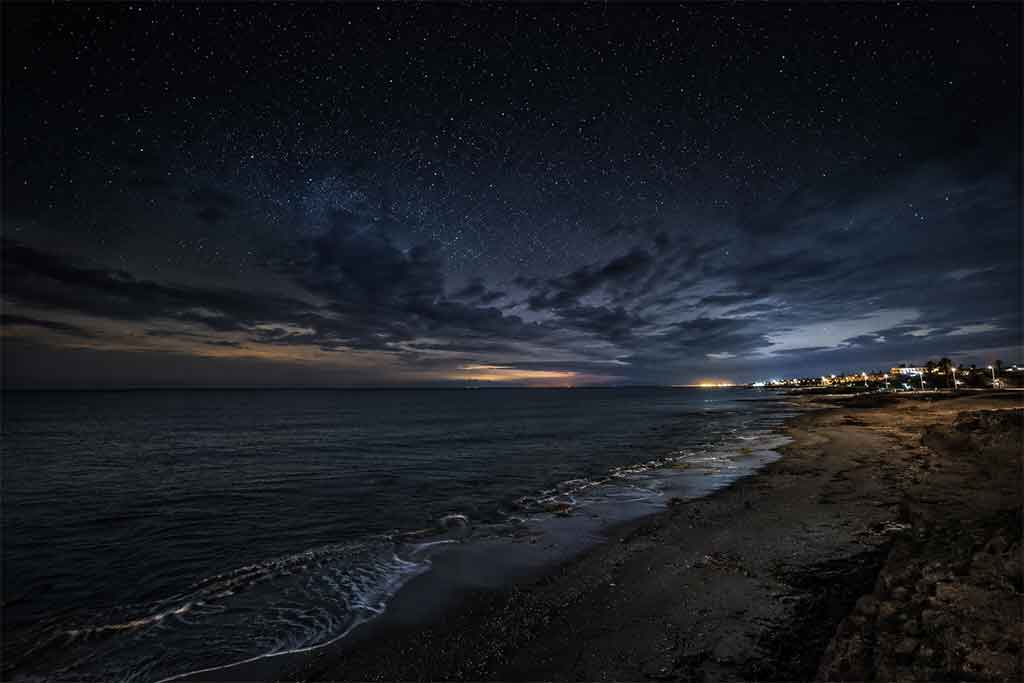
The first noticeable change would happen at night. Without the Moon, nights would become significantly darker. While stars would still be visible, the familiar glow of moonlight would vanish completely. For many animals that rely on moonlight for navigation or hunting, this would be a serious disruption.
But the most dramatic early impact would involve the oceans. The Moon is the main driver of Earth’s tides. Without it, tides wouldn’t disappear entirely, but they would shrink to about one-third of their current strength, influenced only by the Sun.
Why Tides Matter More Than You Think
Tides are not just about waves at the beach. They play a critical role in:
• Circulating nutrients in the ocean
* Supporting marine ecosystems
* Regulating coastal environments
Weaker tides would mean less mixing of ocean waters. Over time, this could harm marine life, especially in coastal areas where many species depend on tidal cycles to survive.
Earth’s Stability Would Begin to Shift
One of the most overlooked roles of the Moon is stabilizing Earth’s tilt. Right now, Earth’s axial tilt stays relatively steady at about 23.5 degrees. That tilt is what gives us predictable seasons.
Without the Moon, that stability would disappear.
Over thousands to millions of years, Earth’s tilt could wobble wildly—possibly shifting between 0 and 85 degrees. Imagine a planet where the poles sometimes face the Sun directly, or where the equator experiences freezing conditions. That’s the kind of chaos we’re talking about.
Long-Term Climate Chaos
This instability would lead to extreme climate changes:
• Seasons could become unpredictable
* Ice ages might come and go irregularly
* Some regions could become uninhabitable
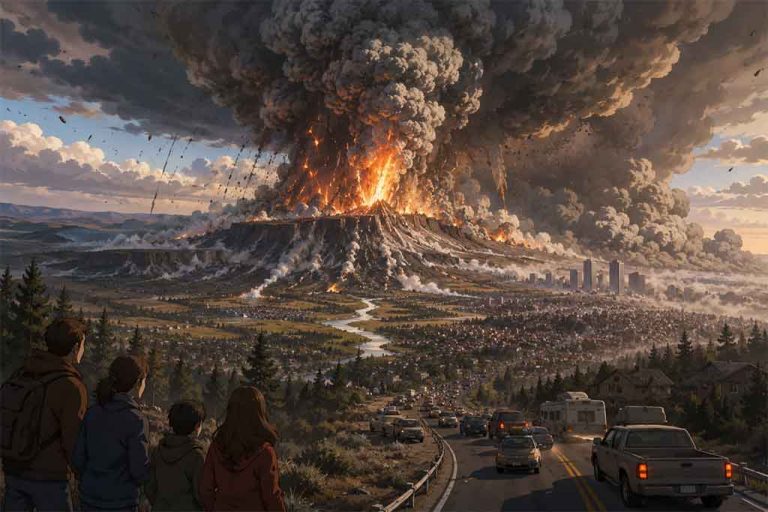
Compared to other extreme scenarios like what would happen if Yellowstone erupted, losing the Moon would be slower—but potentially more devastating over time.
The Length of a Day Would Change
Right now, the Moon is slowly slowing down Earth’s rotation. It acts like a natural brake. Without it, Earth would spin slightly faster.
This means shorter days—though not immediately noticeable. Over millions of years, a day could become several hours shorter than the current 24-hour cycle.
That change would affect:
• Biological clocks in humans and animals
* Weather patterns
* Wind systems
Even small shifts in day length can have ripple effects across the entire planet.
Wildlife Would Struggle to Adapt
Many species rely on the Moon more than we realize. From sea turtles to nocturnal predators, lunar cycles guide behavior.
If the Moon disappeared, these patterns would break.
Examples of Moon-Dependent Behavior
• Sea turtles use moonlight to find the ocean after hatching
* Coral reefs spawn based on lunar cycles
* Predators time hunts with moon phases
Without those signals, confusion would spread across ecosystems. Some species might adapt, but others could decline or even go extinct.
This kind of ecological disruption is similar in scale to scenarios like what would happen if mosquitoes went extinct, where removing a single element creates unexpected chain reactions.
Human Life Would Change Too
Humans might not depend on the Moon as directly as wildlife, but its disappearance would still affect daily life.
For starters, coastal communities would notice weaker tides, which could impact fishing and shipping. Cultural traditions tied to the Moon—like calendars and festivals—would lose their meaning.
Astronomy would also change dramatically. The Moon has been a constant reference point for observing the sky. Without it, both amateur and professional stargazing would feel very different.
What About Earth’s Orbit?
Here’s some good news: Earth wouldn’t suddenly fly out of orbit if the Moon disappeared. The Sun’s gravity is what keeps Earth in place.
However, the Moon does play a role in stabilizing Earth’s motion. Without it, small gravitational influences from other planets could have a bigger impact over long periods.
This could slightly alter Earth’s orbit, adding another layer of unpredictability to climate patterns.
Would There Be Any Positive Effects?
Surprisingly, there might be a few minor upsides—though they hardly outweigh the negatives.
• Darker skies would make stargazing clearer
* Some tidal flooding risks might decrease
* Nighttime energy use could change in certain areas
But these benefits are small compared to the massive disruptions Earth would face.
How Could the Moon Disappear?
In reality, the Moon isn’t going anywhere anytime soon. But if we imagine how it could disappear, a few possibilities come up:
• A massive collision knocking it out of orbit
* Gradual breakup due to gravitational forces
* A hypothetical cosmic event removing it entirely
A more dramatic version of this idea is explored in what would happen if the Moon exploded, which would cause immediate and catastrophic effects compared to simple disappearance.
Comparing Other “What If” Scenarios
The idea of losing the Moon fits into a broader category of “what if” questions that explore Earth’s fragility.
For example, imagining what Earth would look like if humans disappeared tomorrow shows how nature recovers without us. Meanwhile, extreme cosmic scenarios like what happens if you fall into a black hole highlight how different the universe behaves beyond Earth.
Each scenario reveals something important: small changes can lead to massive consequences.
The Psychological Impact of a Moonless Sky
There’s also a human side to consider. The Moon has inspired art, myths, and storytelling for thousands of years.
Without it, the night sky would feel emptier. That might sound minor, but cultural and emotional connections to the Moon run deep.
Think about how often the Moon appears in:
• Poetry and music
* Folklore and legends
* Religious and cultural traditions
Losing it would change not just science—but identity.
Would Life on Earth Survive?
The short answer: yes, but it would be different.
Life wouldn’t disappear overnight if the Moon vanished. However, the long-term effects could reshape ecosystems, climates, and evolution itself.
Some species would adapt. Others wouldn’t. Over millions of years, Earth could look very different from what we know today.
Final Thoughts: The Moon’s Hidden Importance
So, what would happen if the Moon disappeared? The planet wouldn’t explode, and humans wouldn’t vanish instantly—but the changes would be deep, complex, and far-reaching.
From stabilizing Earth’s tilt to controlling tides and influencing life cycles, the Moon quietly supports the balance of our world. Its absence would slowly unravel systems we depend on every day.
It’s easy to overlook something that’s always there. But the Moon isn’t just part of the scenery—it’s part of the system that keeps Earth livable.
And that makes one thing clear: some of the most important forces in our lives are the ones we rarely think about.