
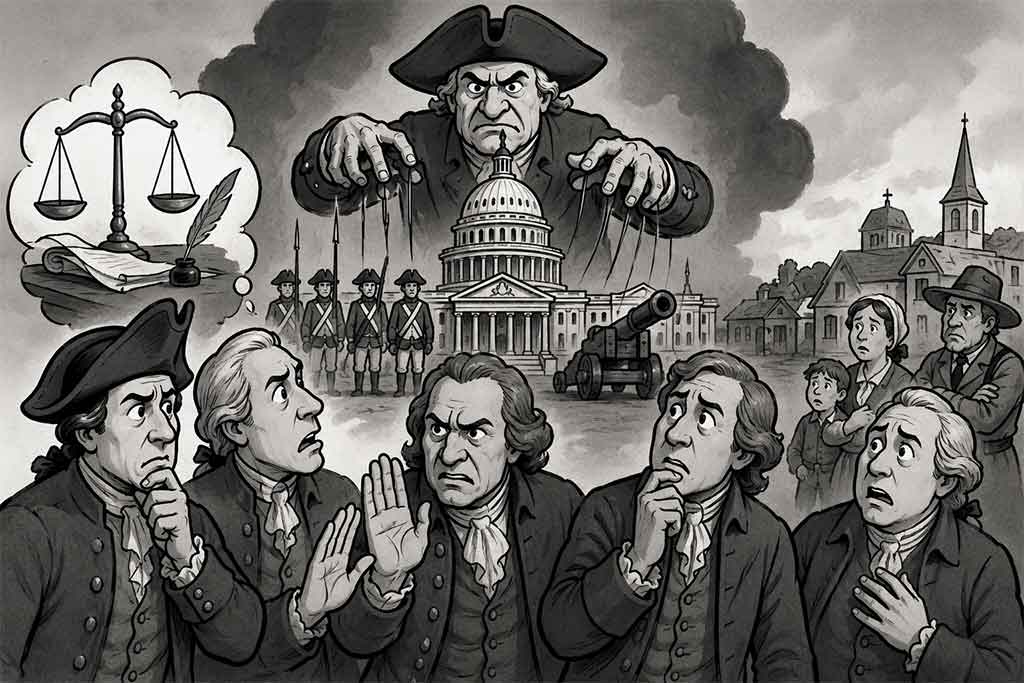

The core fear of the Anti-Federalists was simple: if the Constitution became law, they believed it would create a powerful central government that could threaten individual freedoms and the rights of states. Right from the beginning, their concern focused on the risk of tyranny, similar to what they had just fought against under British rule.
So when people ask, what did Anti-Federalists fear would happen if the Constitution became law?, the direct answer is this: they worried the new system would concentrate too much power in federal hands, weaken state authority, and leave citizens vulnerable without clear protections for their rights.
Table of Contents
Fear of a Strong Central Government
The Anti-Federalists were deeply skeptical of centralized power. They had fresh memories of British control, where decisions were made far away with little regard for local needs. To them, the proposed Constitution looked like a step backward.
They believed a strong national government could:
• Override state laws
* Control taxation without proper accountability
* Build a standing army that might be used against citizens
This fear wasn’t abstract. It was rooted in real experience. The idea of giving distant leaders too much authority felt risky and unnecessary.
Lack of a Bill of Rights
Another major concern tied directly to the question what did Anti-Federalists fear would happen if the Constitution became law? was the absence of a Bill of Rights.
At first, the Constitution did not clearly protect freedoms like speech, religion, or trial by jury. That alarmed many people.
Without written guarantees, Anti-Federalists believed the government could:
• Limit free speech
* Control the press
* Deny fair trials
Interestingly, concerns about legal obligations and civic duties still matter today. For example, skipping responsibilities like jury duty can have consequences, as explained in what happens if you don’t show for jury duty. Back then, the fear was even bigger: what if the system itself became unfair?
Threat to State Power
State governments were closer to the people. Anti-Federalists trusted them more than a distant federal authority. They feared the Constitution would shift power away from states and concentrate it at the national level.
This raised concerns like:
• States losing control over local laws
* Federal courts overriding state courts
* Less representation for smaller communities
For them, local control meant accountability. Losing that felt dangerous.
Risk of Tyranny
Perhaps the biggest fear behind what did Anti-Federalists fear would happen if the Constitution became law? was tyranny. Not instantly, but gradually.
They believed power tends to grow over time. Even if leaders started with good intentions, the system could evolve into something oppressive.
Some worried about:
• Presidents acting like kings
* Congress becoming too dominant
* Citizens having little say in decisions
This mindset reflects a broader concern about authority and consequences. Even today, people question systems that enforce rules without flexibility, similar to issues raised in what happens if you miss jury duty. The underlying fear is always the same: lack of fairness and control.
Why Their Concerns Mattered
Even though the Constitution was eventually ratified, Anti-Federalist concerns didn’t disappear. In fact, they shaped key changes.
The most important result was the addition of the Bill of Rights. These first ten amendments directly addressed fears about individual freedoms.
So while they opposed the Constitution at first, their influence made it stronger and more balanced.
Modern Perspective on Their Fears
Looking back, the question what did Anti-Federalists fear would happen if the Constitution became law? still feels relevant today. People continue to debate the balance between government power and individual rights.
Issues like taxation, legal obligations, and federal authority still spark discussion. For instance, concerns about compliance and consequences can be seen in topics like what happens if you don’t file your taxes but don’t owe anything. These modern examples echo the same tension between authority and personal responsibility.
Final Thoughts
At its core, the Anti-Federalist position was about caution. They weren’t against government entirely. They just wanted safeguards.
They feared that if the Constitution became law without limits, it could lead to centralized control, reduced freedoms, and long-term abuse of power.
In the end, their warnings helped shape the system we have today. And that’s why understanding their fears still matters.