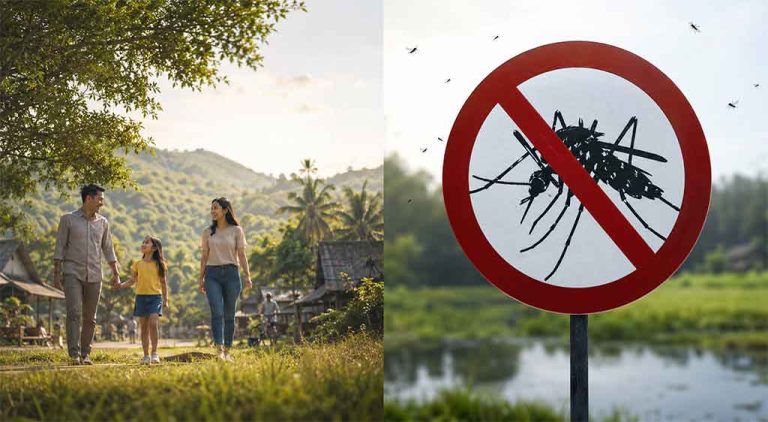
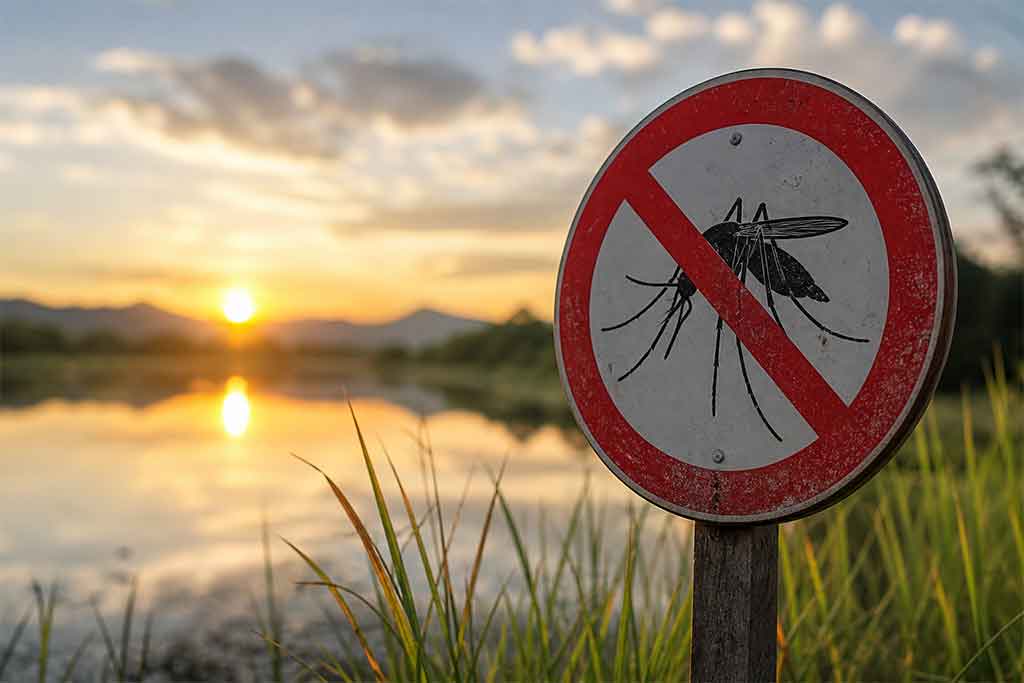

What Would Happen If Mosquitoes Went Extinct? – If mosquitoes suddenly went extinct, the immediate effect would be overwhelmingly positive for humans—fewer diseases, fewer deaths, and far less annoyance. But the deeper reality is more complex. Entire ecosystems would quietly shift. Some species would struggle, others would adapt, and a few might even thrive. The world wouldn’t collapse overnight, but it wouldn’t stay the same either.
At first glance, the idea of a mosquito-free planet sounds like a dream. No buzzing in your ear at 2 a.m., no itchy bites, no fear of malaria or dengue. But nature rarely works in simple cause-and-effect chains. Removing a species—especially one as widespread as mosquitoes—creates ripple effects that travel far beyond what we expect.
Table of Contents
The Immediate Impact on Human Life
The biggest and most obvious change? Human health would improve dramatically.
Mosquitoes are responsible for spreading some of the deadliest diseases in human history—malaria, dengue fever, Zika virus, yellow fever, and more. Every year, millions of people get sick, and hundreds of thousands die because of these tiny insects. If mosquitoes disappeared, those numbers would drop sharply, possibly to near zero in some regions.
In practical terms, entire healthcare systems in tropical and subtropical regions would experience relief. Governments could redirect billions of dollars spent on prevention and treatment toward other needs like infrastructure or education.
Daily life would also feel different. Outdoor activities would become more comfortable. Travel to certain regions would feel less risky. Even sleep quality might improve—no more midnight buzzing that keeps you awake.
It would feel like a small miracle, similar to the relief people imagine in other “what if” scenarios, like what happens if you use your phone before bed every night, where a simple habit quietly shapes your well-being over time.
Would Ecosystems Collapse Without Mosquitoes?
Here’s where things get interesting—and less straightforward.
Mosquitoes are part of the food chain. Their larvae live in water and serve as food for fish, amphibians, and other aquatic creatures. Adult mosquitoes are eaten by birds, bats, spiders, and insects.
So, what would happen if mosquitoes went extinct from an ecological standpoint?
Surprisingly, most scientists believe the impact would be noticeable—but not catastrophic.
Why? Because ecosystems are adaptable. Many predators that eat mosquitoes don’t rely on them exclusively. They have varied diets and would likely shift to other prey. Fish that consume mosquito larvae, for example, would still have access to other small aquatic organisms.
In other words, mosquitoes are part of the system, but they’re not the foundation holding it together.
The Role of Mosquito Larvae in Aquatic Environments
While adult mosquitoes are annoying, their larvae play a quieter but important role in water ecosystems.
Mosquito larvae feed on organic matter, including algae and microorganisms. This helps recycle nutrients and maintain balance in stagnant water environments like ponds and wetlands.
If mosquitoes disappeared, these ecosystems would adjust. Other organisms might fill the gap, but the transition wouldn’t be perfectly smooth. You could see temporary imbalances—more algae growth, changes in water quality, or shifts in microbial populations.
It’s a reminder that even the smallest creatures contribute to larger systems, much like how small daily habits can lead to bigger consequences, similar to what happens if you check your phone every 5 minutes.
What Happens to Animals That Eat Mosquitoes?
Many animals eat mosquitoes—but very few depend on them exclusively.
Bats, for example, are often thought of as mosquito-eating machines. While they do eat mosquitoes, they also consume moths, beetles, and other insects. The same goes for birds and dragonflies.
If mosquitoes went extinct, these animals wouldn’t starve. They would simply adjust their diets. Some populations might decline slightly if mosquitoes were a significant seasonal food source, but extinction-level impacts are unlikely.
The real shift would be subtle: changes in feeding patterns, competition for other prey, and slight adjustments in population dynamics.
Pollination: A Lesser-Known Role
Here’s something most people don’t realize—mosquitoes are also pollinators.
Not all mosquitoes feed on blood. In fact, only females bite, and even they primarily consume nectar for energy. While feeding on nectar, mosquitoes can transfer pollen between plants.
Some plant species, particularly in colder climates, rely on mosquitoes for pollination. If mosquitoes disappeared, these plants might struggle—or they might adapt by relying more on other pollinators like bees and butterflies.
This is where things get tricky. Nature rarely leaves a vacuum. When one species disappears, others often step in. But the transition can take time, and during that period, ecosystems can feel the strain.
Would Any Species Go Extinct?
It’s possible—but unlikely on a large scale.
There are a few species that interact closely with mosquitoes, especially in extreme environments like the Arctic. Some birds rely heavily on mosquito swarms during breeding seasons as a high-protein food source.
If mosquitoes vanished, these species might face challenges. Their populations could decline, or they might be forced to migrate or adapt their feeding habits.
But again, extinction across multiple species is considered unlikely. Nature tends to be more resilient than we expect.
The Evolutionary Perspective
Mosquitoes have existed for over 100 million years. They’ve survived mass extinctions, climate shifts, and dramatic changes in Earth’s ecosystems.
From an evolutionary standpoint, removing them would be like erasing a long-standing thread from the fabric of life.
That doesn’t mean the fabric would unravel—but it would definitely change shape.
It’s similar to imagining other extreme “what if” scenarios, like what Earth would look like if humans disappeared tomorrow, where the system doesn’t collapse—it simply reorganizes itself.
Could We Intentionally Eradicate Mosquitoes?
Technically, yes—or at least partially.
Scientists are already exploring genetic technologies like gene drives to reduce or eliminate populations of disease-carrying mosquitoes. The idea is to target specific species—especially those responsible for spreading malaria—without wiping out all mosquitoes.
This is important because not all mosquitoes are harmful to humans. Out of more than 3,000 species, only a small fraction actually bite humans and transmit diseases.
Targeting those specific species could give us the best of both worlds: fewer diseases without disrupting ecosystems too severely.
Would the World Be Better Without Mosquitoes?
From a human perspective, the answer feels like an obvious “yes.”
Fewer deaths, less disease, more comfort—it sounds like a win across the board.
But from a broader ecological perspective, the answer is more nuanced.
The world wouldn’t collapse, but it would shift. Some ecosystems would need time to rebalance. Certain species might struggle temporarily. New patterns would emerge.
Nature doesn’t operate on convenience—it operates on balance.
The Bigger Picture: Why This Question Matters
Asking what would happen if mosquitoes went extinct isn’t just about mosquitoes. It’s about understanding how interconnected life on Earth really is.
Even something as small and seemingly insignificant as a mosquito plays multiple roles—some obvious, some hidden.
It’s the same lesson we see in everyday life. Small changes can lead to bigger consequences over time, much like what happens if you don’t clean your room for a month, where minor neglect gradually turns into a larger problem.
Nature works in a similar way—just on a much larger scale.
So, What Would Happen If Mosquitoes Went Extinct?
Let’s bring it all together.
So, What Would Happen If Mosquitoes Went Extinct?
If mosquitoes went extinct, humans would benefit almost immediately through improved health and quality of life. However, ecosystems would experience subtle but widespread changes. Food chains would adjust, certain species might struggle, and ecological balance would shift before stabilizing again.
The world wouldn’t end. But it wouldn’t be exactly the same either.
And maybe that’s the real takeaway—every species, no matter how annoying or seemingly useless, is part of a much larger story.
Even mosquitoes.