
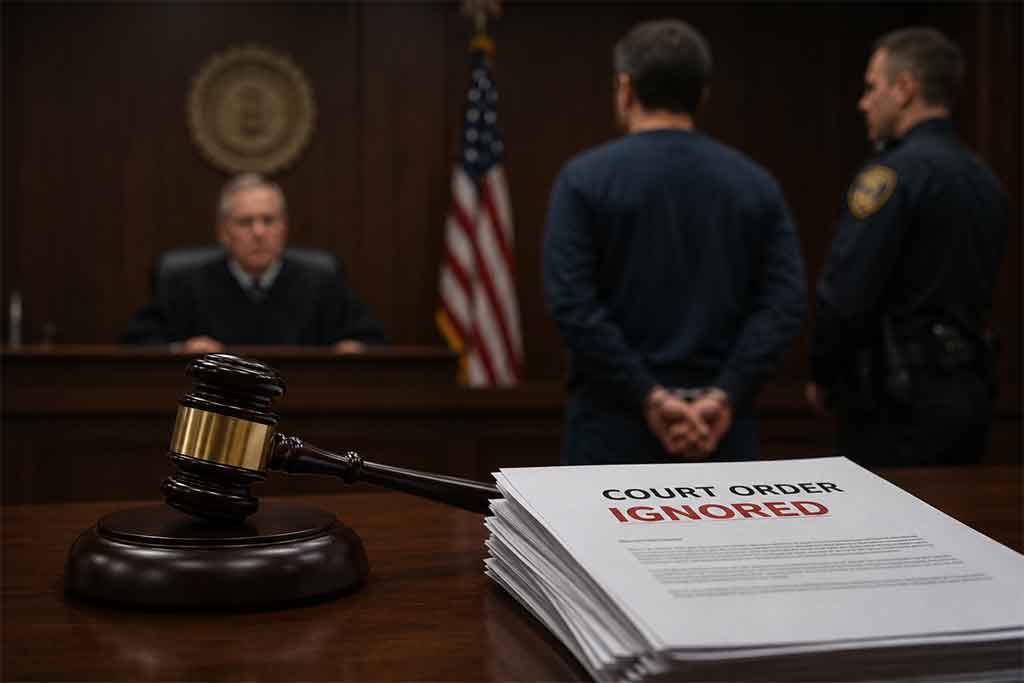

If a Court Order Is Ignored What Happens? If a court order is ignored, the court can take serious legal action against the person who failed to comply. Depending on the situation, consequences may include fines, wage garnishment, property seizure, arrest warrants, or even jail time. Courts treat disobedience seriously because a court order is legally binding once issued by a judge.
In many cases, the court may first issue warnings or schedule another hearing. However, continued refusal to follow the order can quickly escalate into contempt of court charges. Whether the order involves child support, custody, debt payments, jury duty, or civil disputes, ignoring it rarely makes the problem disappear.
People often underestimate how much power courts have to enforce their decisions. Similar issues happen when individuals ignore other legal obligations, such as failing to appear for jury duty or skipping required legal notices. The legal system keeps records, and unresolved violations can create long-term consequences.
Table of Contents
Why Court Orders Must Be Followed
A court order is an official legal directive signed by a judge. Once issued, all involved parties are legally required to comply. Courts rely on compliance to maintain order within the legal system.
Ignoring a court order is not viewed as a simple mistake. The court may interpret it as deliberate disobedience. That is why judges often have broad authority to punish noncompliance.
Common examples of court orders include:
- Child support orders
- Child custody arrangements
- Restraining orders
- Debt repayment orders
- Property division orders
- Subpoenas
- Mandatory court appearances
Each type of order carries its own enforcement procedures, but the core rule stays the same: ignoring a court order can create additional legal trouble.
What Happens Immediately After Ignoring a Court Order?
The first response usually depends on the severity of the violation. In less serious situations, the court may send notices or schedule another hearing. In more serious cases, enforcement can happen quickly.
The Other Party May File a Complaint
In civil cases, the other party often reports the violation to the court. For example, if someone refuses to pay court-ordered child support, the receiving parent can notify the judge.
The court may then schedule a compliance hearing to review why the order was ignored.
A Judge Can Issue Contempt Charges
Contempt of court is one of the most common consequences when a court order is ignored. This means the court believes someone intentionally violated a legal order.
There are two main types of contempt:
- Civil contempt
- Criminal contempt
Civil contempt usually pressures someone into compliance. Criminal contempt punishes disobedience directly.
Contempt of Court Penalties
Penalties for contempt vary by state and case type. However, courts generally have significant discretion.
Fines
Financial penalties are common. Judges may impose daily fines until the person follows the order.
For example, someone refusing to turn over court-ordered documents could face accumulating fines every day they remain noncompliant.
Jail Time
In severe situations, jail is possible. Courts can order incarceration until the individual obeys the court order or completes a required action.
This often happens in cases involving:
- Repeated child support violations
- Ignoring restraining orders
- Refusing subpoenas
- Disobeying custody rulings
Arrest Warrants
If someone repeatedly skips hearings or refuses to comply, judges may issue a bench warrant. Law enforcement can then arrest the individual and bring them before the court.
This is similar to what may happen when someone repeatedly misses jury duty obligations without responding to court notices.
What Happens if You Ignore a Family Court Order?
Family court violations are among the most aggressively enforced because they often affect children and financial support.
Child Support Enforcement
Ignoring child support orders can trigger:
- Wage garnishment
- Tax refund interception
- License suspension
- Passport denial
- Jail time
Courts typically do not accept “I forgot” as a valid excuse. If financial hardship exists, the correct approach is requesting a modification through the court.
Custody Violations
Violating custody orders can damage parental rights. Judges prioritize the child’s best interests, and repeated violations may lead to custody modifications.
For example, refusing scheduled visitation could cause the court to reconsider custody arrangements entirely.
Ignoring a Restraining Order
Restraining orders carry especially serious consequences because they are tied to personal safety concerns.
If someone violates a restraining order, police may arrest them immediately. Many jurisdictions treat restraining order violations as criminal offenses.
Possible penalties include:
- Immediate arrest
- Criminal charges
- Protective custody restrictions
- Jail sentences
- Probation
Even indirect contact, such as messages through friends or social media, may count as a violation depending on the order’s wording.
Can You Go to Jail for Ignoring a Court Order?
Yes, jail is absolutely possible if a court order is ignored. However, judges often prefer giving individuals opportunities to comply first.
The likelihood of jail increases when:
- The violation is intentional
- Warnings were ignored
- Public safety is involved
- Financial obligations remain unpaid for long periods
- The person repeatedly disobeys the court
Courts generally reserve jail penalties for serious or repeated noncompliance rather than honest misunderstandings.
What if You Cannot Follow the Court Order?
Not every violation is intentional. Sometimes people genuinely cannot comply due to financial hardship, illness, or changing circumstances.
In those situations, the worst thing to do is ignore the order entirely.
The proper step is filing a motion with the court requesting modification or clarification. Judges are often more willing to work with individuals who communicate honestly rather than disappear or refuse to respond.
For example, someone struggling financially may request reduced child support payments instead of simply stopping payments altogether.
Defenses Against Contempt Charges
Courts may consider certain defenses when reviewing noncompliance.
Lack of Knowledge
If the person never received notice of the order, that may serve as a defense in limited situations.
Inability to Comply
A person who genuinely lacks the ability to comply may avoid harsh penalties if they provide evidence.
Examples include:
- Job loss
- Medical emergencies
- Severe financial hardship
- Administrative errors
Order Was Unclear
If the court order itself was vague or confusing, judges may reconsider enforcement actions.
Long-Term Consequences of Ignoring Court Orders
The effects often extend beyond immediate penalties.
Damaged Reputation
Legal violations can affect employment opportunities, professional licenses, and public reputation.
Financial Problems
Fines, legal fees, and collection efforts may create long-term financial strain.
Criminal Records
Some contempt charges become part of permanent criminal records.
Difficulty in Future Legal Cases
Judges often consider past compliance history when making future rulings.
Someone known for ignoring court orders may receive less favorable treatment later.
How Courts Usually Enforce Orders
Courts use several enforcement tools depending on the case.
- Contempt hearings
- Bench warrants
- Asset seizure
- Bank levies
- License suspensions
- Probation conditions
- Mandatory compliance deadlines
The legal system has many mechanisms to pressure compliance. Simply avoiding communication rarely works long term.
Can Ignoring a Court Order Affect Taxes or Financial Records?
Yes, financial court orders may impact tax refunds, bank accounts, or credit history.
Courts can intercept tax refunds for unpaid child support or legal judgments. Financial disputes connected to legal obligations may also overlap with tax-related issues, similar to situations involving failure to file taxes properly.
Once government agencies become involved, resolving the issue usually becomes more expensive and complicated.
How to Respond if You Ignored a Court Order
The best approach is acting quickly before penalties increase.
Contact an Attorney
Legal advice helps you understand available options and possible defenses.
Communicate With the Court
Showing willingness to cooperate may reduce penalties.
File Necessary Motions
If circumstances changed, request a modification instead of remaining silent.
Attend All Hearings
Skipping court appearances usually makes the situation worse.
Final Thoughts
If a court order is ignored, the consequences can range from fines to jail time depending on the severity of the violation. Courts take noncompliance seriously because legal orders only work when people follow them. Ignoring the issue often leads to larger financial, legal, and personal problems later.
The safest approach is responding immediately, attending hearings, and requesting modifications when necessary. Courts are generally more flexible with people who cooperate than with those who avoid the legal process entirely.
Legal systems may seem complicated, but refusing to follow a judge’s order almost always creates bigger consequences than addressing the issue directly.