You unload your dishwasher expecting sparkling clean dishes, only to find them covered with a chalky white film. It’s frustrating, especially after running a full wash cycle. If you’ve been wondering why is my dishwasher leaving white residue, you’re not alone.
The good news is that this problem is usually easy to fix. In most cases, white residue isn’t caused by a broken dishwasher. Instead, it’s related to hard water, detergent issues, or poor cleaning habits. This guide explains every common cause, shows you exactly how to solve it, and helps prevent the problem from coming back.
Why Is My Dishwasher Leaving White Residue?
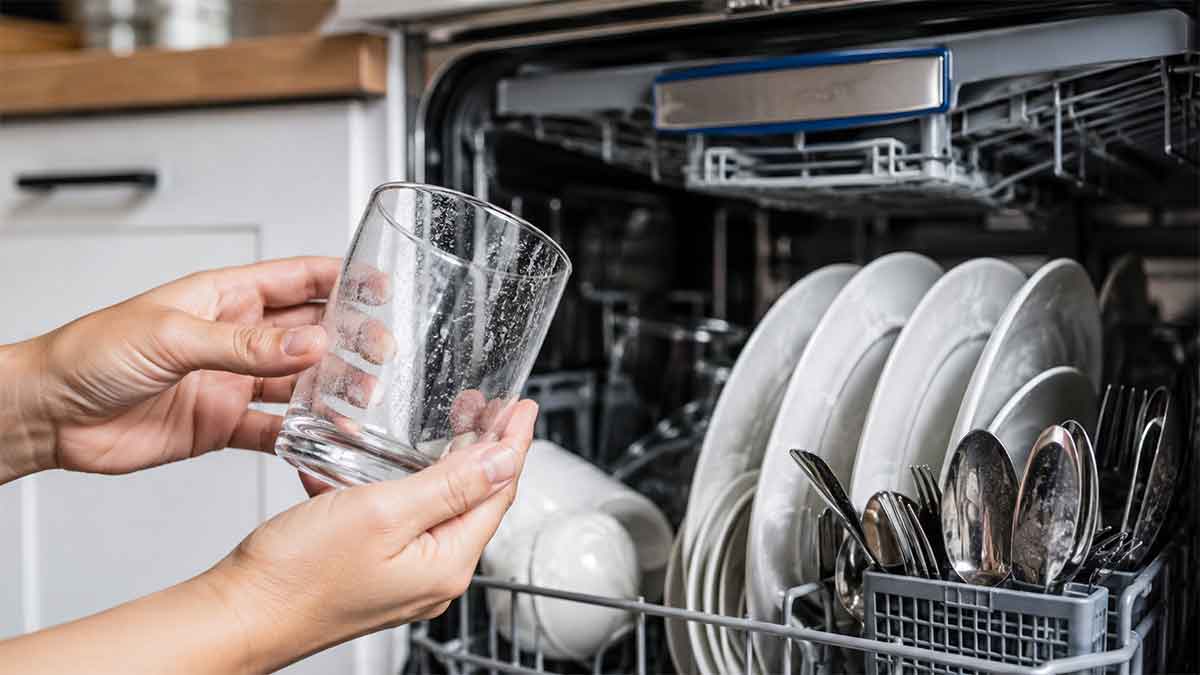
The white residue is typically made up of mineral deposits, mostly calcium and magnesium left behind by hard water. When these minerals aren’t completely rinsed away, they dry on your dishes, glasses, cutlery, and even inside the dishwasher.
Several factors can make the problem worse:
- Hard water
- Too much detergent
- Low-quality detergent
- Empty rinse aid dispenser
- Clogged spray arms
- Dirty dishwasher filter
- Incorrect wash cycle
- Water temperature that’s too low
Fortunately, each of these issues has a straightforward solution.
What Does White Residue Look Like?
Depending on the cause, the residue may appear as:
- Chalky white powder
- Cloudy film on glasses
- White spots on stainless steel
- Dust-like coating on plastic containers
- Crusty buildup inside the dishwasher
Knowing the appearance helps narrow down the cause.
Why Do I Get Chalky Film on My Dishes After the Dishwasher?
The most common reason is hard water.
Hard water contains dissolved minerals that stay behind after the water evaporates. During the drying cycle, these minerals form a visible white layer.
Signs you have hard water include:
- Spots on drinking glasses
- White buildup on faucets
- Soap doesn’t lather well
- Scale inside kettles or coffee makers
If your home has hard water, your dishwasher will need extra help to remove minerals effectively.
How to Fix Dishwasher Leaving White Residue?
Try these solutions one at a time until the residue disappears.
1. Refill the Rinse Aid
A rinse aid helps water slide off dishes instead of drying into mineral spots.
Check the rinse aid dispenser regularly.
Modern dishwashers usually have an indicator light when it runs low.
2. Use Less Detergent
More detergent doesn’t always mean cleaner dishes.
Too much detergent may not dissolve completely, leaving behind white powder.
Follow your detergent manufacturer’s recommendations based on your water hardness.
3. Switch to a Better Dishwasher Detergent
Some inexpensive detergents struggle with mineral-rich water.
Choose products designed specifically for:
- Hard water
- Mineral control
- Spot-free drying
Premium dishwasher pods often include water softening ingredients.
4. Clean the Dishwasher Filter
Food debris blocks water circulation and reduces cleaning performance.
Most filters can be removed by:
- Opening the bottom rack.
- Twisting the filter counterclockwise.
- Rinsing under warm water.
- Gently scrubbing with a soft brush.
- Reinstalling securely.
Clean the filter every month.
5. Unclog the Spray Arms
Spray arm holes can become blocked with food particles and mineral buildup.
Remove the spray arms if your model allows.
Use:
- Toothpick
- Small wire
- Soft brush
Never enlarge the holes.
6. Run a Dishwasher Cleaning Cycle
Minerals also collect inside the appliance.
Run an empty cycle using:
- Dishwasher cleaner
- White vinegar (if recommended by your manufacturer)
- Citric acid cleaner
This removes hidden scale that can redeposit onto dishes.
7. Increase Water Temperature
Dishwashers clean best when incoming water reaches around 120°F (49°C).
If the water is too cool:
- Detergent won’t dissolve properly.
- Grease stays behind.
- Minerals cling to dishes.
Run the kitchen faucet until hot before starting the dishwasher.
8. Install a Water Softener
If your home has very hard water, a water softener offers the most permanent solution.
It removes calcium and magnesium before water enters your dishwasher.
Benefits include:
- Cleaner dishes
- Less limescale
- Longer appliance lifespan
- Better detergent performance
9. Avoid Overloading the Dishwasher
Crowded dishes prevent water from reaching every surface.
Leave enough space between:
- Plates
- Bowls
- Cups
- Glasses
Proper loading improves rinsing significantly.
Why Is There White Stuff Coming Out of My Dishwasher?
If the white material is coming from inside the dishwasher itself, possible causes include:
| Cause | Solution |
|---|---|
| Mineral scale | Run a cleaning cycle |
| Excess detergent | Reduce detergent amount |
| Clogged spray arms | Clean spray arms |
| Dirty filter | Wash the filter |
| Hard water buildup | Use rinse aid or water softener |
Inspect the interior walls and heating element for thick white deposits.
Why Is My Dishwasher Leaving White Residue After Every Wash?
If it happens after every cycle, the issue is usually ongoing rather than temporary.
Common long-term causes include:
- Hard water
- Empty rinse aid
- Incorrect detergent
- Old mineral buildup
- Poor dishwasher maintenance
Regular monthly cleaning helps prevent recurring residue.
Dishwasher Leaves White Residue on Dishes and Cutlery
Metal utensils often show residue more clearly.
Stainless steel cutlery may develop:
- White streaks
- Chalky patches
- Water spots
Increasing rinse aid and reducing detergent often solves this quickly.
Dishwasher White Residue on Stainless Steel
Stainless steel attracts mineral deposits because its smooth surface makes spots easy to see.
To remove residue:
- Wipe with diluted white vinegar.
- Rinse thoroughly.
- Dry immediately with a microfiber cloth.
Avoid abrasive scrubbers that can scratch the finish.
Dishwasher White Residue on Plastic
Plastic doesn’t retain heat like ceramic or glass.
As a result, water evaporates more slowly, leaving mineral deposits behind.
To reduce residue:
- Place plastics on the top rack.
- Use rinse aid.
- Choose the heated drying option carefully if recommended by your manufacturer.
White Residue on Glasses After Dishwasher
Cloudy glasses are one of the biggest complaints.
There are two possible causes:
Mineral Deposits
These can usually be removed with vinegar.
Glass Etching
Etching permanently damages the glass.
Signs include:
- Hazy appearance
- Cannot be wiped off
- Rough texture
Etching results from excessive detergent, soft water, or washing delicate glassware too aggressively.
Is White Residue From the Dishwasher Harmful?
Generally, no.
The residue usually consists of harmless minerals such as calcium carbonate.
However, if the residue comes from undissolved detergent, it’s best to rinse dishes before using them.
If residue has an unusual smell, color, or greasy texture, inspect your dishwasher for mechanical problems.
Is White Residue on Dishes Harmful?
For most households, the answer is no.
Mineral deposits are not considered dangerous.
Still, nobody wants to eat from dishes covered in residue.
Cleaning the dishwasher and correcting the underlying issue restores both appearance and hygiene.
Why Do My Dishes Have White Residue After Hand Washing?
If the same problem appears after hand washing, the dishwasher may not be the culprit.
Possible reasons include:
- Hard tap water
- Soap residue
- Air drying without rinsing thoroughly
- Mineral-rich water supply
Try drying dishes immediately with a clean towel or use filtered water for the final rinse.
How to Prevent White Residue in the Future
Follow these habits to keep your dishwasher performing its best:
- Clean the filter every month.
- Refill rinse aid regularly.
- Use quality dishwasher detergent.
- Don’t overload the racks.
- Run a dishwasher cleaner monthly.
- Check spray arms every few months.
- Use a water softener if needed.
- Run hot water before starting a cycle.
A little maintenance goes a long way.
Related Dishwasher and Home Maintenance Guides
If you’re troubleshooting other household issues, these guides may also help:
Frequently Asked Questions
Why is my dishwasher leaving white residue but everything else seems clean?
This usually indicates mineral deposits from hard water rather than poor washing performance. Try adding rinse aid and reducing detergent.
Can too much detergent cause white residue?
Yes. Excess detergent may not dissolve completely, leaving a powdery white film on dishes and inside the dishwasher.
Why are only my glasses getting white residue?
Glasses show mineral deposits more easily because they’re transparent. Hard water and insufficient rinse aid are the most common causes.
How often should I clean my dishwasher?
Clean the filter monthly and run a dishwasher cleaning cycle every one to three months, depending on usage and water hardness.
Will vinegar remove white residue?
Yes. White vinegar dissolves most mineral deposits caused by hard water. However, always check your dishwasher manufacturer’s recommendations before using vinegar.
Conclusion
If you’ve been asking why is my dishwasher leaving white residue, the answer is usually much simpler than you might expect. Hard water, detergent misuse, and neglected maintenance account for most cases.
Start by checking your rinse aid, cleaning the filter, inspecting the spray arms, and adjusting your detergent. If hard water is the root cause, investing in a water softener can eliminate the problem for good.
With just a few simple maintenance habits, you can enjoy spotless dishes, crystal-clear glasses, and a dishwasher that performs like new every time.