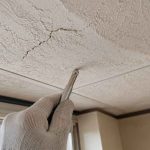
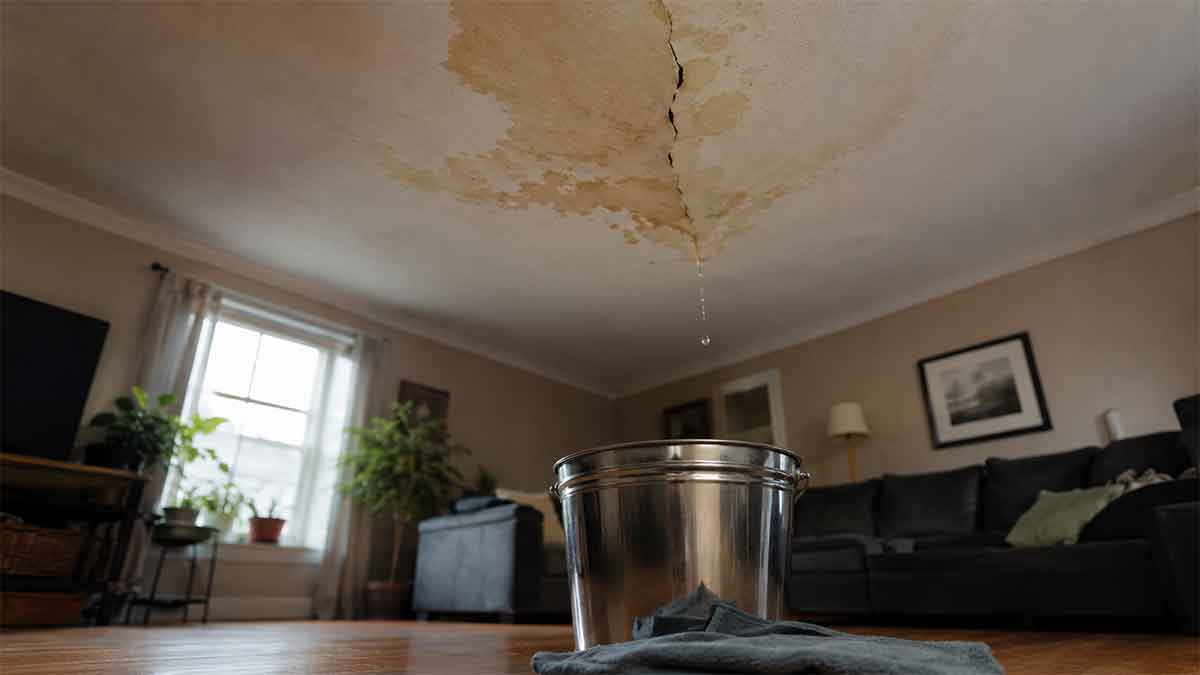
If your ceiling is leaking, turn off the electricity to that room, move furniture out of the way, and put a bucket or towels under the drip right away. If the ceiling is bulging or sagging, poke a small hole in the lowest point to let trapped water drain in a controlled way instead of collapsing on its own. Once the area is safe, figure out where the water is coming from so you can stop it at the source.
Here’s how to handle each stage of the problem, from the first five minutes to the repair itself.
Turn Off Power Before You Do Anything Else
Water and electrical wiring don’t mix, and a wet ceiling is one of the few home emergencies where safety comes before cleanup. If the leak is anywhere near a light fixture, fan, or outlet, shut off power to that circuit at the breaker box before you go near it.
Don’t touch light switches or fixtures with wet hands or while standing in water. If you’re not sure which breaker controls the room, cut power to the whole house until you know. This step takes thirty seconds and can prevent a fire or shock.
Catch and Contain the Water
Once power is off, slide a bucket, trash can, or large bowl under the drip. Lay towels or a tarp around it to catch splashes, and move rugs, electronics, and furniture out of the drip zone.
If you notice a bulge or soft, sagging spot in the drywall, don’t ignore it. Water pooling behind the surface adds weight fast, and an unplanned collapse can bring down insulation, debris, and a lot more water at once. Puncturing the center of the bulge with a screwdriver, over a bucket, lets it drain on your terms instead.
This isn’t a permanent fix. It just buys you time and prevents worse damage while you sort out what’s actually happening above the ceiling.
Related: What to Do If You Have Asbestos Ceiling Tiles
Figure Out Where the Water Is Coming From
A leaking ceiling almost always traces back to one of three sources:
- Roof damage — missing or cracked shingles, damaged flashing around vents or chimneys, or clogged gutters that push water back under the roofline.
- Plumbing — a pipe, drain line, or supply line running through the floor above, especially near a bathroom, kitchen, or laundry area.
- Condensation or HVAC issues — a clogged AC condensate line or poorly insulated ductwork can drip steadily in a way that looks like a roof leak but isn’t.
The location of the stain is a strong clue. A leak directly below a bathroom or upstairs kitchen usually points to plumbing. A leak near an exterior wall or that gets worse during or right after rain almost always points to the roof.
What to Do if the Ceiling Is Leaking During Rain
If the leak only shows up during a storm, treat it as a roof or exterior problem until proven otherwise. Check the attic if you can access it safely, using a flashlight to look for wet insulation, dark staining on rafters, or daylight coming through the roof deck.
From outside, look for missing shingles, damaged flashing, or gutters that are overflowing instead of draining. You don’t need to climb on the roof to spot most of these issues from the ground with binoculars.
If it’s currently raining and you can’t inspect anything, focus on containment inside and wait until conditions are dry and safe to investigate further. Getting on a wet roof is how minor leaks turn into injuries.
When It’s Safe to Handle Yourself vs. When to Call a Pro
A single small stain with no active dripping and no soft spots can sometimes wait for a dry day to inspect. Active dripping, a growing stain, or any sagging drywall means it’s time to get help sooner rather than later.
Call a licensed plumber if the source is clearly a pipe or fixture. Call a roofing contractor if the leak tracks back to the roof or if you’re not sure and it keeps recurring after rain. For ceilings with significant sagging, staining, or mold growth, a water damage restoration company can assess structural risk and moisture levels that aren’t obvious from the surface.
Most roofers and plumbers offer a diagnostic visit even if you’re not ready to commit to a full repair, which is often the fastest way to confirm the source instead of guessing.
What Repair Usually Involves
Once the source is fixed, the ceiling itself needs attention. Wet drywall that’s stayed damp for more than a day or two often needs to be cut out and replaced, since it can harbor mold even after it looks dry.
Smaller stains from a quick, already-fixed leak can sometimes just be primed with a stain-blocking primer and repainted. Costs vary a lot depending on the extent of the damage, whether mold remediation is needed, and local labor rates, so it’s worth getting a couple of quotes rather than assuming a fixed price.
Insurance coverage depends on the cause. Sudden pipe bursts are often covered, while gradual leaks from long-term neglect or maintenance issues typically aren’t — check your policy or ask your agent directly.
Related: Why Is There a Crack in My Ceiling? Causes, Warning Signs, and When to Worry
The Bottom Line
Knowing what to do if the ceiling is leaking comes down to three moves: cut the power, catch the water, and trace the source before it gets worse. Handle the immediate safety steps yourself, but don’t hesitate to bring in a professional once you know whether you’re dealing with a roof, a pipe, or something else. Acting in the first hour usually makes the difference between a quick patch and a much bigger repair bill.