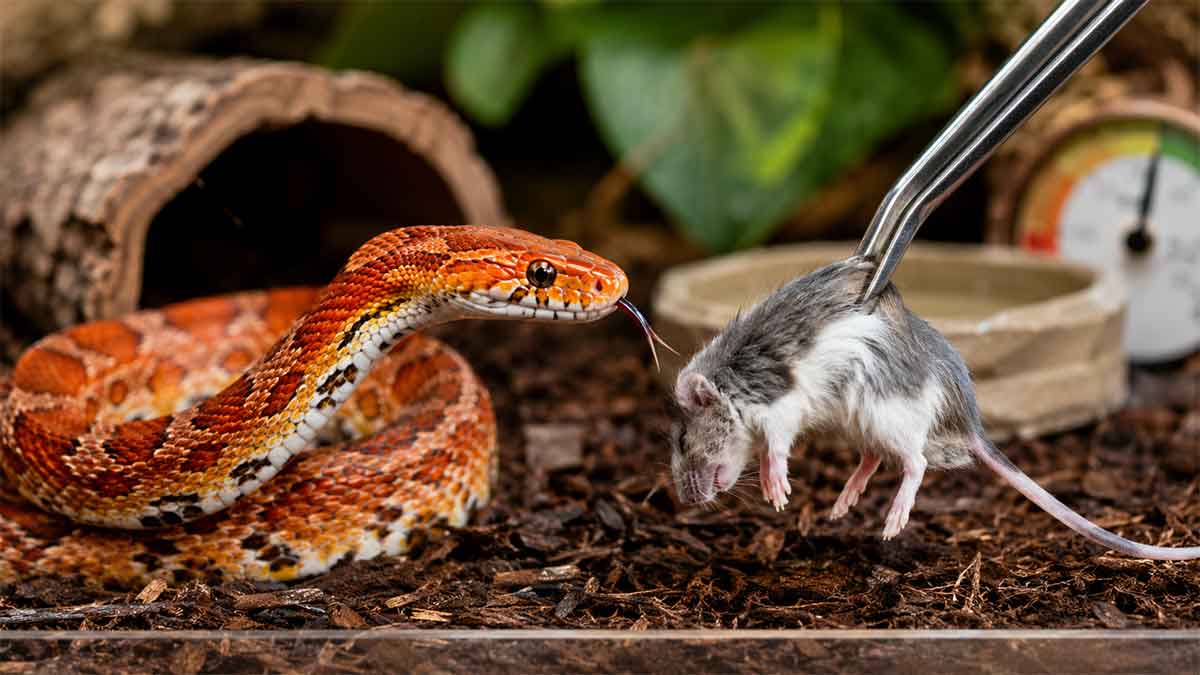
Your corn snake suddenly refuses food, and now you’re wondering, why won’t my corn snake eat? One missed meal can be completely normal, but repeated refusals can make any snake owner nervous.
The good news is that a corn snake not eating does not automatically mean something is seriously wrong. Stress, shedding, temperature problems, seasonal behavior, incorrect prey size, and changes in the enclosure can all affect appetite.
However, you also don’t want to ignore prolonged food refusal, especially when your snake is losing weight or showing other signs of illness.
This guide explains why a corn snake won’t eat, how long it can safely go without food, what to check at home, and when professional veterinary care is necessary.
Why Won’t My Corn Snake Eat?
There isn’t one single answer to why won’t my corn snake eat. Corn snakes can refuse food for several reasons, ranging from completely normal behavior to an underlying health problem.
Some of the most common causes include:
- Shedding
- Stress
- Incorrect enclosure temperatures
- Incorrect humidity or poor enclosure setup
- Food that is too large or inappropriate
- Feeding too frequently
- Recent relocation
- Breeding season
- Brumation or seasonal changes
- Illness or parasites
A healthy adult corn snake can sometimes skip several meals without an immediate problem. What matters most is the snake’s overall condition, weight, behavior, and environment.
Veterinary guidance also recognizes stress, environmental temperature, shedding, hibernation, pregnancy, and breeding-season anorexia as possible reasons snakes temporarily stop eating.
1. Your Corn Snake May Be Preparing to Shed
One of the most common explanations for a corn snake not eating is an upcoming shed.
Before shedding, many corn snakes become less active and spend more time hiding. Their eyes may become cloudy or bluish, while their skin can look dull.
Appetite can also decrease during this period.
Typical signs include:
- Cloudy or blue-looking eyes
- Dull skin
- Increased hiding
- Reduced activity
- Defensive behavior
- Refusing food
Hatchling and juvenile corn snakes may shed every few weeks, while adults generally shed less frequently.
If your snake looks healthy and is simply approaching a shed, don’t force-feed it. Keep the enclosure conditions appropriate and offer food again after the shedding process is complete.
2. The Temperature May Be Wrong
This is one of the first things you should investigate when asking, why won’t a corn snake eat?
Snakes are ectothermic. They rely on environmental heat to regulate their body functions, including digestion.
If the enclosure is too cold, your corn snake may not feel comfortable eating because it cannot properly digest the meal.
A corn snake enclosure should have a temperature gradient, allowing the snake to move between warmer and cooler areas. Veterinary references list approximately 25–30°C (77–86°F) as the preferred optimal temperature zone for corn and rat snakes, although exact enclosure targets can vary depending on the setup and measuring location.
Don’t guess the temperature by touching the enclosure.
Use reliable digital thermometers and measure the relevant areas of the enclosure so you know what temperatures your snake is actually experiencing.
3. Stress Can Make a Corn Snake Refuse Food
Stress is another major reason for appetite loss.
Corn snakes may become stressed after:
- Moving into a new enclosure
- Moving to a new home
- Excessive handling
- Loud noises or vibrations
- Major enclosure changes
- Lack of hiding places
- Being housed with another snake
- Frequent disturbance during feeding
A newly relocated corn snake may need time to settle before it feels comfortable enough to eat.
If your snake recently arrived at your home, give it plenty of privacy. Avoid repeatedly picking it up to check whether it is okay.
Ironically, constantly checking a snake that isn’t eating can sometimes make the problem worse.
4. Your Corn Snake May Not Like the Feeding Setup
Sometimes the snake itself isn’t the problem. The feeding method is.
For example, moving a nervous corn snake into a completely different container every time you feed it can create additional stress.
Some corn snakes are more comfortable eating in their familiar enclosure.
You can also experiment with the timing of the feeding attempt.
Corn snakes are generally more active around dawn and dusk, so offering food during a period when your snake is naturally becoming active may produce a better feeding response.
Keep the environment calm and avoid unnecessary movement around the enclosure.
5. The Prey May Be the Wrong Size
A corn snake may refuse food if the prey item is too large.
Prey should generally be appropriately sized for the snake rather than simply choosing the biggest mouse available.
A commonly used guideline is to select prey around 1–1.5 times the width of the snake’s body at its widest point, while also considering the snake’s weight and condition.
If your snake repeatedly refuses a particular prey size, consider whether the meal is simply too ambitious.
For a reluctant eater, a slightly smaller appropriate prey item may sometimes produce a better response.
6. Your Corn Snake May Simply Not Be Hungry Yet
This is especially important for adult corn snakes.
Baby and juvenile corn snakes need to eat more frequently because they’re growing. Adults, however, naturally have longer intervals between meals.
Typical feeding intervals can vary depending on age, size, body condition, and individual metabolism. ReptiFiles lists approximately every 5–7 days for hatchlings, 7–10 days for juveniles, and around 14–21 days for many adults.
That means an adult refusing food after a relatively short interval isn’t necessarily a crisis.
Instead of focusing only on the number of days since the last meal, monitor the snake’s body weight and body condition.
Regular weighing can help you identify a real problem much earlier.
How Long Will a Corn Snake Go Without Eating?
So, how long can a corn snake go without eating?
There isn’t a single number that applies to every corn snake.
A healthy adult may go several weeks without eating, particularly during seasonal appetite changes. Some individuals may refuse food for even longer periods while maintaining a stable body condition.
However, the answer is very different for a baby corn snake, an underweight snake, or a snake that is losing weight.
A corn snake not eating for 2 weeks isn’t automatically an emergency if the snake is otherwise healthy and maintaining its weight.
A corn snake not eating for 3 weeks deserves closer monitoring, particularly if this is unusual for that individual.
A corn snake not eating for a month should not simply be ignored. At that point, you should carefully review husbandry and consider consulting an experienced reptile veterinarian, especially if there is measurable weight loss.
The duration alone doesn’t tell you whether your snake is healthy.
What About a Baby Corn Snake Not Eating?
A baby corn snake not eating deserves more attention than an adult refusing an occasional meal.
Young snakes are actively growing and generally need food more frequently than mature adults. A hatchling that repeatedly refuses meals should prompt you to check the enclosure conditions, prey size, feeding method, and overall health.
Pay particular attention to:
- Enclosure temperature
- Humidity
- Hiding places
- Prey size
- Feeding frequency
- Recent relocation
- Handling frequency
- Weight changes
Don’t immediately assume a baby snake is simply being stubborn.
If a young corn snake repeatedly refuses food or begins losing weight, contact a veterinarian experienced with reptiles.
Corn Snake Breeding Season Can Affect Appetite
Another answer to why won’t a corn snake eat can be seasonal behavior.
Breeding activity can change feeding behavior, particularly in mature snakes.
During the breeding season, some snakes become more focused on reproductive behavior and may temporarily eat less or refuse meals.
Veterinary sources recognize breeding season as one possible cause of appetite loss in snakes.
This doesn’t mean every corn snake will stop eating during breeding season.
If your adult snake remains active, maintains its body condition, and shows no other concerning symptoms, temporary appetite reduction may not be unusual.
However, seasonal behavior shouldn’t be used as an excuse to ignore unexplained weight loss or illness.
How to Get a Stubborn Snake to Eat?
If your corn snake refuses a meal, don’t immediately start trying ten different techniques.
Instead, work through the basics systematically.
1. Check the enclosure
Verify the temperature gradient and humidity.
Make sure your snake has secure hiding places on appropriate sides of the enclosure. Corn snakes need security, and a barren enclosure can contribute to stress.
2. Reduce handling
If your snake isn’t eating, give it some privacy.
Avoid handling it immediately before attempting to feed.
3. Check the prey
Make sure the prey is appropriately sized.
If you’re using frozen-thawed prey, ensure it has been properly thawed and warmed. ReptiFiles recommends slowly thawing frozen prey in a refrigerator and then warming it before offering it.
4. Try feeding at the right time
Try offering food when your snake is naturally becoming active, rather than disturbing it during a period of deep hiding.
5. Make the prey interesting
When using appropriate frozen-thawed prey, gentle movement with feeding tongs can make it appear more like live prey.
Don’t aggressively chase your snake around the enclosure with the food.
6. Give it time
If the snake refuses, remove the prey and try again later according to an appropriate feeding schedule.
Repeatedly offering food every day can create unnecessary stress.
Should You Feed Live or Frozen-Thawed Prey?
Frozen-thawed rodents are widely preferred because live rodents can injure snakes.
A live mouse can bite or scratch a corn snake, potentially causing serious wounds. VCA Animal Hospitals advises that live prey should never be left unattended with a snake because rodents can bite when they are not eaten.
If a corn snake refuses frozen-thawed food, some owners may consider live prey, but this should be handled carefully and under supervision.
Never leave a live rodent in the enclosure for an extended period.
If your snake has always eaten frozen-thawed prey and suddenly refuses it, investigate environmental or health issues before assuming it simply needs live food.
Why Won’t My Snake Eat If Everything Looks Normal?
Snakes are surprisingly good at hiding illness.
This is why a snake that looks “fine” can still have a health problem.
Potential medical causes of appetite loss can include:
- Parasites
- Respiratory infections
- Gastrointestinal problems
- Mouth infections
- Injuries
- Dehydration
- Other underlying illnesses
ReptiFiles recommends monitoring weight and keeping records of feeding, shedding, and behavior because sudden weight loss can be an important warning sign.
Look beyond appetite alone.
A snake that refuses food but remains alert and maintains its weight is very different from a snake that refuses food while becoming lethargic and visibly thinner.
When Should You See a Reptile Veterinarian?
Contact an experienced reptile veterinarian if your corn snake isn’t eating and you notice other concerning symptoms.
Seek veterinary advice if you notice:
- Significant or continuing weight loss
- Extreme lethargy
- Abnormal breathing
- Wheezing or clicking sounds
- Discharge around the mouth or nose
- Swelling
- Repeated regurgitation
- Persistent diarrhea or abnormal feces
- Severe dehydration
- Mouth abnormalities
- Neurological symptoms
- A prolonged refusal to eat with no obvious explanation
Baby and juvenile snakes deserve particular attention because they have less body reserve than healthy adult snakes.
When in doubt, weigh your snake and record the result. A trend over several weeks is much more useful than simply saying, “My snake hasn’t eaten.”
How Long Can a Corn Snake Go Without Eating?
The question how long can a corn snake go without eating doesn’t have a universal answer.
Healthy adult corn snakes can sometimes tolerate surprisingly long periods without food because snakes have evolved to cope with irregular feeding opportunities.
But “can survive” is not the same as “should go without food.”
The important factors are:
| Situation | What it means |
|---|---|
| One missed meal | Usually not alarming |
| Two missed meals | Check husbandry and feeding conditions |
| 2 weeks without food | Monitor closely, especially weight |
| 3 weeks without food | Investigate the cause carefully |
| A month without food | Veterinary advice may be appropriate |
| Any period with major weight loss | Seek veterinary advice |
These are practical guidelines rather than strict medical cutoffs.
A healthy adult that normally eats every two to three weeks is very different from a hatchling that suddenly refuses several meals.
Corn Snake Lifespan and Long-Term Health
Understanding the corn snake lifespan also puts feeding into perspective.
With appropriate care, captive corn snakes can live for many years. The Royal Veterinary College notes that corn snakes can live up to around 20 years in captivity, while some specialist husbandry resources report lifespans of 15–25 years or more under excellent care.
That means you’re caring for a long-term companion.
Good nutrition matters, but so do proper temperatures, hydration, enclosure design, stress management, and regular health monitoring.
A single missed meal isn’t going to determine your snake’s lifespan.
Consistently poor husbandry, however, can cause serious long-term problems.
A Simple Checklist for a Corn Snake That Won’t Eat
Before panicking, work through this checklist:
- Check the temperature gradient.
- Check humidity and hydration.
- Look for signs of shedding.
- Consider recent stress or relocation.
- Reduce unnecessary handling.
- Check prey size.
- Confirm the prey is properly thawed and warmed.
- Try feeding during the snake’s active period.
- Record the snake’s weight.
- Look for other signs of illness.
- Avoid force-feeding unless directed by a veterinarian.
- Contact a reptile veterinarian if weight loss or other symptoms develop.
This approach is much better than simply trying to make the snake eat at any cost.
Frequently Asked Questions
Why won’t a corn snake eat?
A corn snake may refuse food because of shedding, stress, incorrect temperatures, seasonal changes, breeding behavior, inappropriate prey, recent relocation, or illness. Check husbandry first and monitor weight.
What do I do if my corn snake isn’t eating?
Check the enclosure temperature and humidity, reduce handling, make sure the prey is appropriately sized, and offer food at an appropriate interval. If refusal continues or the snake loses weight, consult a reptile veterinarian.
How long will a corn snake go without eating?
A healthy adult corn snake can sometimes go several weeks without food, particularly during seasonal appetite changes. However, there is no universal safe maximum, and prolonged fasting combined with weight loss requires veterinary attention.
Is a corn snake not eating for 3 weeks normal?
It can happen, particularly in an otherwise healthy adult, but three weeks without food should prompt closer monitoring. Check the snake’s weight, enclosure conditions, shedding status, and behavior.
Why is my baby corn snake not eating?
Baby corn snakes may refuse food because of relocation stress, inappropriate temperatures, excessive handling, prey-size problems, or illness. Because young snakes are growing, repeated food refusal should be taken seriously.
Helpful Pet Care Resources
If you enjoy learning more about potential problems involving household pets, you may also find these related guides useful:
- What Happens If a Cat Licks a Snake Plant?
- What Happens If a Dog Eats Cat Litter?
- Reasons Why My Cat Is Throwing Up
Conclusion
So, why won’t my corn snake eat?
In many cases, the answer is relatively simple. Your snake may be shedding, stressed, too cold, not hungry yet, or responding to seasonal changes.
Don’t judge the situation based on a single missed meal.
Instead, look at the bigger picture: weight, behavior, enclosure conditions, shedding, feeding history, and overall appearance.
An adult corn snake can sometimes go weeks without food and remain healthy. A baby corn snake or a snake that is losing weight deserves much closer attention.
The best thing you can do is stay calm, check the fundamentals, keep accurate records, and know when it’s time to involve a reptile veterinarian. That approach gives your corn snake the best chance of staying healthy for many years to come.