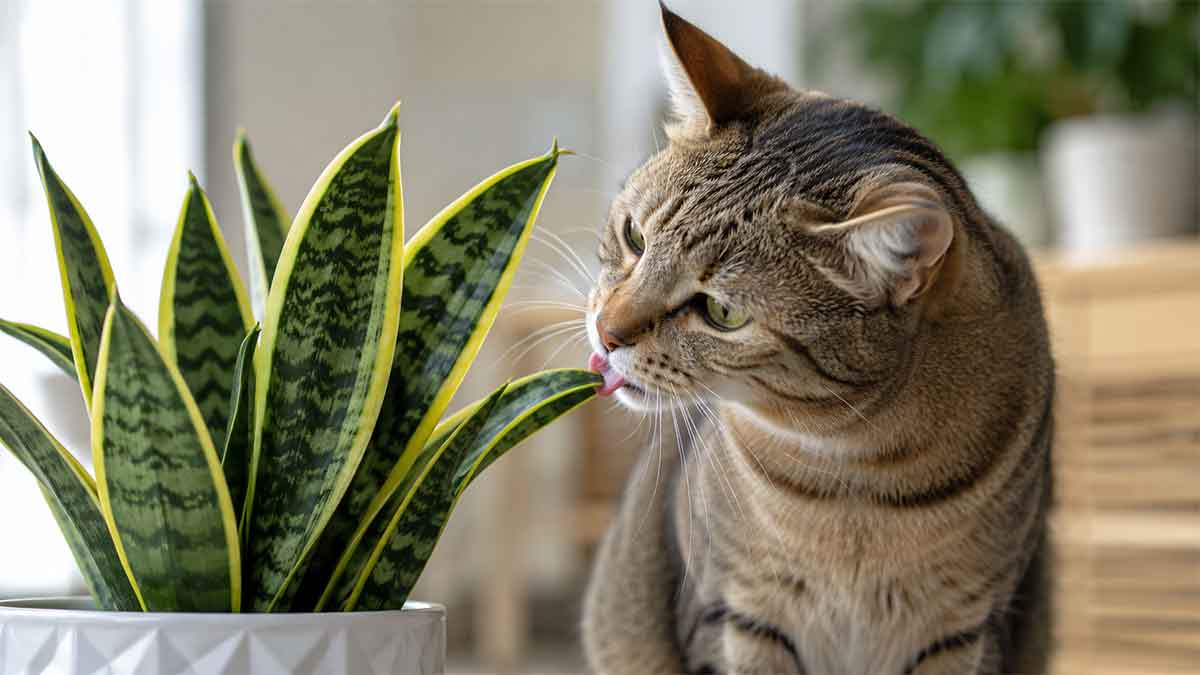
If you’ve ever caught your cat sniffing or nibbling your houseplants, you’re not alone. Cats are naturally curious, and even the most well-behaved indoor cat may decide to investigate a snake plant. That leads many pet owners to ask, what happens if a cat licks a snake plant?
The concern is understandable. A single lick might seem harmless, but some common houseplants contain compounds that can irritate pets. The good news is that snake plants are rarely life-threatening, but they can still make your cat uncomfortable.
In this guide, you’ll learn exactly what happens if a cat licks a snake plant, the symptoms to watch for, whether snake plants are truly toxic, and what you should do next.
What Happens If a Cat Licks a Snake Plant?
The short answer is this: most cats experience mild irritation rather than severe poisoning.
Snake plants contain saponins, naturally occurring chemicals that help protect the plant from insects and fungi. Unfortunately, these compounds can irritate a cat’s digestive system and mouth.
If your cat only licks the leaves once or twice, they may not develop any symptoms at all. However, if they chew or swallow part of the plant, symptoms become more likely.
Common signs include:
- Drooling
- Foaming at the mouth
- Mild vomiting
- Diarrhea
- Decreased appetite
- Lip smacking
- Pawing at the mouth
- Temporary lethargy
Symptoms usually appear within a few hours after exposure and often improve within 24 hours with supportive care.
Do Snake Plants Toxic to Cats?
Yes.
The better way to phrase the question is: Are snake plants toxic to cats?
According to veterinary experts and the ASPCA, snake plants are toxic to cats, but they are considered mildly toxic, not highly poisonous.
The toxins mainly affect the digestive tract instead of causing organ damage.
That means most healthy cats recover quickly after veterinary guidance or simple home monitoring when symptoms are mild.
Is It Safe for My Cat to Lick a Snake Plant?
In general, no.
Even if your cat only licks the surface, there’s still a chance they may ingest small amounts of saponins.
Many cats won’t show any symptoms after a brief lick, but every cat reacts differently depending on:
- Age
- Body weight
- Overall health
- How much plant material they consumed
If you actually see your cat licking the plant, it’s a good idea to remove the plant from their reach and monitor them for several hours.
Are Indoor Snake Plants Poisonous to Cats?
Yes.
Whether the snake plant grows indoors or outdoors makes no difference.
Indoor snake plants contain the same saponins found in outdoor specimens.
Popular varieties include:
- Mother-in-law’s tongue
- Golden snake plant
- Laurentii snake plant
- Cylindrical snake plant
All should be considered potentially toxic to cats.
Symptoms That Mean You Should Call Your Vet Immediately
While most cases are mild, some situations require professional care.
Contact your veterinarian immediately if your cat experiences:
- Repeated vomiting
- Bloody diarrhea
- Trouble breathing
- Swollen face
- Extreme weakness
- Collapse
- Refusal to eat for more than 24 hours
- Continuous drooling that doesn’t improve
Kittens, elderly cats, and cats with existing medical conditions should always be evaluated sooner rather than later.
What Should You Do If Your Cat Licks a Snake Plant?
Here’s a simple step-by-step plan.
| Step | What to Do |
|---|---|
| 1 | Remove the snake plant immediately. |
| 2 | Check your cat’s mouth for remaining plant pieces. |
| 3 | Offer fresh drinking water. |
| 4 | Watch for vomiting or drooling over the next several hours. |
| 5 | Call your veterinarian if symptoms develop or worsen. |
Never try to make your cat vomit unless specifically instructed by a veterinarian.
Human medications should also never be given without veterinary advice.
Should I Get Rid of My Snake Plant If I Have a Cat?
Not necessarily.
Many cat owners successfully keep snake plants by preventing access.
You can:
- Place the plant on a high shelf.
- Use hanging planters.
- Keep it inside a room your cat cannot enter.
- Choose pet-safe plants instead.
However, if your cat repeatedly chews houseplants, replacing the snake plant with a non-toxic alternative may be the safest solution.
Are Snake Plant Safe for Cats?
No.
Although snake plants are often described as “low toxicity,” they are not considered safe for cats.
There’s an important difference between:
- Safe = no known harmful effects
- Low toxicity = may still cause illness
Because of this distinction, veterinarians recommend preventing cats from chewing snake plants whenever possible.
Snake Plant Toxic to Dogs and Cats
Snake plants aren’t only risky for cats.
They are also mildly toxic to dogs.
Dogs typically experience:
- Vomiting
- Diarrhea
- Excessive drooling
- Upset stomach
- Reduced appetite
If your dog eats a significant amount of the plant, contact your veterinarian.
If you’re interested in other pet emergencies, you may also enjoy What Happens If a Dog Eats Cat Litter? and What Happens If a Dog Eats Grass Fertilizer?.
Are Snake Plants Toxic to Dogs?
Yes.
The same saponins affecting cats can also irritate dogs.
Fortunately, severe poisoning is uncommon, but puppies may experience stronger symptoms because of their smaller size.
Always contact your veterinarian if your dog eats a large amount of the plant.
What to Do If Dog Eats Snake Plant
If your dog chews or eats a snake plant:
- Remove any remaining leaves.
- Offer fresh water.
- Watch for vomiting.
- Prevent additional access.
- Contact your veterinarian if symptoms appear.
Do not wait until symptoms become severe before seeking advice.
Snake Plant Poisonous to Humans
Snake plants are generally considered mildly toxic to humans.
Adults who accidentally touch the plant usually experience no problems.
However, chewing the leaves may cause:
- Mouth irritation
- Nausea
- Mild stomach pain
- Vomiting
Young children are more likely to place leaves in their mouths, so it’s best to keep the plant out of reach.
Snake Plant Toxic to Kids
Yes, but usually only mildly.
Children may develop:
- Upset stomach
- Drooling
- Mouth irritation
- Vomiting
If a child eats part of a snake plant, contact your healthcare provider or poison center for guidance.
Are Snake Plants Toxic to Rabbits?
Yes.
Rabbits have sensitive digestive systems and should never be allowed to eat snake plants.
Possible symptoms include:
- Loss of appetite
- Digestive upset
- Reduced activity
- Diarrhea
Stick with rabbit-safe vegetables and hay instead.
Are Spider Plants Toxic to Cats?
Fortunately, spider plants are considered non-toxic to cats.
Many cat owners choose spider plants as a safer alternative.
That said, some cats enjoy chewing spider plant leaves, which can still lead to vomiting simply because they eat too much plant material.
So while they’re safer, moderation is still important.
Safer Houseplants for Cat Owners
If you’re building a pet-friendly indoor garden, consider these safer options:
- Spider Plant
- Boston Fern
- Calathea
- Prayer Plant
- Areca Palm
- Bamboo Palm
- African Violet
These plants are widely considered much safer than snake plants around cats.
How to Keep Cats Away From Houseplants
Prevention is much easier than treating plant poisoning.
Try these tips:
- Place plants on floating shelves.
- Use hanging baskets.
- Grow cat grass for your pet.
- Provide more interactive toys.
- Redirect chewing behavior with enrichment activities.
- Keep toxic plants in rooms your cat cannot access.
Many cats chew plants simply out of boredom.
Providing daily play sessions often reduces unwanted behavior.
For more cat health tips, you might also like Why Are My Cat’s Ears Cold? and Reasons Why My Cat Is Throwing Up.
Frequently Asked Questions
Can a single lick of a snake plant hurt a cat?
Usually not. A single lick often causes no symptoms, although sensitive cats may drool or experience mild mouth irritation.
How long does snake plant poisoning last in cats?
Most mild cases improve within 24 to 48 hours after exposure.
Should I induce vomiting if my cat eats a snake plant?
No. Never induce vomiting unless your veterinarian specifically instructs you to do so.
Can cats recover from snake plant poisoning?
Yes. The vast majority of cats recover completely with monitoring and supportive care.
What houseplants are completely safe for cats?
Spider plants, Boston ferns, prayer plants, and African violets are among the safest choices for homes with cats.
Conclusion
If you’re wondering what happens if a cat licks a snake plant, the answer is usually reassuring but still important to take seriously. Snake plants contain saponins, which can irritate your cat’s mouth and stomach. Most cats only experience mild symptoms such as drooling, vomiting, or diarrhea, but severe reactions can occur in rare cases.
The best approach is prevention. Keep toxic plants out of your cat’s reach, monitor them closely if exposure occurs, and contact your veterinarian whenever symptoms seem unusual or persistent. A few simple precautions can help keep both your favorite houseplants and your curious feline safely under the same roof.