
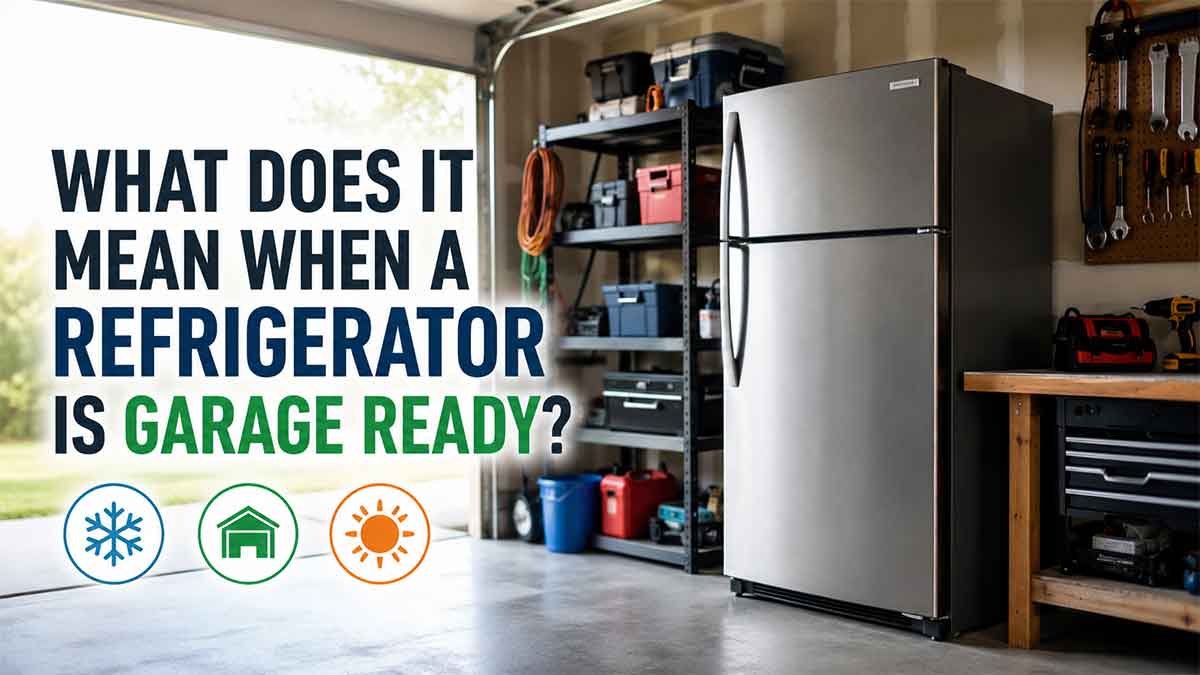
If you’re shopping for a new fridge, you may come across the term garage ready. So, what does it mean when a refrigerator is garage ready?
A garage-ready refrigerator is designed to operate reliably in a wider range of temperatures than a standard refrigerator. That means it can keep food at safe temperatures even when your garage gets very cold in winter or extremely hot in summer. This feature makes it a better choice for garages, workshops, basements, or other spaces that aren’t climate-controlled.
Here’s what makes a garage-ready refrigerator different and whether you actually need one.
What Does It Mean When a Refrigerator Is Garage Ready?
A garage-ready refrigerator is built to maintain proper cooling performance in environments where the surrounding temperature changes significantly.
Most standard refrigerators are intended for indoor kitchens where temperatures stay fairly stable. When placed in an unheated or non-air-conditioned garage, they may struggle to cool properly because their temperature sensors and compressor are designed for a narrower operating range.
Garage-ready models are engineered to continue working correctly even when outdoor temperatures affect the garage.
The exact temperature range depends on the manufacturer, but many garage-ready refrigerators are designed to operate in conditions ranging from around 38°F (3°C) up to 110°F (43°C) or higher. Always check the product specifications for the model you’re considering.
Why Standard Refrigerators Can Have Problems in a Garage
Many homeowners assume any refrigerator will work anywhere. Unfortunately, that’s not always true.
A refrigerator relies on sensors that monitor the fresh food compartment. If the surrounding air becomes too cold, the refrigerator may think it’s already cold enough and stop running the compressor.
When that happens:
- The refrigerator compartment may stay cold.
- The freezer can gradually warm up.
- Frozen food may partially thaw without you realizing it.
Hot weather creates a different challenge. High garage temperatures force the compressor to work much harder, increasing energy use and putting extra wear on the cooling system.
What Makes a Refrigerator Garage Ready?
A garage-ready refrigerator usually includes design features that help it adapt to changing temperatures.
These may include:
- Improved temperature controls
- Sensors that perform accurately across a wider temperature range
- Heating elements near the thermostat on some models
- Components designed to withstand higher ambient temperatures
- Compressor controls optimized for seasonal temperature swings
Not every manufacturer uses the same technology. The overall goal is the same: keep both the refrigerator and freezer at safe temperatures despite changing garage conditions.
Do You Need a Garage-Ready Refrigerator?
It depends on where you plan to use it.
A garage-ready refrigerator is a smart investment if your garage:
- Isn’t heated during winter.
- Doesn’t have air conditioning in summer.
- Regularly experiences temperatures below 40°F (4°C).
- Frequently exceeds 90°F (32°C).
- Is used for long-term food storage.
On the other hand, if your garage stays close to normal indoor temperatures year-round, a standard refrigerator may work just fine.
Garage-Ready vs. Standard Refrigerator
Here’s a quick comparison.
| Feature | Garage-Ready Refrigerator | Standard Refrigerator |
|---|---|---|
| Designed for garages | Yes | Usually no |
| Handles cold winters | Yes | Often struggles |
| Handles hot summers | Better | May lose efficiency |
| Stable freezer performance | Better | Can become inconsistent |
| Best location | Garage, basement, workshop, kitchen | Kitchen or climate-controlled room |
The main difference isn’t necessarily cooling power. It’s the refrigerator’s ability to respond correctly when the surrounding air temperature changes.
Will a Garage-Ready Refrigerator Use More Electricity?
Not necessarily.
Under normal conditions, energy use is similar to other refrigerators of the same size and efficiency rating.
During extremely hot weather, any refrigerator uses more electricity because the compressor runs longer. A garage-ready model is simply better equipped to handle those conditions without sacrificing food safety.
If energy efficiency matters, compare the refrigerator’s energy rating in addition to checking whether it’s garage ready.
Can You Put a Regular Refrigerator in the Garage?
Yes, but there are risks.
Some people use standard refrigerators in garages without any issues. Success largely depends on the local climate and how well insulated the garage is.
Problems become more likely if your garage experiences:
- Freezing winter temperatures
- Long periods of extreme summer heat
- Large daily temperature swings
If you already own a regular refrigerator, monitor both the refrigerator and freezer temperatures with appliance thermometers. This helps confirm that food remains within safe storage temperatures throughout the year.
Are Garage-Ready Refrigerators Worth It?
For many homeowners, yes.
The extra cost is often worthwhile if the refrigerator will stay in a garage full-time.
A garage-ready appliance can provide:
- More reliable food storage
- Better freezer performance
- Less worry during seasonal weather changes
- Reduced risk of spoiled food
If you’re storing meat, frozen meals, or bulk groceries, dependable temperature control offers valuable peace of mind.
Common Questions
Can a garage-ready refrigerator be used indoors?
Absolutely. A garage-ready refrigerator works perfectly well inside a kitchen or utility room.
Does “garage ready” mean weatherproof?
No.
Garage ready refers to temperature performance, not protection from rain, moisture, or outdoor exposure. These refrigerators are still designed for indoor use.
Can I make a regular refrigerator garage ready?
Usually not.
Some older refrigerators could be fitted with special garage heater kits, but these aren’t available for every model and may not be recommended by the manufacturer. For most newer refrigerators, buying a model specifically labeled as garage ready is the better option.
Does every garage-ready refrigerator have the same temperature range?
No.
Each manufacturer specifies its own operating temperature range. Always check the owner’s manual or product specifications before purchasing.
Tips for Using a Refrigerator in the Garage
Even with a garage-ready model, proper installation helps improve performance.
- Leave enough space around the refrigerator for airflow.
- Keep the condenser coils clean.
- Avoid placing the unit in direct sunlight.
- Install it on a level surface.
- Check the door seals regularly for wear.
These simple maintenance steps help any refrigerator cool more efficiently.
Related: Why Is My Refrigerator So Loud When It Runs?
Final Thoughts on What Does It Mean When a Refrigerator Is Garage Ready
Understanding what does it mean when a refrigerator is garage ready can help you choose the right appliance for your home. A garage-ready refrigerator is specifically designed to handle wider temperature swings than a standard model, making it a dependable option for garages and other non-climate-controlled spaces.
If your garage experiences cold winters, hot summers, or both, choosing a garage-ready refrigerator can help protect your food, improve freezer performance, and reduce the chance of unexpected temperature problems throughout the year.