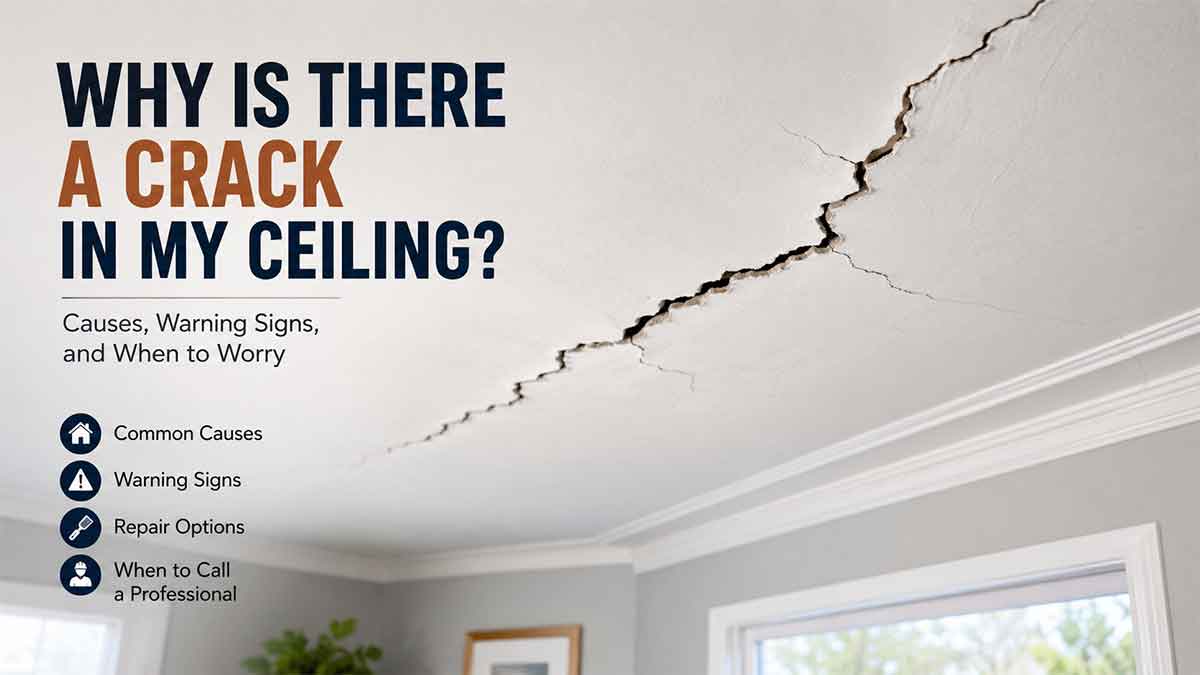
If you’re asking why is there a crack in my ceiling, the answer depends on the crack’s size, shape, and location. Many ceiling cracks are harmless and happen as a house settles over time. Others can point to water damage, structural movement, or problems that need immediate attention.
The key is knowing how to tell the difference. A small hairline crack usually isn’t an emergency, but a wide or growing crack deserves a closer look.
What Does a Ceiling Crack Mean?
A ceiling crack is a visible split in the drywall, plaster, or joint where ceiling materials meet. It forms when the surface is stressed by movement, moisture, or aging materials.
Some cracks are purely cosmetic. Others may signal a deeper issue affecting your home’s structure.
Common Reasons Why There Is a Crack in My Ceiling
Normal House Settling
One of the most common reasons for ceiling cracks is natural settling.
As a home ages, the foundation and framing shift slightly. Drywall joints can separate, creating thin, straight cracks. This is especially common in newer homes during the first few years after construction.
Typical signs include:
- Hairline cracks
- Straight lines following drywall seams
- No sagging or discoloration
- No noticeable growth over time
These cracks are usually cosmetic and can often be repaired with joint compound and fresh paint.
Drywall Joint Problems
Many ceiling cracks appear where two drywall panels meet.
Over time, joint tape can loosen or separate because of small seasonal movements, poor installation, or changes in humidity. The result is a long, straight crack running across the ceiling.
If the drywall itself feels solid and the crack stays narrow, the repair is usually straightforward.
Seasonal Temperature and Humidity Changes
Wood expands and contracts as moisture levels change.
During hot summers or dry winters, framing members can move just enough to stress drywall joints. Homes in climates with significant seasonal swings often develop recurring hairline cracks.
These cracks may appear during one season and become less noticeable during another.
Water Damage
Water is one of the biggest concerns when you notice a ceiling crack.
A roof leak, plumbing leak, or overflowing bathroom above can weaken drywall and plaster. As the material absorbs moisture, it may crack, stain, or sag.
Look for these warning signs:
- Brown or yellow stains
- Soft drywall
- Bubbling paint
- Mold or mildew
- A ceiling that feels damp
If you see any of these symptoms, finding the source of the leak should be your first priority before repairing the crack.
Structural Movement
Not every ceiling crack is cosmetic.
Significant foundation movement, shifting support beams, or roof framing problems can create larger cracks that continue to widen.
Structural cracks often have characteristics such as:
- Wider than about 1/8 inch
- Jagged or zigzag shape
- Continuing across walls and ceilings
- Doors or windows suddenly sticking
- Uneven floors nearby
These signs suggest the house itself may be moving rather than just the drywall surface.
Heavy Loads Above the Ceiling
Sometimes the ceiling supports more weight than intended.
A large attic storage area, heavy HVAC equipment, or damaged roof framing can place extra stress on ceiling joists. Over time, this pressure may lead to cracking or sagging.
If a crack appears together with a ceiling that bows downward, it should be inspected promptly.
Plaster Aging
Older homes with plaster ceilings develop cracks for different reasons than drywall.
As plaster ages, it becomes more brittle. The wooden lath behind it may also loosen, allowing sections of plaster to separate and crack.
While small plaster cracks are common, loose plaster can eventually fall if left unrepaired.
Should I Be Worried About a Ceiling Crack?
Not every crack is dangerous.
Generally, you can monitor the crack if it is:
- Thin and hairline-sized
- Straight
- Stable over several months
- Free of stains or sagging
You should investigate further if the crack:
- Gets longer or wider
- Is accompanied by water stains
- Causes the ceiling to bulge
- Appears suddenly after a storm
- Is part of several new cracks throughout the house
If you’re ever unsure, having the ceiling inspected can help determine whether the problem is cosmetic or structural.
Related: What to Do if the Ceiling Is Leaking
What Different Ceiling Crack Shapes Can Tell You
The shape of the crack often provides useful clues.
Straight cracks usually follow drywall joints and often indicate joint movement rather than structural damage.
Spiderweb cracks commonly occur in older plaster ceilings due to aging materials.
Diagonal or jagged cracks may point to more significant movement, especially when they extend into nearby walls.
Wide gaps deserve closer attention because they can indicate substantial shifting or structural stress.
The crack’s appearance alone cannot confirm the cause, but it provides valuable clues during inspection.
Can You Repair the Crack Yourself?
Small cosmetic cracks are often manageable for homeowners.
A typical repair involves:
- Removing loose material
- Applying drywall tape if needed
- Covering with joint compound
- Sanding smooth after drying
- Priming and repainting
However, repairing the crack without addressing the underlying cause can lead to the same crack returning.
For example, painting over a crack caused by an active roof leak won’t solve the problem.
When to Call a Professional
Professional evaluation is worth considering if:
- The crack keeps growing.
- The ceiling is sagging.
- Water damage is present.
- You hear creaking or popping noises.
- Multiple large cracks appear at once.
- Doors and windows become difficult to open around the same time.
Depending on the suspected cause, you may need a roofer, plumber, drywall contractor, foundation specialist, or structural engineer.
How to Monitor a Ceiling Crack
If the crack appears minor, keep an eye on it before assuming the worst.
Take a clear photo with today’s date. Measure the widest part of the crack using a ruler or tape measure. Check it every few weeks to see whether it changes.
If it stays the same size for months and no other symptoms develop, it’s more likely to be cosmetic.
How to Prevent Future Ceiling Cracks
Some cracks are unavoidable as homes age, but you can reduce the risk by:
- Fixing roof leaks quickly.
- Maintaining consistent indoor humidity.
- Avoiding excessive attic storage.
- Repairing plumbing leaks promptly.
- Addressing foundation drainage issues around the home.
- Inspecting the roof after severe storms.
Routine maintenance helps prevent small issues from becoming expensive repairs.
Frequently Asked Questions
Is a hairline crack in the ceiling normal?
Yes. Hairline cracks are often caused by normal settling, seasonal movement, or minor drywall joint separation.
Can a ceiling crack collapse?
A small cosmetic crack alone usually does not mean the ceiling will collapse. However, a sagging ceiling, large widening cracks, or water-damaged drywall should be inspected immediately.
Does homeowners insurance cover ceiling cracks?
It depends on what caused the crack. Damage from a covered event, such as certain storms, may qualify. Normal settling, aging, and lack of maintenance are often excluded. Review your specific policy for details.
How wide is too wide?
There’s no universal measurement that guarantees a structural problem, but cracks wider than about 1/8 inch, especially if they’re growing or accompanied by other warning signs, deserve professional evaluation.
Related: What to Do If You Have Asbestos Ceiling Tiles
Final Thoughts on Why Is There a Crack in My Ceiling
If you’ve been wondering why is there a crack in my ceiling, remember that many ceiling cracks are simply the result of normal settling or aging drywall. The real concern is whether the crack is changing over time or accompanied by signs like water damage, sagging, or structural movement.
Pay attention to the crack’s size, location, and any changes. Small cosmetic cracks can often be repaired easily, while growing or unusual cracks should be inspected before they develop into larger and more costly problems.