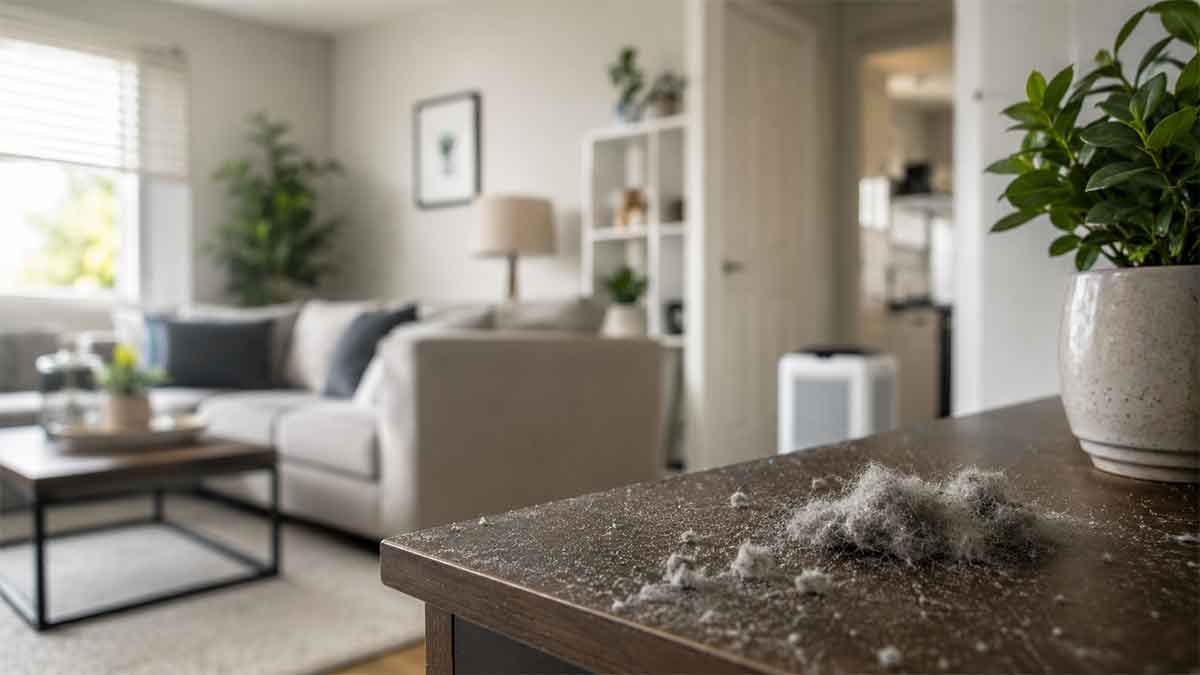
Why does my house get so dusty every day? In most homes, daily dust comes from a mix of outdoor dirt, fabric fibers, pet dander, dead skin cells, and particles pulled in through doors, windows, and your HVAC system. While you can’t eliminate dust completely, you can usually reduce it by improving air filtration, controlling humidity, sealing air leaks, and cleaning the right way instead of simply moving dust around.
If it feels like you dust one day and your furniture looks dirty again the next, you’re not imagining it. Some homes naturally collect more dust than others because of their location, airflow, flooring, or everyday habits.
Here’s why it happens and what you can do about it.
Why Does My House Get So Dusty Every Day?
Dust is a combination of tiny particles from both inside and outside your home. Every time someone walks across the floor, opens a door, or turns on the heating or cooling system, some of those particles become airborne.
The amount of dust you notice depends on several factors, including:
- Foot traffic
- Pets
- Carpeted floors
- Open windows
- Nearby construction
- Dirty HVAC filters
- Poor air sealing
- Dry indoor air
When several of these factors occur together, dust can seem to return almost immediately after cleaning.
Where Does Household Dust Actually Come From?
Many people assume dust mainly comes from outdoors, but a large portion is produced inside the home.
Common sources include:
- Dead skin cells
- Clothing and carpet fibers
- Pet hair and dander
- Pollen entering through doors and windows
- Soil tracked in on shoes
- Cooking residue
- Tiny paper fibers
- Dust mites and their waste
- Outdoor pollution carried inside
Exactly what makes up household dust varies depending on where you live and how you use your home.
Your HVAC System May Be Spreading Dust
Your heating and cooling system constantly moves air throughout your house.
If the air filter is dirty, low quality, or installed incorrectly, fine particles may continue circulating instead of being trapped.
Other HVAC-related problems include:
- Leaky ductwork
- Dirty supply vents
- Dust buildup inside ducts
- Running the fan continuously without adequate filtration
Replacing your HVAC filter regularly is often one of the simplest ways to reduce airborne dust.
If your heating system also makes unusual sounds, you may find our guide on why your baseboard heater is making noise helpful for diagnosing another common household issue.
Carpets Can Hold and Release Dust
Carpet acts like a giant filter.
It traps dirt, pollen, fibers, and pet hair throughout the day. Walking across it releases some of those particles back into the air.
Vacuuming regularly with a vacuum that has a HEPA filter can significantly reduce dust buildup.
If replacing flooring isn’t practical, deep cleaning carpets periodically also helps.
Open Windows Bring More Than Fresh Air
Fresh air feels great, but open windows also allow outdoor particles inside.
Depending on where you live, these may include:
- Pollen
- Road dust
- Construction debris
- Smoke
- Agricultural dust
- Fine soil particles
During windy days or high-pollen seasons, keeping windows closed may noticeably reduce indoor dust.
Pets Add More Dust Than You Might Think
Even pets that don’t shed heavily contribute to household dust.
Pet hair, dander, dried saliva, and dirt carried in on paws all become part of the dust circulating through your home.
Regular grooming, washing pet bedding, and wiping paws after outdoor walks can make a noticeable difference.
If you have a dog, you might also find these related articles useful:
Dry Air Makes Dust Stay Airborne Longer
Very dry indoor air allows lightweight particles to remain suspended longer before settling.
While humidity alone won’t eliminate dust, maintaining moderate indoor humidity may help some particles settle faster.
Too much humidity, however, can encourage mold growth and dust mites, so balance is important.
Air Leaks Let Dust Sneak Inside
Tiny gaps around doors, windows, electrical outlets, attic hatches, and foundations allow outside air to enter.
That incoming air often carries fine dust with it.
Homes located near:
- Busy roads
- Farms
- Gravel driveways
- Construction sites
- Dry climates
often experience higher indoor dust levels because outdoor particles easily enter through small leaks.
Weatherstripping and caulking can help reduce unwanted airflow.
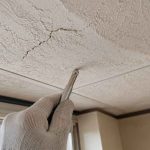
Ceiling Problems Can Create Extra Dust
Sometimes the dust isn’t coming from everyday living.
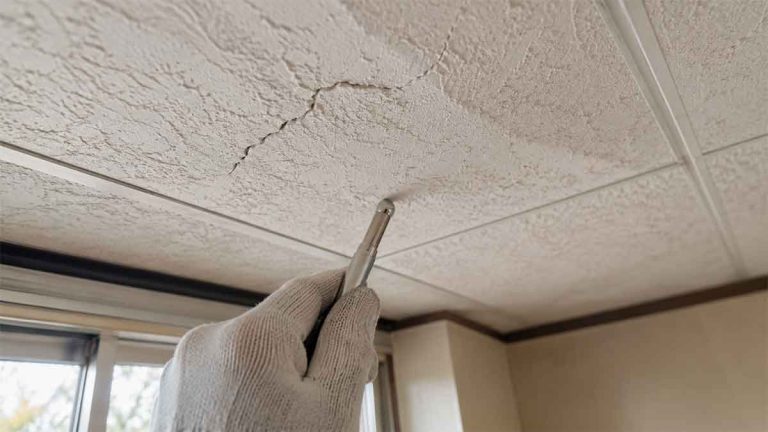
Damaged drywall, deteriorating insulation, cracked plaster, or aging ceiling materials may slowly release fine particles into your home.
Watch for signs such as:
- Powder beneath ceiling cracks
- Peeling paint
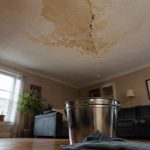
- Water stains
- Flaking drywall
These problems should be investigated rather than simply cleaned away.
Related resources:
- Why is there a crack in my ceiling?
- What to do if the ceiling is leaking
- What to do if you have asbestos ceiling tiles
If you suspect your home contains asbestos materials, avoid disturbing them until they can be properly assessed.
Cleaning Methods Matter More Than Frequency
Cleaning every day doesn’t always reduce dust if you’re using methods that push particles back into the air.
Instead:
- Dust with a damp microfiber cloth.
- Vacuum with a HEPA-equipped vacuum.
- Clean from top to bottom.
- Wash bedding regularly.
- Empty the vacuum outside when possible.
Dry feather dusters often spread fine dust instead of removing it.
Your Furniture Could Be Producing Dust
Some furniture and fabrics naturally shed fibers over time.
Examples include:
- Upholstered sofas
- Wool blankets
- Cotton bedding
- Decorative pillows
- Curtains
- Area rugs
Washing fabrics according to their care instructions helps reduce loose fibers.
Could Your Air Filter Be the Wrong Type?
Not every HVAC filter captures the same amount of dust.
Higher-efficiency filters generally trap smaller particles than basic fiberglass filters.
However, not every HVAC system is designed for highly restrictive filters.
Check your system’s recommendations before switching to a different filter type.
Is Dust Coming From Your Garage?
Garages often contain sawdust, dirt, lawn debris, fertilizer residue, and vehicle dust.
Every time the door connecting the garage to the house opens, some of those particles may enter.
Keeping the garage clean and storing dusty materials in sealed containers helps limit transfer into the home.
If you store an extra refrigerator there, you may also enjoy reading what it means when a refrigerator is garage-ready.
How to Reduce Dust Every Day
You won’t eliminate dust entirely, but these habits can dramatically reduce buildup:
- Replace HVAC filters on schedule.
- Vacuum carpets and rugs regularly.
- Use microfiber cloths instead of dry dusters.
- Keep windows closed during windy or high-pollen days.
- Remove shoes at the door.
- Groom pets frequently.
- Wash bedding every one to two weeks.
- Seal gaps around windows and doors.
- Use an air purifier if dust remains excessive.
Small improvements in several areas usually work better than relying on one solution.
When Dust Could Be a Sign of a Bigger Problem
Excessive dust isn’t always normal.
Consider investigating further if you notice:
- Dust appearing only in one room
- White powder constantly collecting beneath vents
- Dust immediately after running the HVAC system
- Crumbling drywall
- Persistent ceiling debris
- Visible mold
- Water damage
These situations may point to building issues rather than ordinary household dust.
Frequently Asked Questions
Is it normal to dust every day?
Some homes naturally require daily light dusting, especially if they have pets, carpeting, nearby construction, or heavy foot traffic. Needing occasional daily cleaning doesn’t necessarily indicate a problem.
Why is my bedroom dustier than the rest of the house?
Bedrooms collect fabric fibers from bedding, clothing, curtains, and carpets. People also spend many hours there, adding skin cells and other particles to the room.
Does opening windows make a house dustier?
Yes. Open windows allow pollen, dirt, road dust, and other outdoor particles inside. The effect depends on weather conditions and your local environment.
Do air purifiers reduce dust?
Air purifiers can reduce airborne particles, especially models with HEPA filters. They work best alongside regular cleaning and proper HVAC maintenance.
Can an old house be dustier?
Sometimes. Older homes may have more air leaks, aging insulation, deteriorating building materials, or older ductwork that allows additional dust to circulate.
Final Thoughts
If you’ve been wondering why does my house get so dusty every day, the answer is usually a combination of indoor activity, outdoor particles, airflow, and cleaning habits rather than a single cause. Start with the basics: replace HVAC filters, vacuum effectively, seal air leaks, and use microfiber cloths instead of dry dusters. If dust remains unusually heavy or appears alongside signs of structural damage, it’s worth inspecting your home’s ceilings, ductwork, or insulation to identify the underlying issue before it becomes a larger problem.