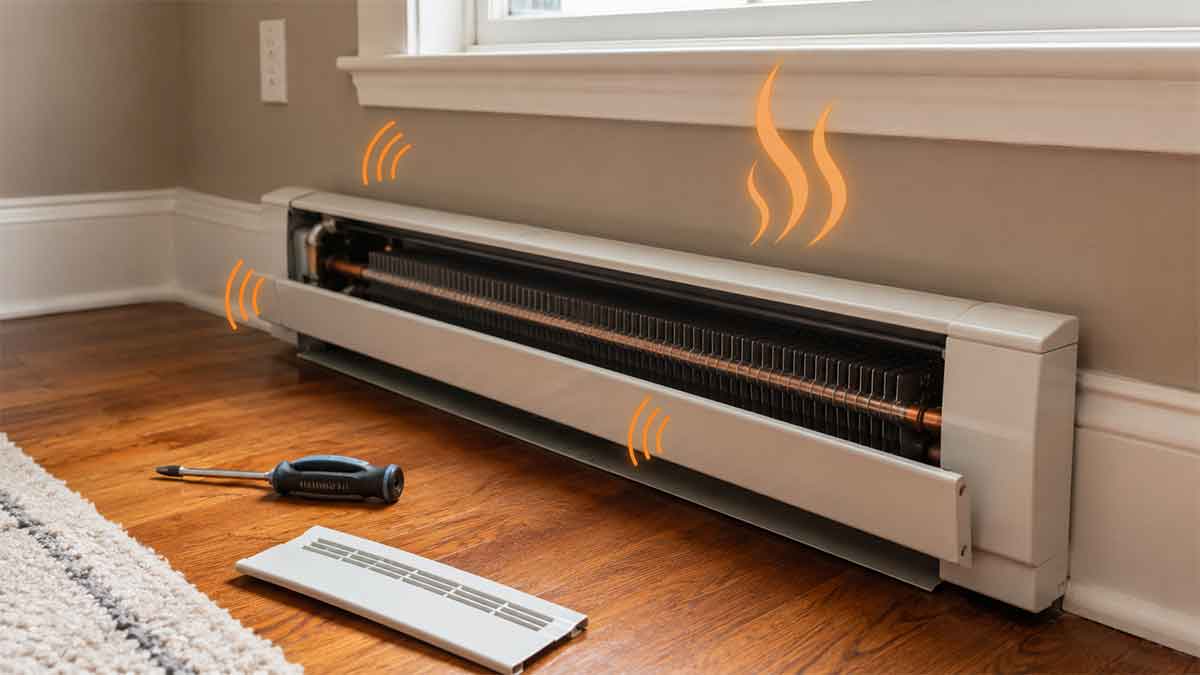
Why is my baseboard heater making noise? In most cases, the sound comes from normal metal expansion, trapped air in a hydronic system, loose parts, or dust burning off after the heater sits unused. Some noises are harmless, while others can point to a maintenance issue that should be addressed before it gets worse.
Knowing what type of sound you’re hearing is the fastest way to figure out whether you can ignore it, fix it yourself, or call a professional.
Why Baseboard Heaters Make Noise
Baseboard heaters generate heat, and heat causes materials to expand and contract. Metal covers, pipes, and heating elements naturally move as temperatures change. That’s why many baseboard heaters make occasional sounds even when they’re working correctly.
However, loud, frequent, or unusual noises usually indicate something that needs attention. The cause depends on whether you have an electric baseboard heater or a hydronic (hot water) system.
What Does the Noise Sound Like?
The type of noise often provides the biggest clue.
| Noise | Likely Cause |
|---|---|
| Popping | Metal expanding or contracting |
| Clicking | Thermostat cycling or loose metal parts |
| Banging | Water hammer or expanding pipes |
| Gurgling | Air trapped inside hot water pipes |
| Buzzing | Electrical component or loose connection |
| Humming | Normal operation or aging electrical parts |
| Crackling | Dust burning off heating elements |
| Squealing | Circulator pump (hydronic systems) |
Let’s look at each one more closely.
Why Is My Baseboard Heater Making Noise When It Heats Up?
This is the most common complaint.
As the heater warms, the metal housing and heating components expand. When the thermostat shuts off, everything cools and contracts. That movement creates popping or clicking sounds.
A little noise during heating and cooling is considered normal.
It becomes a concern when:
- The popping is extremely loud.
- The noise continues long after heating stops.
- The heater vibrates.
- The sound suddenly becomes much worse than before.
Sometimes the decorative cover is rubbing against the wall or floor. Removing the cover, cleaning it, and reinstalling it correctly may reduce the noise.
Popping Sounds
Popping noises usually come from expanding metal.
Electric baseboard heaters have metal fins that heat quickly. Hydronic systems have copper pipes carrying hot water. Both materials expand as temperatures rise.
Small pops every heating cycle are generally nothing to worry about.
If the popping is loud enough to wake you up, check for:
- Loose mounting brackets
- Bent covers
- Pipes rubbing against framing
- Tight openings where pipes pass through floors or walls
Allowing a little room for expansion often solves the problem.
Clicking Sounds
Clicking is often completely normal.
The thermostat may click when switching power on or off. Metal components may also make light clicking sounds as they warm.
Persistent clicking can sometimes indicate:
- Loose front covers
- Aging thermostat contacts
- Heating elements shifting inside the enclosure
If the clicking becomes rapid or continuous, turn off the heater and inspect it before using it again.
Banging or Knocking
A loud bang usually isn’t normal.
Hydronic baseboard systems sometimes develop water hammer, which occurs when water flow changes suddenly inside the pipes.
Other possible causes include:
- Expanding copper pipes
- Loose pipe supports
- Air pockets
- High water pressure
Electric baseboard heaters rarely produce true banging sounds.
If you hear repeated knocking from a hot water heating system, it’s worth having the system inspected before the problem worsens.
Gurgling Sounds
Gurgling almost always points to air inside a hydronic heating system.
Air bubbles interrupt the smooth flow of hot water through the pipes. Besides making noise, trapped air can reduce heating efficiency.
Depending on the system design, bleeding the heating loop may remove the trapped air. If the air keeps returning, there may be another issue that needs professional diagnosis.
Electric baseboard heaters do not produce gurgling because they contain no circulating water.
Buzzing or Humming
A gentle hum can be normal for some electric heaters.
A louder buzzing sound may come from:
- Loose electrical connections
- A failing thermostat
- A worn relay
- Internal electrical components
Electrical issues should never be ignored.
Turn off power at the breaker before inspecting the heater. If you suspect wiring problems, contact a qualified electrician instead of opening energized components.
Crackling After Months of No Use
A crackling smell or sound at the beginning of heating season is usually caused by dust burning off the heating element.
This is common after months without using the heater.
The smell and sound normally disappear within a few minutes.
To reduce dust buildup:
- Vacuum the heater before the first use of the season.
- Keep furniture from blocking airflow.
- Clean accumulated pet hair regularly.
A similar issue can happen with other household appliances when dust collects on hot components. You may also find our guide on why a refrigerator becomes unusually loud while running helpful for troubleshooting another common household noise.
Can a Dirty Baseboard Heater Make Noise?
Yes.
Dust, pet hair, and debris can affect airflow and sometimes create crackling or light rattling sounds.
Cleaning is simple:
- Turn off power.
- Let the heater cool.
- Remove the front cover if possible.
- Vacuum dust carefully.
- Wipe accessible surfaces with a dry cloth.
- Reinstall the cover securely.
Never spray water or household cleaners directly onto electric heating elements.
Loose Covers Can Cause Rattling
The metal front cover is designed to expand slightly during heating.
If it’s loose or bent, vibration can produce rattling sounds.
Check that:
- All clips are fully seated.
- No screws are loose.
- The cover isn’t touching flooring.
- Furniture isn’t pressing against the heater.
Sometimes gently adjusting the cover is enough to eliminate the noise.
When Pipes Cause the Noise
Hydronic systems often make sounds that seem to come from the heater even though the pipes are responsible.
Pipes may expand against:
- Wooden framing
- Floor openings
- Metal brackets
- Wall penetrations
As the pipe grows slightly with heat, friction creates clicking or popping.
Correcting pipe support or adding room for movement often solves the issue.
Should You Worry About Electrical Noises?
Some sounds deserve immediate attention.
Turn off the heater and stop using it if you notice:
- Loud buzzing with a burning smell
- Sparking
- Smoke
- Melted insulation
- Frequent breaker trips
- Visible scorch marks
These symptoms may indicate an electrical fault that requires professional repair.
How to Troubleshoot a Noisy Baseboard Heater
Start with the easiest checks before assuming something is broken.
Ask yourself:
- Does the noise happen only while heating?
- Is it coming from the heater or the pipes?
- Is the sound new?
- Has the heater been cleaned recently?
- Did the problem begin after moving furniture or remodeling?
Then try these steps:
- Vacuum dust from the heater.
- Tighten loose covers.
- Check for objects touching the heater.
- Listen for pipe movement nearby.
- Monitor whether the noise changes after several heating cycles.
Many minor noises disappear after basic cleaning and adjustment.
When to Call a Professional
Professional service is recommended when:
- The heater stops producing heat.
- Loud banging continues.
- Water leaks appear.
- Electrical buzzing gets worse.
- Breakers repeatedly trip.
- The heater smells like burning plastic.
- The same problem returns after cleaning.
Ignoring electrical or plumbing problems can lead to more expensive repairs later.
How to Prevent Future Noise
Regular maintenance goes a long way toward keeping a baseboard heater quiet.
Simple habits include:
- Vacuuming before each heating season.
- Keeping furniture several inches away from the heater.
- Avoiding blocked airflow.
- Tightening loose covers.
- Inspecting visible wiring for damage.
- Having hydronic systems serviced periodically.
Preventive care also extends the heater’s lifespan and helps it operate more efficiently.
Frequently Asked Questions
Is it normal for a baseboard heater to pop?
Yes. Light popping during heating and cooling is usually caused by normal metal expansion.
Why does my baseboard heater click every few minutes?
The thermostat may be cycling the heater on and off, or metal parts may be expanding as temperatures change.
Why does my hot water baseboard heater gurgle?
Gurgling typically means air is trapped inside the heating pipes. Bleeding the system may solve the problem, depending on its design.
Can dust make a baseboard heater noisy?
Yes. Dust and pet hair can create crackling sounds as they burn off when the heater is first used after sitting idle.
Why is my electric baseboard heater buzzing?
Buzzing may indicate a loose electrical connection, aging thermostat, or another electrical issue. If the buzzing is loud or accompanied by a burning smell, stop using the heater until it’s inspected.
Final Thoughts on Why Is My Baseboard Heater Making Noise
Why is my baseboard heater making noise? The answer depends on the sound you’re hearing. Light clicking, popping, and occasional crackling are often part of normal operation, especially as metal expands and contracts during heating cycles. Loud banging, persistent buzzing, water-related noises, or signs of electrical problems deserve closer attention.
Learning to identify the type of noise can help you decide whether a quick cleaning or adjustment is enough or whether it’s time to call a professional. Catching problems early not only keeps your heating system quieter but may also help prevent larger repairs later.