If you’ve ever wondered how does your zen garden grow, the answer is surprisingly simple: through thoughtful design, regular care, and a focus on balance rather than perfection. A Zen garden isn’t about growing lush flowers or colorful plants. Instead, it creates a calm environment using gravel, rocks, sand, and carefully chosen greenery that encourages mindfulness and relaxation.
Whether you’re building a small tabletop garden or transforming part of your backyard, understanding the purpose behind a Zen garden helps you create a space that feels peaceful and timeless.
What Is a Zen Garden?
A Zen garden, often called a Japanese rock garden, is a minimalist landscape designed to inspire quiet reflection. Traditional Zen gardens originated in Japan and were commonly found in Buddhist temples as places for meditation.
Unlike conventional gardens, a Zen garden usually emphasizes:
- Carefully placed rocks
- Raked gravel or sand
- Minimal plant life
- Open space
- Natural balance
Every element is intentionally placed to create harmony rather than visual abundance.
How Does Your Zen Garden Grow?
The phrase how does your zen garden grow doesn’t refer to rapid plant growth. Instead, it reflects how the garden develops over time through mindful care and gradual refinement.
A Zen garden “grows” by:
Developing Balance
Each rock, plant, and empty space contributes to the overall composition. The goal isn’t symmetry but visual harmony.
As your understanding of the space improves, you may reposition elements to create a more natural flow.
Evolving Through Maintenance
Regular maintenance is part of the Zen experience.
This often includes:
- Raking patterns into the gravel
- Removing fallen leaves
- Trimming moss or small shrubs
- Cleaning stones
- Replacing displaced gravel
These simple tasks become calming rituals rather than chores.
Reflecting the Seasons
Many Zen gardens subtly change throughout the year.
Moss may become greener during wet seasons, while small evergreens provide year-round structure. Even shifting sunlight can give the garden a different character from season to season.
The Main Elements of a Zen Garden
Understanding each component makes it easier to design a space that feels authentic.
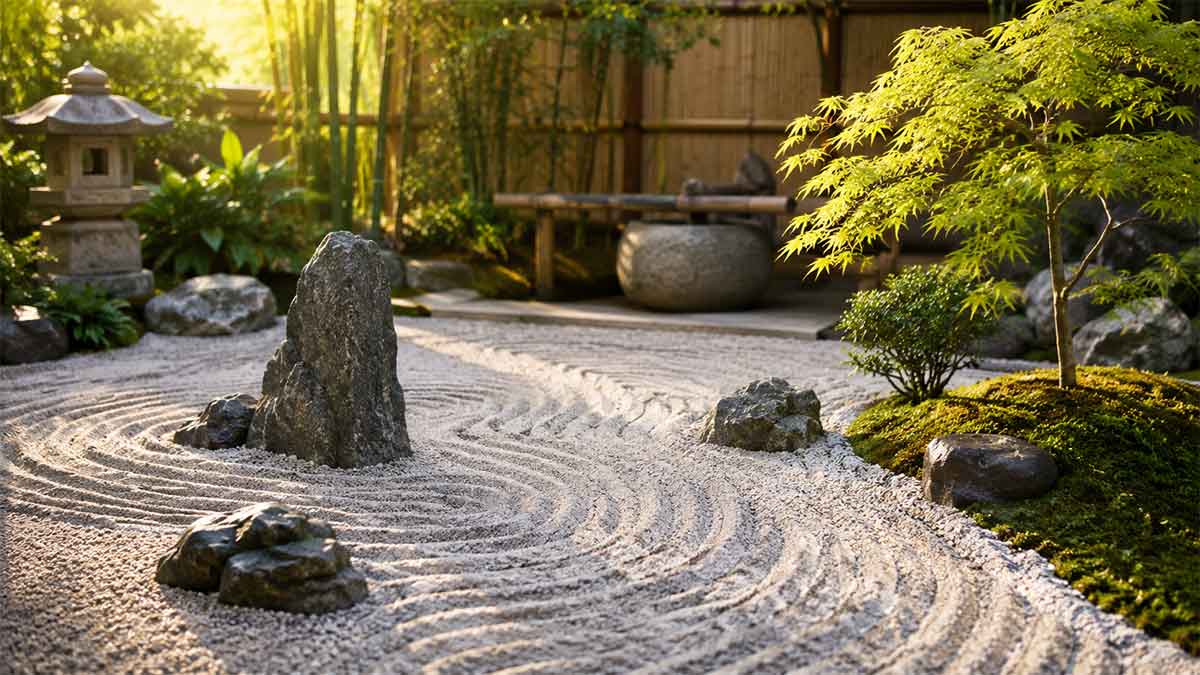
Gravel or Sand
Gravel represents water or flowing rivers.
Using a rake, you can create wave-like patterns that symbolize movement and tranquility. The patterns are temporary, making each raking session a fresh start.
Rocks
Large stones represent mountains, islands, or natural formations.
Rather than scattering rocks randomly, they’re usually grouped in odd numbers to create a more organic appearance.
Plants
Plants play a supporting role rather than becoming the main attraction.
Popular choices include:
- Moss
- Small evergreen shrubs
- Japanese maple (where climate allows)
- Bamboo (used carefully)
- Ground covers
The focus stays on texture and simplicity instead of colorful blooms.
Empty Space
One of the defining characteristics of a Zen garden is intentional empty space.
Rather than filling every corner, open areas help create a sense of calm and allow the eye to rest.
Can You Grow Plants in a Zen Garden?
Yes, but less is usually more.
Traditional Zen gardens often contain very few plants because the emphasis is on rocks and gravel. Modern home Zen gardens, however, may include carefully selected greenery that adds texture without overwhelming the design.
Choose plants that:
- Require minimal maintenance
- Keep a clean, structured shape
- Stay relatively compact
- Blend naturally with stone and gravel
Avoid overly colorful flower beds if your goal is a classic Zen aesthetic.
How to Start Your Own Zen Garden
You don’t need a large yard to create one.
Choose the Location
Look for a quiet area with minimal distractions.
This could be:
- A backyard corner
- A small patio
- A balcony
- An indoor tabletop display
Even a few square feet can create a peaceful retreat.
Define the Space
Use edging stones, wood, or simple borders to separate the garden from the surrounding landscape.
A defined boundary helps the garden feel intentional.
Add a Base Layer
Spread gravel or coarse sand evenly across the area.
White, gray, or natural-colored gravel works well because it highlights the raked patterns.
Position the Rocks
Place the largest rocks first.
Instead of lining them up evenly, create natural-looking groupings with varying heights and spacing.
Introduce Minimal Plants
If you want greenery, add only a few carefully selected plants.
Leave enough open space so each plant stands out rather than competing for attention.
Finish With Raking
Use a wooden rake or a specialized Zen garden rake to create flowing patterns around the rocks.
Many people find this final step relaxing and meditative.
Related: How High Should a Garden Fence Be?
How Much Maintenance Does a Zen Garden Need?
A Zen garden is generally lower maintenance than a traditional flower garden, but it still benefits from regular attention.
Typical maintenance includes:
- Raking gravel after wind or rain
- Removing weeds
- Sweeping leaves
- Washing stones occasionally
- Trimming small plants
How often you do this depends on your local climate and the size of the garden.
Common Mistakes to Avoid
Many beginners accidentally overcomplicate their design.
Some common mistakes include:
Adding Too Many Decorations
Lanterns, statues, bridges, and ornaments can quickly make the space feel cluttered.
Choose only a few meaningful features if you include any decorative items.
Using Too Many Plant Types
A Zen garden isn’t meant to showcase plant collections.
Limiting the variety creates a cleaner, more peaceful appearance.
Ignoring Empty Space
People often feel the need to fill every gap.
In Zen garden design, empty space is just as meaningful as the objects within it.
Making Perfectly Symmetrical Layouts
Nature rarely creates perfect symmetry.
Slight irregularity makes the garden feel more natural and visually interesting.
Indoor Zen Gardens
If outdoor space is limited, an indoor Zen garden offers many of the same calming benefits.
A tabletop version usually includes:
- Fine sand
- Small stones
- A miniature rake
- A few decorative rocks
While it won’t replace a full landscape garden, it provides an easy way to practice mindful raking and create a relaxing workspace.
Related: How to Choose an Outdoor Garden Bench: A Practical Guide
Frequently Asked Questions
What does a Zen garden symbolize?
A Zen garden symbolizes simplicity, balance, and mindfulness. Rocks often represent mountains or islands, while raked gravel symbolizes flowing water.
Do Zen gardens require plants?
No. Traditional Zen gardens often contain very few plants. Many rely almost entirely on rocks, gravel, and open space.
Why do people rake Zen gardens?
Raking creates patterns that represent water and serves as a calming, meditative activity. The patterns are temporary, encouraging mindfulness rather than permanence.
Can beginners make a Zen garden?
Yes. A simple design with gravel, a few rocks, and minimal plants is often the easiest and most effective starting point.
Final Thoughts on How Does Your Zen Garden Grow
The answer to how does your zen garden grow isn’t measured by how many plants you cultivate. It grows through intentional design, consistent care, and the quiet moments you spend maintaining it. Whether your garden is a small tabletop display or a peaceful backyard retreat, the goal remains the same: creating a space that encourages reflection, balance, and a welcome break from everyday distractions.