Wondering why are my cucumber leaves turning white? In most cases, white cucumber leaves are caused by powdery mildew, sunscald, pest damage, nutrient deficiencies, or environmental stress. The right solution depends on where the white spots appear, how quickly they spread, and whether the leaves show other symptoms like curling, wilting, or yellowing.
The good news is that many causes are treatable, especially when caught early. Knowing what you’re looking at can help save your cucumber plants before the problem affects fruit production.
Why Are My Cucumber Leaves Turning White?
White leaves are a symptom rather than a disease on their own. The discoloration happens when something damages the leaf surface, reduces chlorophyll, or allows fungal growth to develop.
Start by asking these questions:
- Are the white areas powdery or smooth?
- Do they appear on older leaves or new growth?
- Have you recently had hot, dry weather or long periods of humidity?
- Are insects present underneath the leaves?
Your answers will help narrow down the cause.
Powdery Mildew Is the Most Common Reason
The number one reason cucumber leaves turn white is powdery mildew.
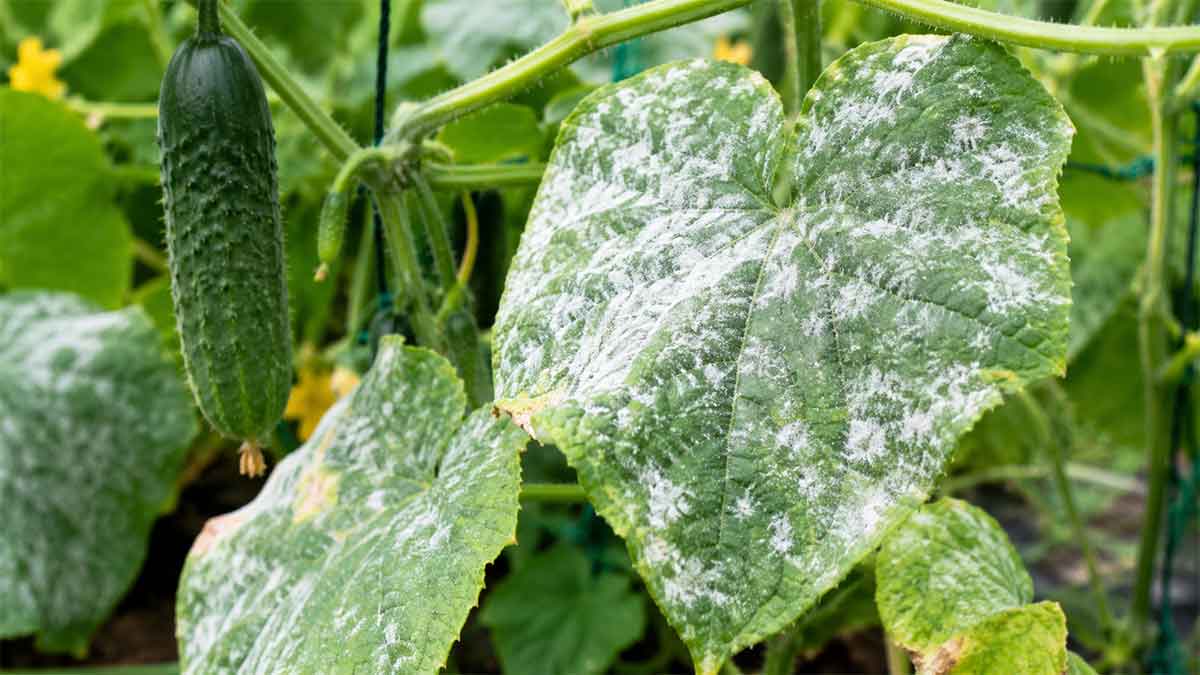
This fungal disease creates white, dusty patches that look like someone sprinkled flour over the leaves. It usually starts on older leaves before spreading to younger ones.
Warm days, cool nights, and high humidity create ideal conditions for powdery mildew. Unlike many other fungal diseases, it doesn’t require standing water to spread.
Signs of powdery mildew
- White powder on upper leaf surfaces
- White patches that gradually expand
- Leaves becoming yellow or brown over time
- Reduced plant growth
- Smaller cucumbers
If left untreated, powdery mildew weakens the plant and reduces harvests.
How to treat it
Remove badly infected leaves first. Avoid composting diseased plant material.
Improve air circulation by spacing plants properly and pruning overcrowded foliage. Water at the base instead of wetting the leaves.
Organic fungicides containing sulfur, potassium bicarbonate, or neem oil may help when applied early. Always follow product instructions.
Sunscald Can Bleach the Leaves
Sometimes the white color isn’t caused by disease at all.
Leaves exposed to sudden, intense sunlight may become pale white or tan instead of green. This often happens after moving seedlings outdoors without hardening them off or after heavy pruning exposes shaded leaves.
Unlike powdery mildew, sunscald doesn’t leave a fuzzy coating.
What to do
The damaged tissue won’t turn green again.
Focus on protecting the remaining healthy leaves by:
- Watering consistently
- Avoiding heavy pruning during heat waves
- Using shade cloth during extreme temperatures if necessary
New growth should appear healthy once conditions improve.
Spider Mites May Be Feeding on Your Plants
Tiny spider mites are another possible culprit.
These nearly invisible pests suck sap from cucumber leaves, causing tiny pale dots that can merge into larger white or silvery patches.
You may also notice fine webbing beneath the leaves.
Other symptoms include
- Speckled leaves
- Leaf curling
- Dry-looking foliage
- Stunted growth
Treatment
Inspect the undersides of leaves carefully.
Wash plants with a strong spray of water to knock mites off. In heavier infestations, insecticidal soap or horticultural oil may help reduce populations.
Healthy, well-watered plants are generally less attractive to spider mites during hot weather.
Nutrient Deficiencies Can Cause Pale Leaves
Although nutrient deficiencies usually cause yellowing, certain deficiencies can make leaves appear whitish or very pale.
Iron deficiency often affects new leaves first, leaving green veins surrounded by pale tissue.
Magnesium deficiency usually begins on older leaves with discoloration between the veins.
Poor soil pH can also prevent roots from absorbing nutrients even when fertilizer is present.
How to fix nutrient problems
Test your soil before adding fertilizer whenever possible.
If a deficiency exists:
- Apply a balanced vegetable fertilizer.
- Correct soil pH if needed.
- Avoid overfertilizing, which can create new problems.
Healthy soil rich in compost often reduces nutrient-related issues.
Downy Mildew Looks Different
Downy mildew is another fungal disease that gardeners sometimes confuse with powdery mildew.
Instead of white powder on top of the leaf, downy mildew usually produces yellow angular spots on the upper surface while grayish or purplish fungal growth develops underneath.
This disease spreads quickly during cool, wet weather.
Remove infected foliage and avoid overhead watering to slow its spread.
Chemical Damage May Bleach Leaves
Herbicide drift or overly concentrated sprays can damage cucumber foliage.
Sensitive cucumber plants may develop white patches, distorted leaves, or burned edges after exposure to certain lawn weed killers.
This is especially common when herbicides are sprayed on windy days.
Unfortunately, damaged leaves usually don’t recover.
If the exposure was minor, new growth may return to normal after the plant recovers.
Natural Variegation Isn’t a Problem
Some cucumber varieties naturally have silver or white markings on their leaves.
These markings are part of the plant’s genetics and are perfectly normal.
The leaves remain healthy, with no powdery coating, dead tissue, or spreading damage.
If every plant of the same variety shows identical markings, you likely have natural variegation rather than disease.
Could It Be Water Stress?
Water stress doesn’t always cause white leaves directly, but severe stress can weaken plants enough to make other problems appear faster.
Inconsistent watering also increases the risk of:
- Powdery mildew
- Spider mite infestations
- Sun damage
- Reduced fruit production
Aim to provide about 1 to 2 inches of water each week, depending on rainfall, soil type, and temperature.
Deep watering encourages stronger root systems than frequent shallow watering.
How to Tell What’s Causing White Cucumber Leaves
Here’s a quick comparison.
| Symptom | Most Likely Cause |
|---|---|
| White powder on leaves | Powdery mildew |
| Smooth white bleaching | Sunscald |
| Tiny white speckles with webs | Spider mites |
| Pale leaves with green veins | Nutrient deficiency |
| White patches after spraying chemicals | Herbicide injury |
| Silver markings on every leaf | Natural variegation |
Looking closely at the leaf surface usually provides the biggest clue.
Can White Leaves Turn Green Again?
Usually, no.
Once leaf tissue has been damaged by fungi, sun, chemicals, or pests, the white areas rarely regain their green color.
However, the plant can still recover if healthy new leaves continue growing.
Your goal is to stop the problem from spreading rather than restoring damaged tissue.
How to Prevent White Leaves on Cucumber Plants
Good growing practices make a huge difference.
Choose a planting location with full sun and good airflow.
Avoid crowding cucumber vines since poor circulation encourages fungal diseases.
Water early in the day and direct water toward the soil instead of the leaves.
Mulching helps maintain consistent soil moisture while reducing plant stress.
Regularly inspect leaves for early signs of disease or pests. Catching problems early is much easier than treating severe infestations.
Cleaning up plant debris at the end of the growing season also reduces the chance of fungal spores surviving until next year.
Frequently Asked Questions
Is it safe to eat cucumbers from plants with white leaves?
Usually, yes.
If the issue is powdery mildew or minor pest damage, the fruit is generally safe after washing. However, avoid eating fruit from plants recently treated with pesticides until the product’s waiting period has passed.
Should I remove white leaves?
If leaves are heavily infected with powdery mildew or severely damaged, removing them can slow the spread.
Avoid removing too many healthy leaves at once because plants still need foliage for photosynthesis.
Does baking soda cure powdery mildew?
A baking soda solution may help slow powdery mildew in some cases, but it usually works better as a preventive measure than a cure for severe infections. Commercial fungicides labeled for powdery mildew often provide more consistent results.
Will powdery mildew kill cucumber plants?
Not always.
Healthy plants can survive mild infections. Severe or untreated cases may weaken plants, reduce fruit production, and shorten the harvest season.
Final Thoughts on Why Are My Cucumber Leaves Turning White
When asking why are my cucumber leaves turning white, the answer often comes down to carefully observing the symptoms. Powdery mildew is the most common cause, but pests, sun damage, nutrient deficiencies, chemical exposure, and even natural leaf patterns can produce similar-looking discoloration.
The sooner you identify the problem, the better your chances of keeping the plant healthy and productive. Regular inspections, proper watering, good airflow, and healthy soil remain the best long-term strategies for preventing white leaves in cucumber plants.
You may also find these gardening guides helpful:
- Learn how high a garden fence should be to protect your vegetable garden from animals.
- Discover how to choose an outdoor garden bench for a comfortable and functional backyard.
- Explore how your zen garden grows for ideas to create a relaxing outdoor space.