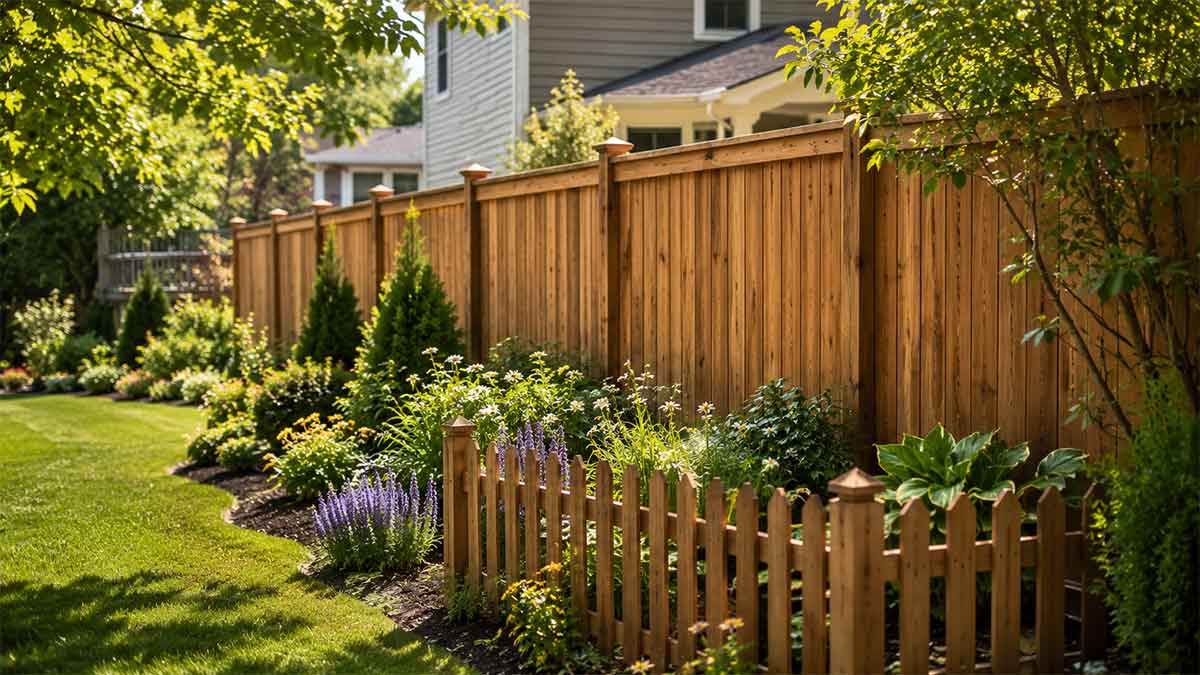
Most garden fences work best between 3 and 6 feet tall. Front yard fences typically stay in the 3- to 4-foot range so they don’t block sightlines, while backyard and side fences can usually go up to 6 feet for privacy and security. The exact number depends on your local zoning rules, whether the fence faces the street, and what you’re trying to achieve — privacy, pet containment, or simple garden definition.
There’s no single “correct” height that applies everywhere, so it’s worth checking your city or county’s fence ordinance before you buy materials. Many municipalities regulate fence height by location on the property, not just by preference.
Standard Height Guidelines by Location
Front yard fences are usually capped around 3 to 4 feet. This keeps the yard visually open and satisfies the traffic-visibility rules many cities enforce near sidewalks and driveways.
Backyard and side yard fences typically max out at 6 feet without a permit. This height offers solid privacy from neighbors and passersby while still being simple to build with standard fence panels.
Fences taller than 6 or 7 feet often require a building permit, and some areas cap residential fencing at 8 feet even with approval. If you’re aiming for extra height — say, for noise reduction or a busy street — a quick call to your local planning department will save you from having to tear it down later.
Corner Lots and Sight Triangles
If your garden sits on a corner lot, height rules get stricter near the intersection. Most cities enforce a “sight triangle” or “clear vision zone” where fences, hedges, and other obstructions can’t exceed about 2 to 3 feet, so drivers can see cross-traffic and pedestrians.
This restriction usually only applies to the corner section of the yard. The rest of the fence line can typically follow standard front- or side-yard height rules.
Related: How Does Your Zen Garden Grow?
Matching Height to Purpose
Privacy: Six feet is the standard for blocking sightlines from neighboring yards or the street. Solid panels or tightly spaced boards work better than open styles like picket fencing for this purpose.
Decorative or garden-defining: A 3- to 4-foot picket or low rail fence marks boundaries and adds curb appeal without feeling like a wall. It’s also the go-to choice for cottage-style or English garden aesthetics.
Pet containment: For dogs, height depends on the breed and jumping ability. A 4-foot fence contains most small and medium dogs, but larger or more athletic breeds often need 5 to 6 feet to prevent escapes.
Pool areas: Pool safety codes commonly require a minimum fence height of 4 feet, along with self-closing, self-latching gates. Requirements vary by state and county, so it’s worth confirming the specific rule where you live, since some jurisdictions set the minimum higher.
Wind and sun screening: Windbreaks for gardens usually work best around 5 to 6 feet — tall enough to slow wind without creating heavy shade that stunts sun-loving plants nearby.
HOA and Neighbor Considerations
If you’re in a neighborhood with a homeowners association, its rules can be stricter than city code and may also dictate fence materials, color, or style. Always check HOA guidelines separately, since they’re a common source of unexpected fence disputes.
It’s also good practice to talk to neighbors before installing anything close to a shared property line. Height isn’t usually the issue — placement and material choice are what tend to cause friction later.
Related: How to Choose an Outdoor Garden Bench: A Practical Guide
Getting the Height Right
There’s no universal answer to how high a garden fence should be, but a few defaults hold up in most situations: 3 to 4 feet for front yards and open garden borders, and 6 feet for backyard privacy. Beyond that, let your specific goal — privacy, pet safety, wind protection, or curb appeal — guide the decision, and confirm the number against local zoning before you dig the first post hole.